Technique & Performance
Brushes (Drum Brushes)
Brushes are drum beaters with a fan of thin wires or plastic bristles in place of a stick's wooden tip. Drummers sweep them across the head for a soft, continuous swish and tap them for short notes, mostly in jazz and quiet music.
A brush has a handle and a fan of thin metal wires or plastic (nylon) bristles at one end. On many brushes the wires slide back into the handle, so you can protect them when you pack up and set how far they spread when you play. Brushes are much quieter than sticks, and they can do something sticks cannot: keep a sound going by moving across the head.
Drummers use them on the snare drum and the rest of the drum kit in jazz, especially ballads, in bossa nova and in other quiet music.
Sweeps and taps
A brush makes two basic sounds:
- Sweep: the brush stays in contact with the head and keeps moving, for a continuous swish. With the snares on, it has a soft sizzle.
- Tap: the brush strikes the head and lifts off, for a short note, like a quiet stick stroke.
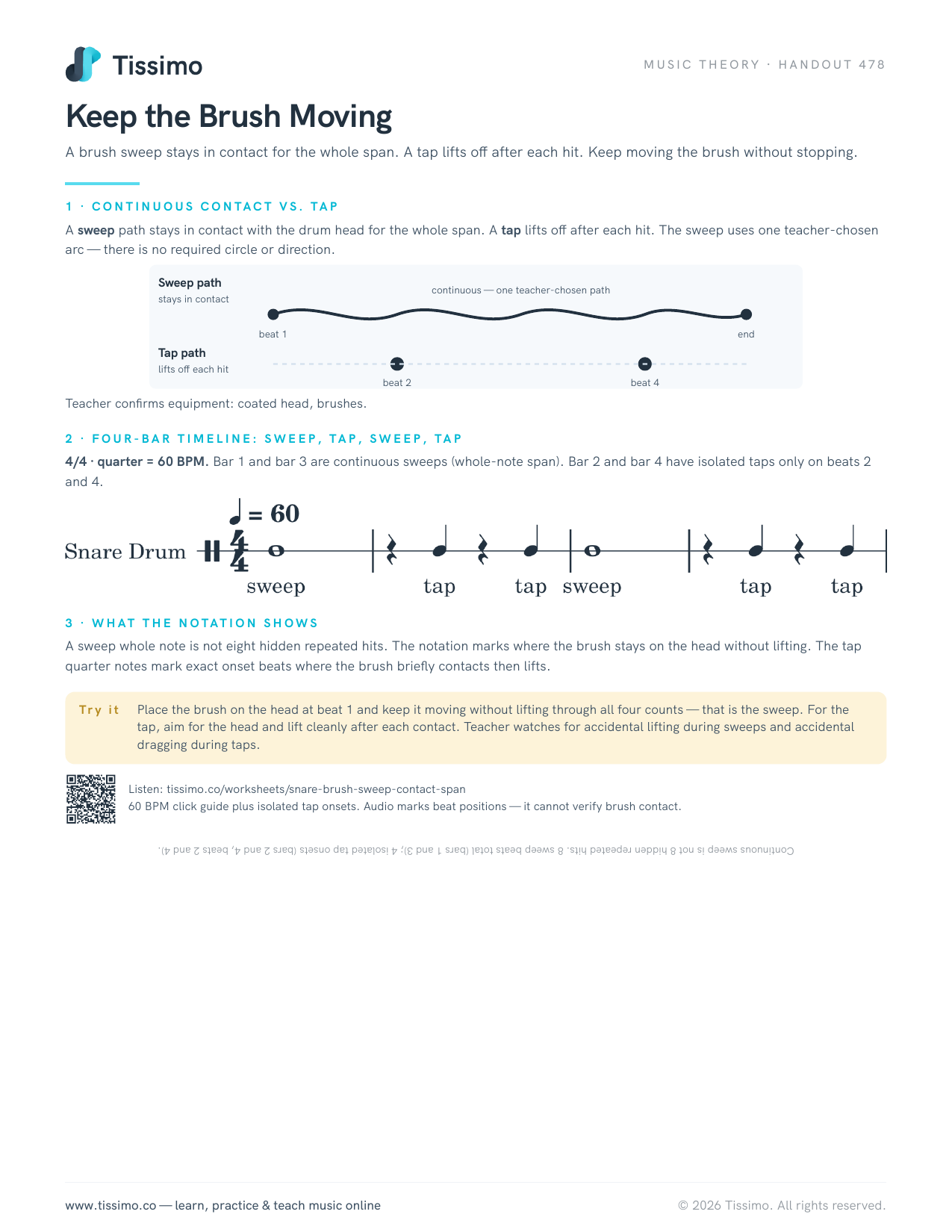
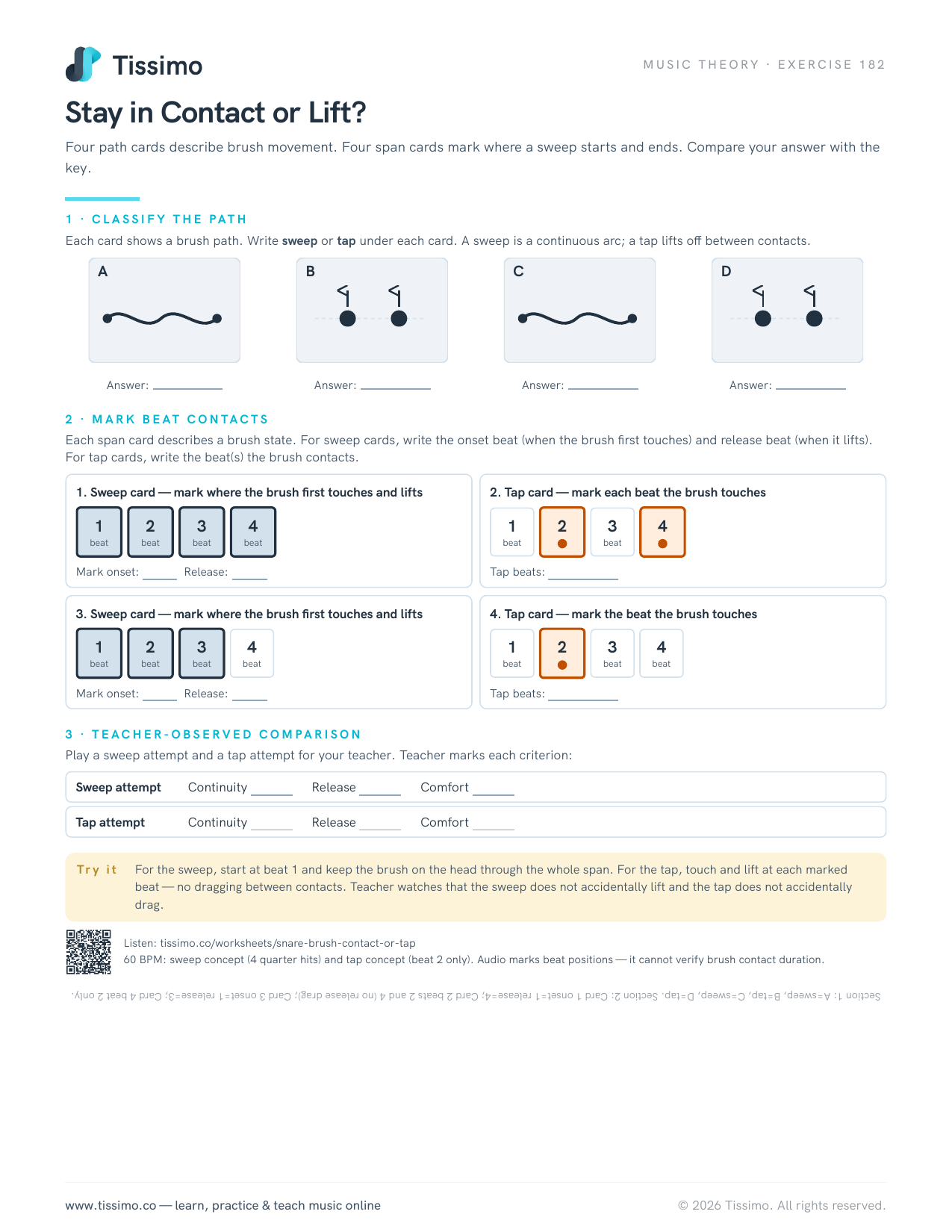
Keep the Brush Moving and Stay in Contact or Lift? practice telling the two apart and keeping the sweep going for its whole length.
A first brush pattern
A common way in is to give each hand one job. One brush sweeps without stopping, often in a circle, and you can mark the beat with the small change in sound where the brush changes direction. The other brush taps, at first on beats 2 and 4. In a slow swing tune the tapping hand can then play the jazz ride rhythm on the head instead, sliding on some beats and tapping on others. There are many ways to play brushes, and players develop their own patterns.
How brush parts are written
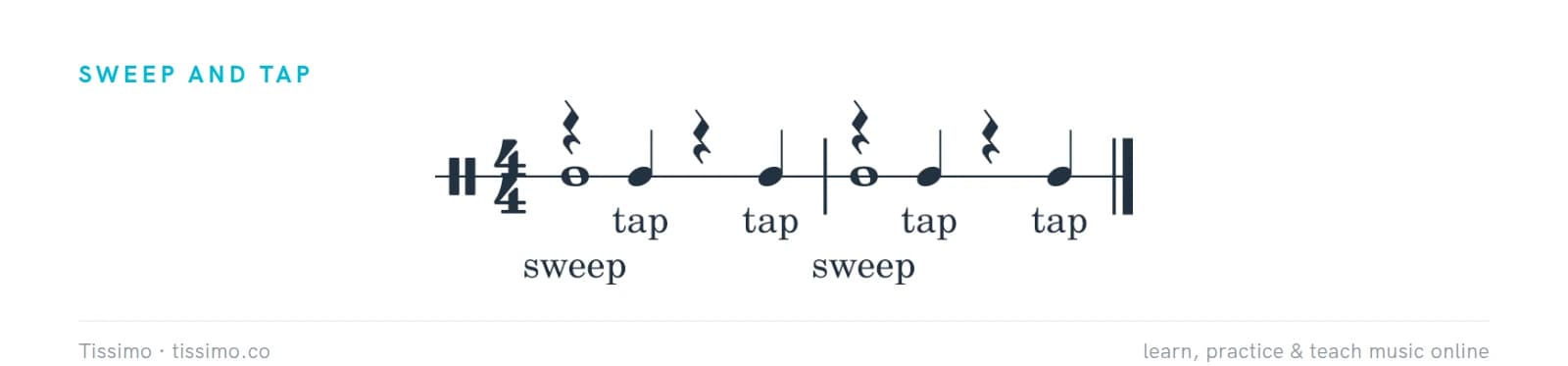
Brush notation is not standardized. A part may look like an ordinary snare part, or it may show sweeps as long notes or with lines and words, explained in a key. The example uses the same "sweep" and "tap" labels as the worksheets.
A sweep is not a roll
A sweep written as a whole note does not mean many quick strokes hidden inside the note. It means one continuous movement, with the brush on the head for the whole length. A drum roll fills a note with separate strokes or bounces.
Common questions
What are drum brushes used for?
For soft playing, especially jazz ballads and other quiet music. Besides tapping like a stick, a brush can sweep across the head for a continuous swish, which sticks cannot do.
What is a brush sweep?
A stroke in which the brush stays on the drumhead and keeps moving, often in a circle, so the sound continues instead of dying away. A tap, by contrast, strikes the head and lifts off.
Comments