Technique & Performance
Drum Roll
A drum roll is a sustained sound made of rapid strokes that blend together. On the snare drum it is played as a buzz (multiple-bounce) roll or an open roll of double strokes, and it is written with slashes or a z through the stem.
A drum cannot hold a note: struck once, the sound dies away. To sustain a sound for the length of a written note, a drummer fills that length with fast strokes. That is a roll. On the snare drum there are three main kinds, which are also the roll families of the Percussive Arts Society (PAS) list of rudiments:
- Multiple-bounce roll (buzz roll, press roll, closed roll): each hand presses the stick into the head so that it bounces several times, and the hands alternate. The bounces blend into a smooth, sustained sound.
- Double-stroke open roll: each hand plays exactly two strokes, R R L L. You can still hear the separate strokes.
- Single-stroke roll: fast alternating single strokes, R L R L.
On the timpani and on keyboard percussion such as the marimba, a roll is usually played with rapid single strokes.
How rolls are written
- Slashes through the stem. Three slashes (with beams counting as slashes) mark a roll. A long roll is usually tied into the note where it stops.
- A z through the stem marks a buzz roll. PAS and many drum methods use it for the multiple-bounce roll.
- Stroke rolls such as the five-stroke roll (two doubles and an accented single) are named after their number of strokes.
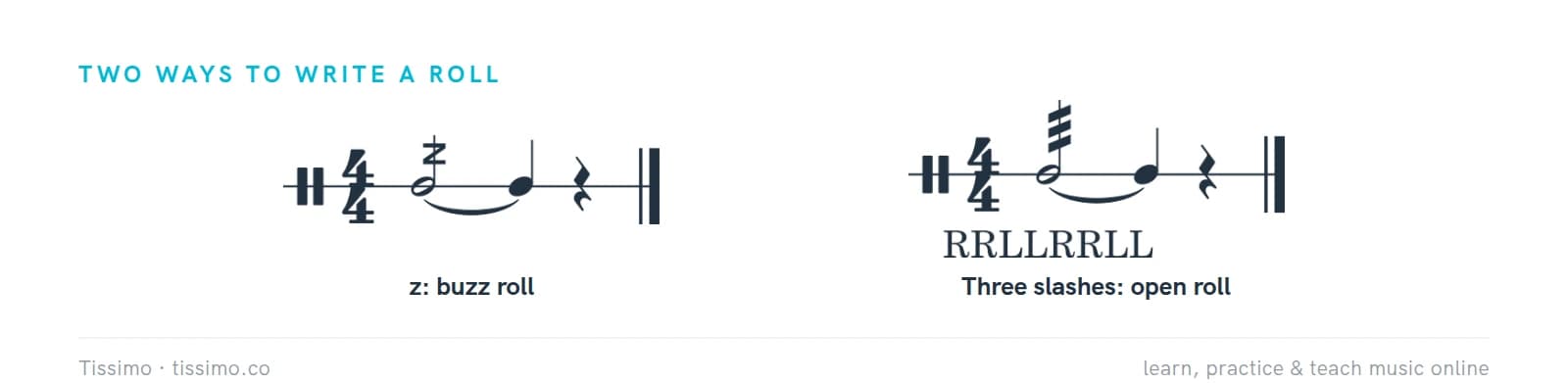
Which roll does the music want?
The same three slashes are read in two ways. In orchestral and concert music they usually ask for a closed (buzz) roll; the percussion teacher Anthony Cirone gives that rule for his classical snare drum studies. In rudimental and drum corps music, slashes usually ask for open double strokes, and a z marks the buzz. As Cirone notes, composers are not consistent, so the player often decides from the style, the tempo and any key printed in the part.
How to practice
Start the roll exactly on the written note and stop exactly where the tie ends, as Start the Roll, Finish the Span and Many Bounces, One Roll Span practice. For buzz rolls, make both hands give the same number and loudness of bounces. For open rolls, play each double as two controlled strokes, slow to fast and back, with Two Contacts, Then Change Hands and Count Both Contacts.
Roll or tremolo?
The slashes are the same sign as a tremolo. On a violin they ask for fast repeated bow strokes; on a drum they ask for a roll. Keep the Roll Inside the Note applies the same idea to marimba.
Common questions
What does a z on a drum note mean?
A buzz roll, also called a multiple-bounce or press roll: each hand presses the stick into the head so it bounces several times, and the hands alternate for the length of the note.
What is the difference between an open roll and a closed roll?
In an open roll each hand plays two clear strokes (R R L L), so you can hear the separate notes. In a closed roll each hand plays many bounces, which blend into one smooth sound.
Practice it: free worksheets
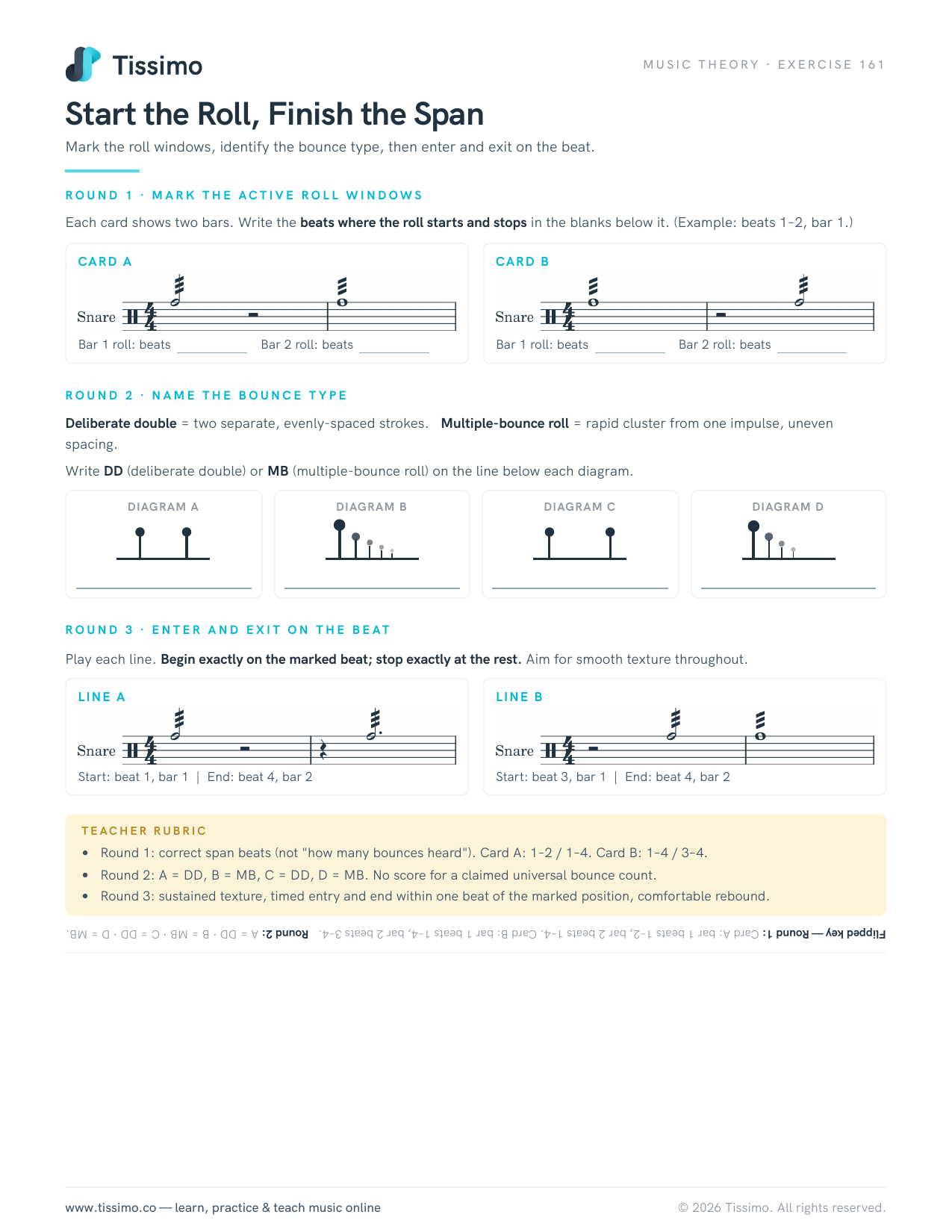 Start the Roll, Finish the SpanMark the roll windows, identify the bounce type, then enter and exit on the beat.
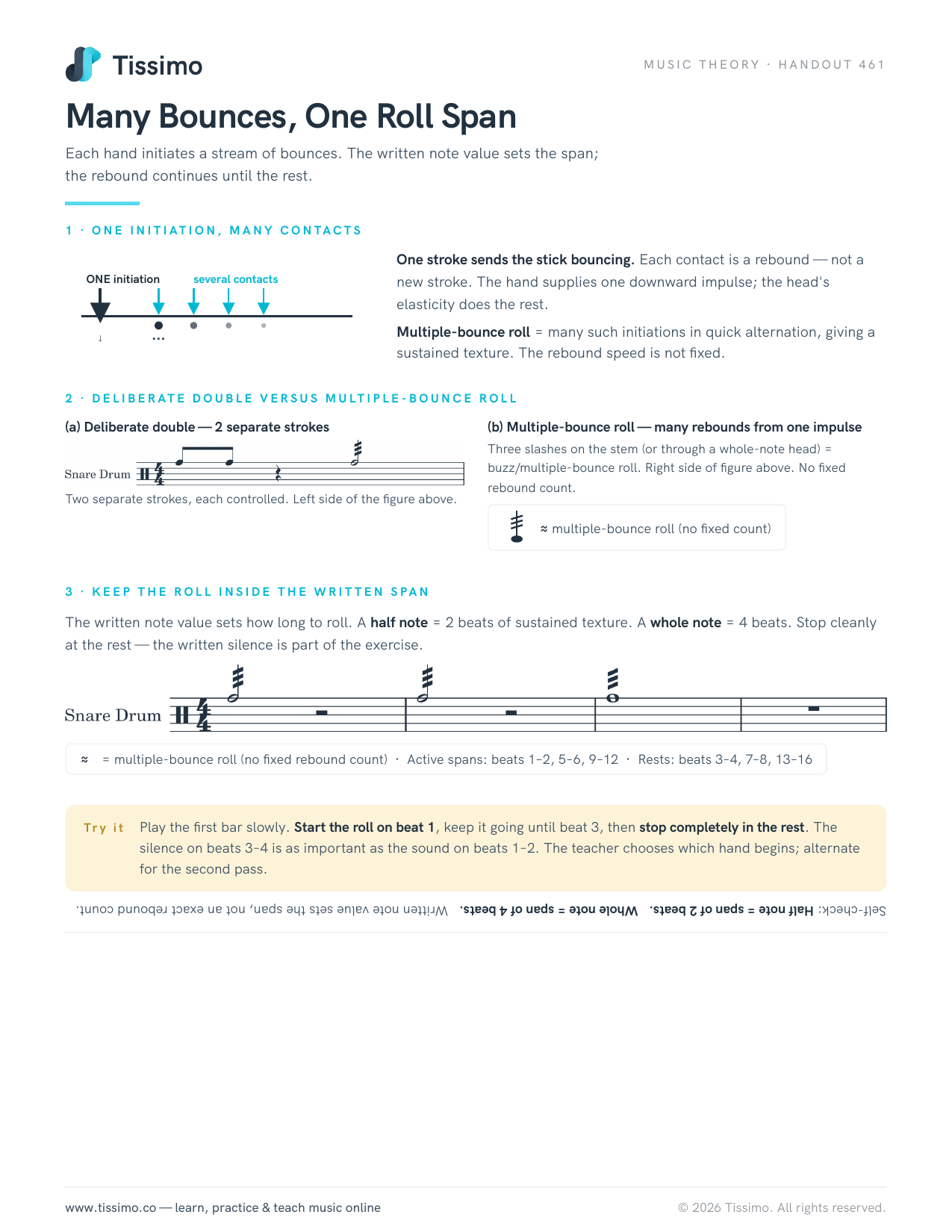 Many Bounces, One Roll SpanEach hand initiates a stream of bounces. The written note value sets the span; the rebound continues until the rest.
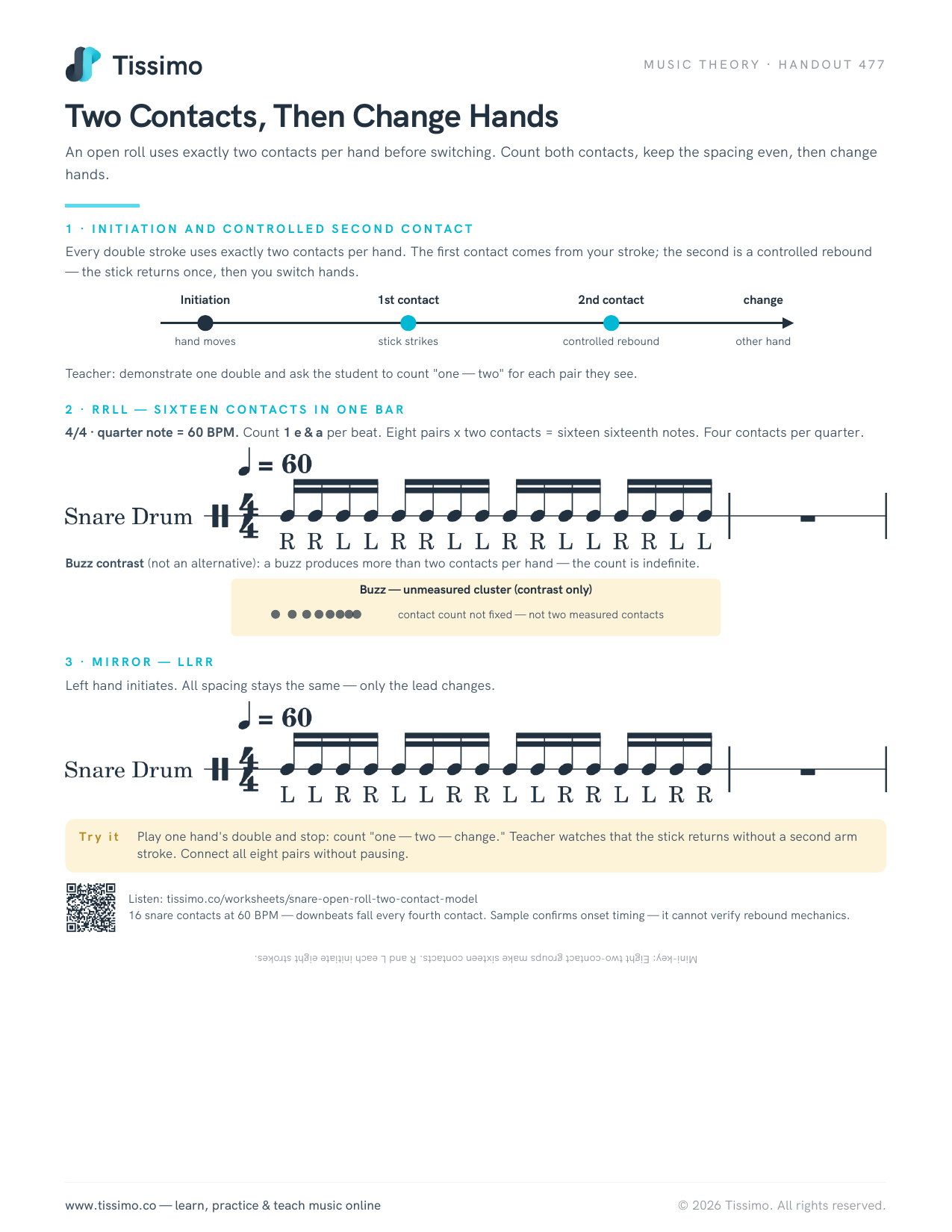 Two Contacts, Then Change HandsAn open roll uses exactly two contacts per hand before switching. Count both contacts, keep the spacing even, then change hands.
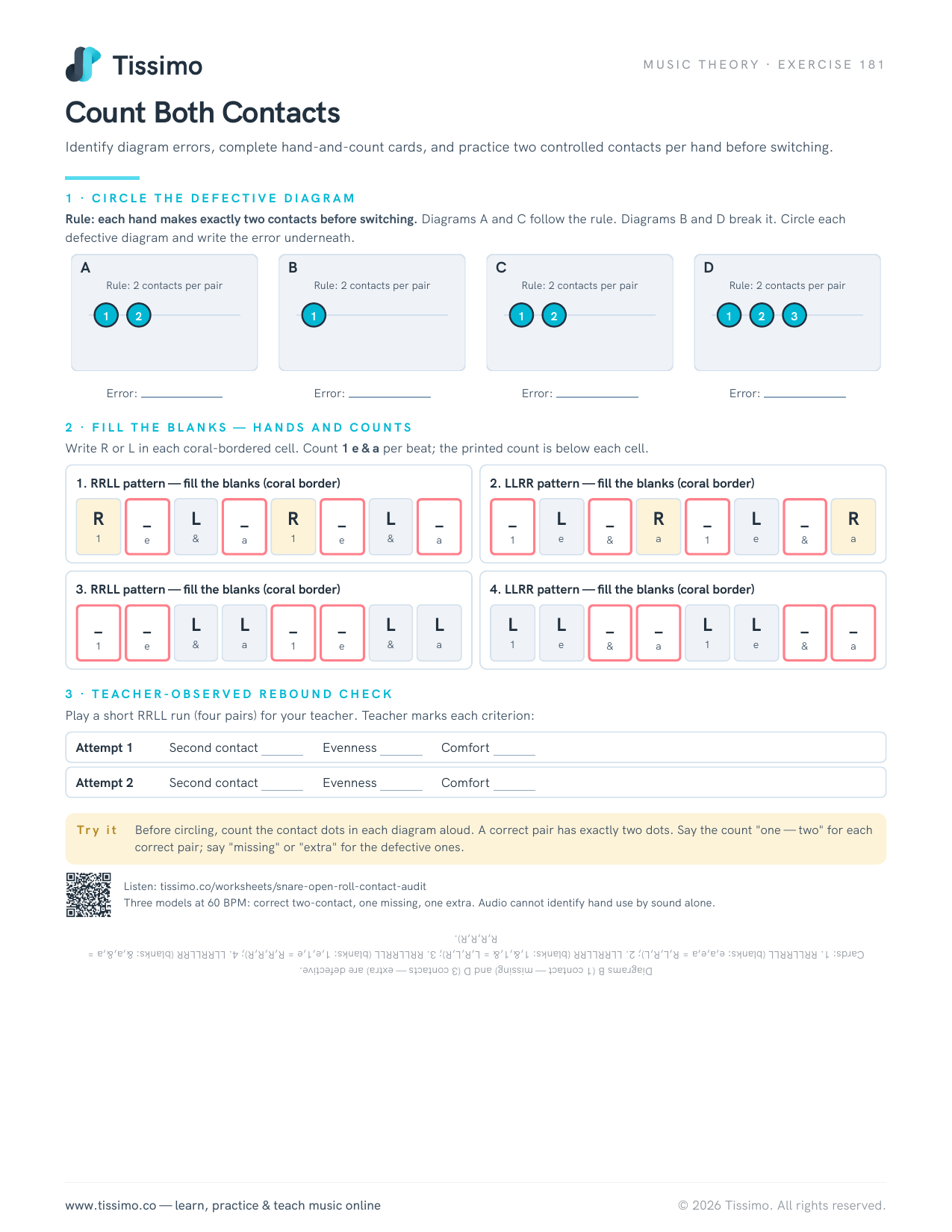 Count Both ContactsIdentify diagram errors, complete hand-and-count cards, and practice two controlled contacts per hand before switching.
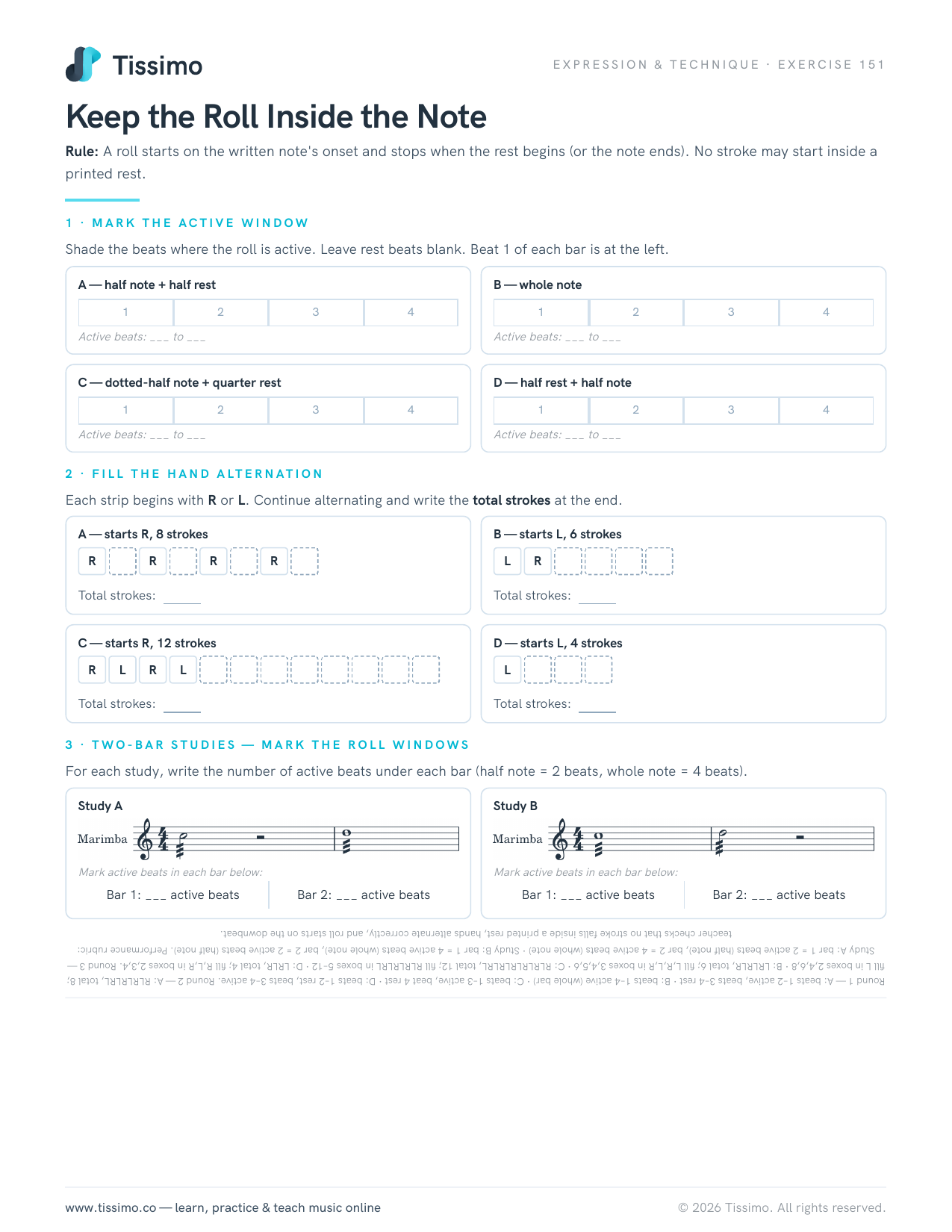 Keep the Roll Inside the NoteRule: A roll starts on the written note's onset and stops when the rest begins (or the note ends). No stroke may start inside a printed rest.
Comments