Technique & Performance
Paradiddle
A paradiddle is a drum rudiment of two single strokes and a double stroke, played R L R R L R L L. Because the double repeats a hand, each group of four starts with the other hand.
A paradiddle is one of the standard drum rudiments: four notes played right, left, right, right, then the mirror image, left, right, left, left. Two single strokes are followed by a double stroke, two notes from the same hand. Drummers call a double stroke a diddle, and the Percussive Arts Society (PAS) files the paradiddle among its "diddle rudiments".
How it looks on the page
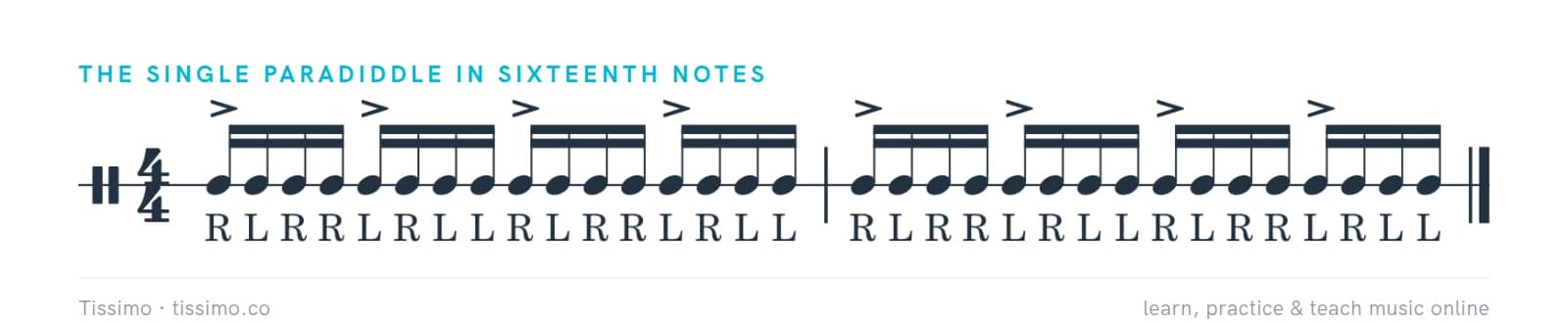
The PAS rudiment sheet writes the single paradiddle as sixteenth notes, R L R R L R L L, with an accent on the first note of each group of four. The hands are printed under the notes, because the rhythm alone looks like any run of even sixteenth notes.
Why the leading hand changes
The double at the end of each group (R R or L L) is what makes the pattern useful. It hands the next group to the other hand, so the accent and the start of the group alternate between right and left without you thinking about it. That trains both hands to lead equally, and it lets you move between two drums or cymbals while the hands keep a steady pattern.
How to practice it
- Start slowly with a metronome. Make every unaccented note the same low height and volume; play the accents from a higher stick height.
- Say the sticking aloud as you play: "right, left, right, right; left, right, left, left".
- Go from slow to fast and back. PAS advises practicing every rudiment open (slow) to closed (fast) to open, or at an even, moderate march tempo.
- Move it around. Once it is even on a pad or snare drum, play the right hand on one drum and the left on another, then try it on the drum kit.
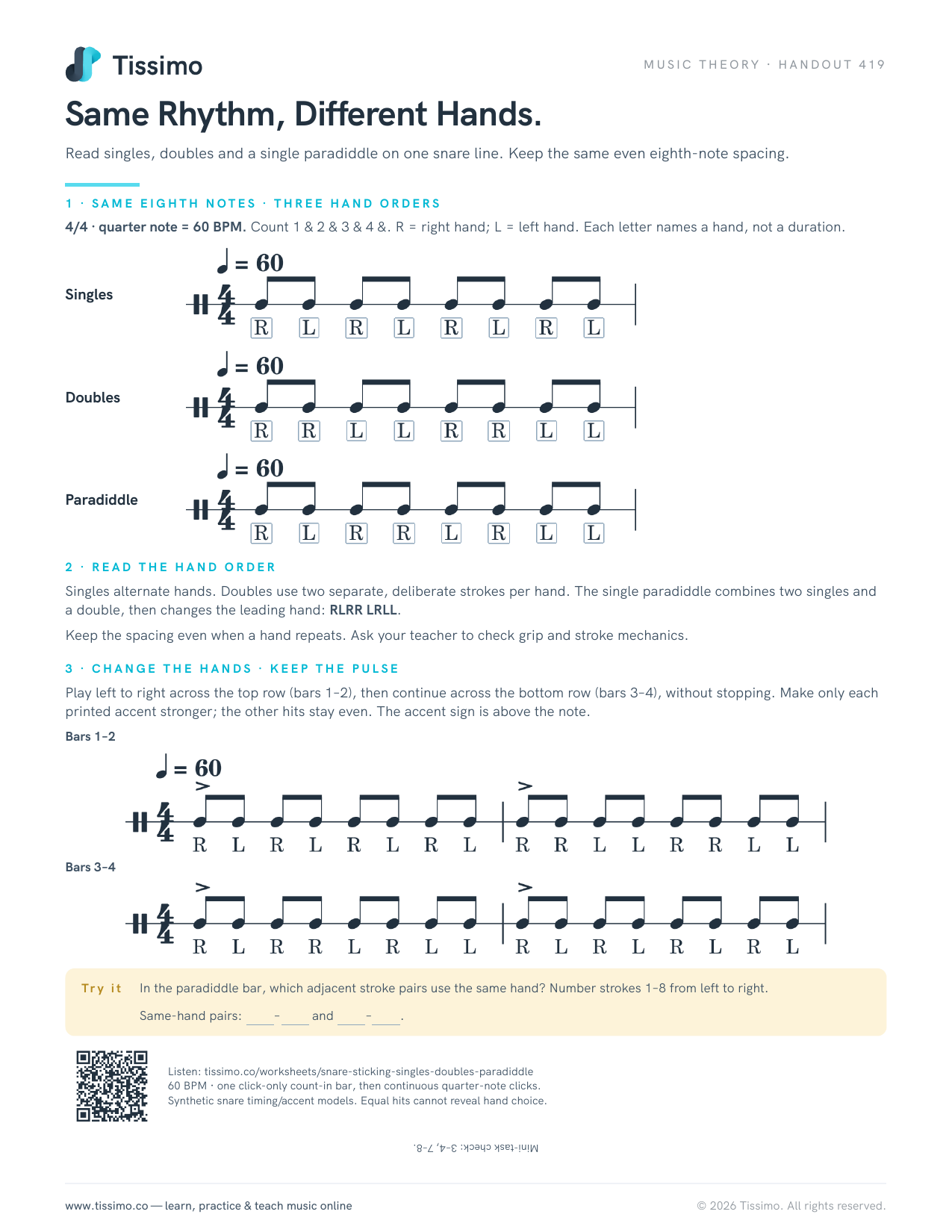
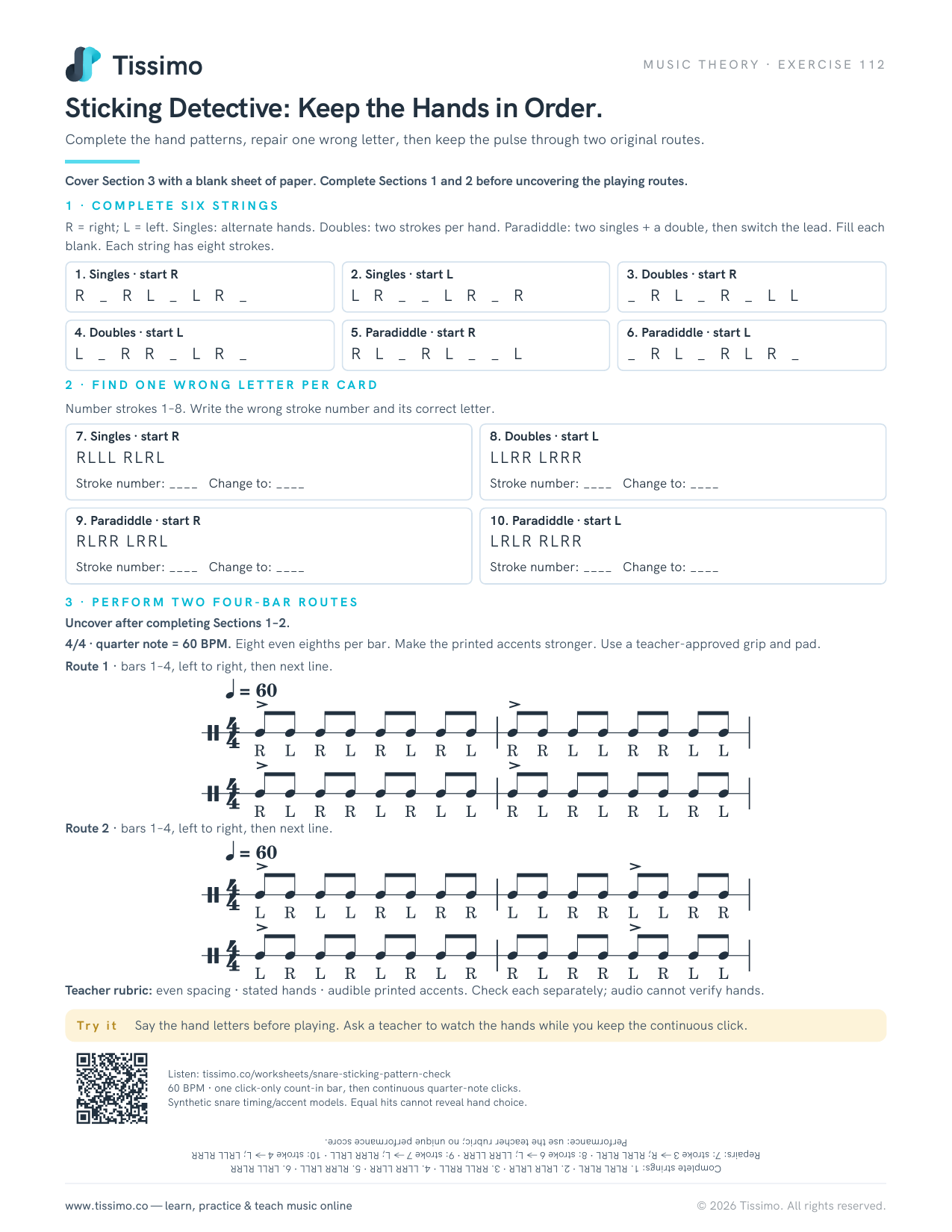
Same Rhythm, Different Hands puts the paradiddle next to single and double strokes, and Sticking Detective checks your hand order.
The paradiddle family
The PAS list of 40 rudiments has four diddle rudiments: the single paradiddle (R L R R L R L L), the double paradiddle (R L R L R R L R L R L L), the triple paradiddle (R L R L R L R R, then the mirror image) and the single paradiddle-diddle (R L R R L L). In the flam family, the flam paradiddle puts a flam on the first note of each group.
Paradiddle or single strokes?
Played without accents, a paradiddle and a single-stroke run sound almost the same: even notes at the same speed. The difference is in the hands, which is why drum music writes the sticking out. With the accents in, the paradiddle has its own sound: a strong note at the start of every group of four, alternating hands.
Common questions
What is the sticking for a paradiddle?
R L R R L R L L: right, left, right, right, then left, right, left, left. The first note of each group of four is usually accented, so the accent moves from the right hand to the left and back.
What is the difference between a paradiddle and a double paradiddle?
A double paradiddle adds two more single strokes before the double: R L R L R R, then L R L R L L. Each half has six notes instead of four.
Comments