Technique & Performance
Flam
A flam is a drum rudiment in which a soft grace note from one hand falls just before a louder main stroke from the other, so the two sound like one broad, thick note.
A flam is two strokes that almost land together. A quiet grace note from one hand arrives a split second before the louder main note from the other hand. The main note is the one on the beat; the grace note only thickens its start. It gives its name to one of the four families of drum rudiments on the Percussive Arts Society (PAS) list.
How it looks on the page
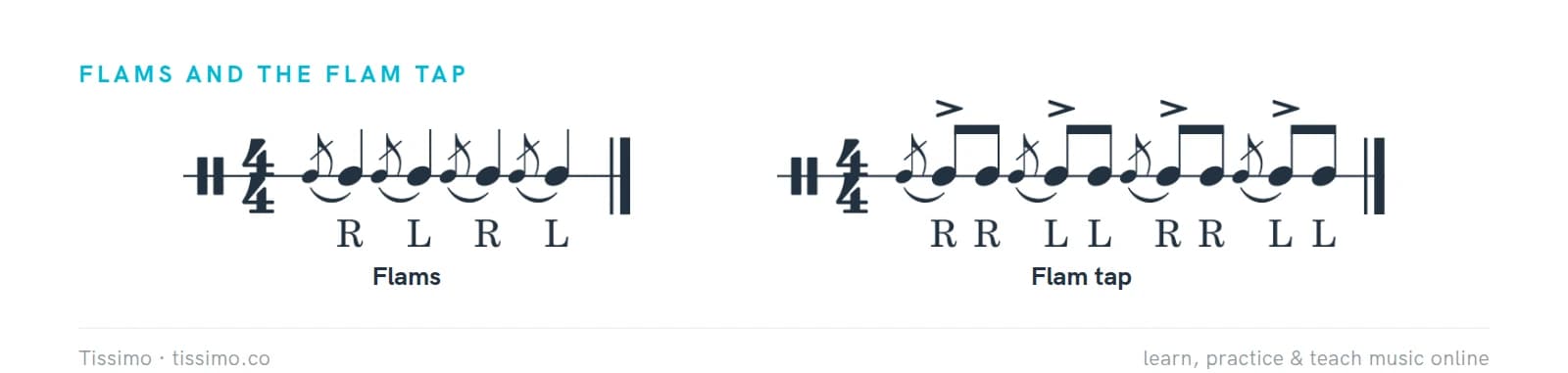
A flam is written as a small grace note slurred to the main note. The PAS rudiment sheet prints it with a slash through its stem and flag, the way an acciaccatura is printed. The grace note takes no time in the bar. Under the notes, the PAS sheet prints the grace hand as a smaller letter in front of the main hand's letter; this entry writes that as lR, a flam with the right hand on the beat and the left hand's grace just before it. The example prints only the main hand, as the worksheet Before the Beat: Your First Flam does; the grace always comes from the other hand.
How to play one
- Set the heights first. Hold the grace-note stick low, close to the head, and the main stick high. On a drum, most of the volume comes from the height of the stroke.
- Let the low stick land first. It should be just ahead of the high one, near enough to sound like one note.
- Check the spacing. If both sticks land together, you hear one loud flat note; if the grace comes too early, you hear two separate notes.
- Alternate. Practice lR, then rL, so that both hands can play the main note.
Which Hand Arrives First? drills the grace hand and its place just before the beat.
The flam rudiments
PAS lists eleven flam rudiments, from the flam itself to patterns such as the flamacue and the pataflafla. Two to start with:
- Flam tap: a flam, then a tap with the same hand as the main note: lR R, rL L.
- Flam accent: a group of three even notes, the first one flammed and accented: lR L R, rL R L.
The flam paradiddle adds a flam to the first note of a paradiddle.
Flam, drag or acciaccatura?
A drag has two grace notes from one hand before the main note, not one from the other hand. On a piano or a violin, a single grace note before the beat is an acciaccatura: a separate, pitched note from the same hand. The two signs look alike; the difference is in the playing. A drum flam is two hands making one sound.
Common questions
What is a flam on drums?
Two strokes from different hands that land almost together: a quiet grace note just before a louder main note on the beat. Played well, they sound like one thick note.
What is the difference between a flam and a drag?
A flam has one grace note, from the hand that does not play the main note. A drag has two quick grace notes from one hand before the main note.
Practice it: free worksheets
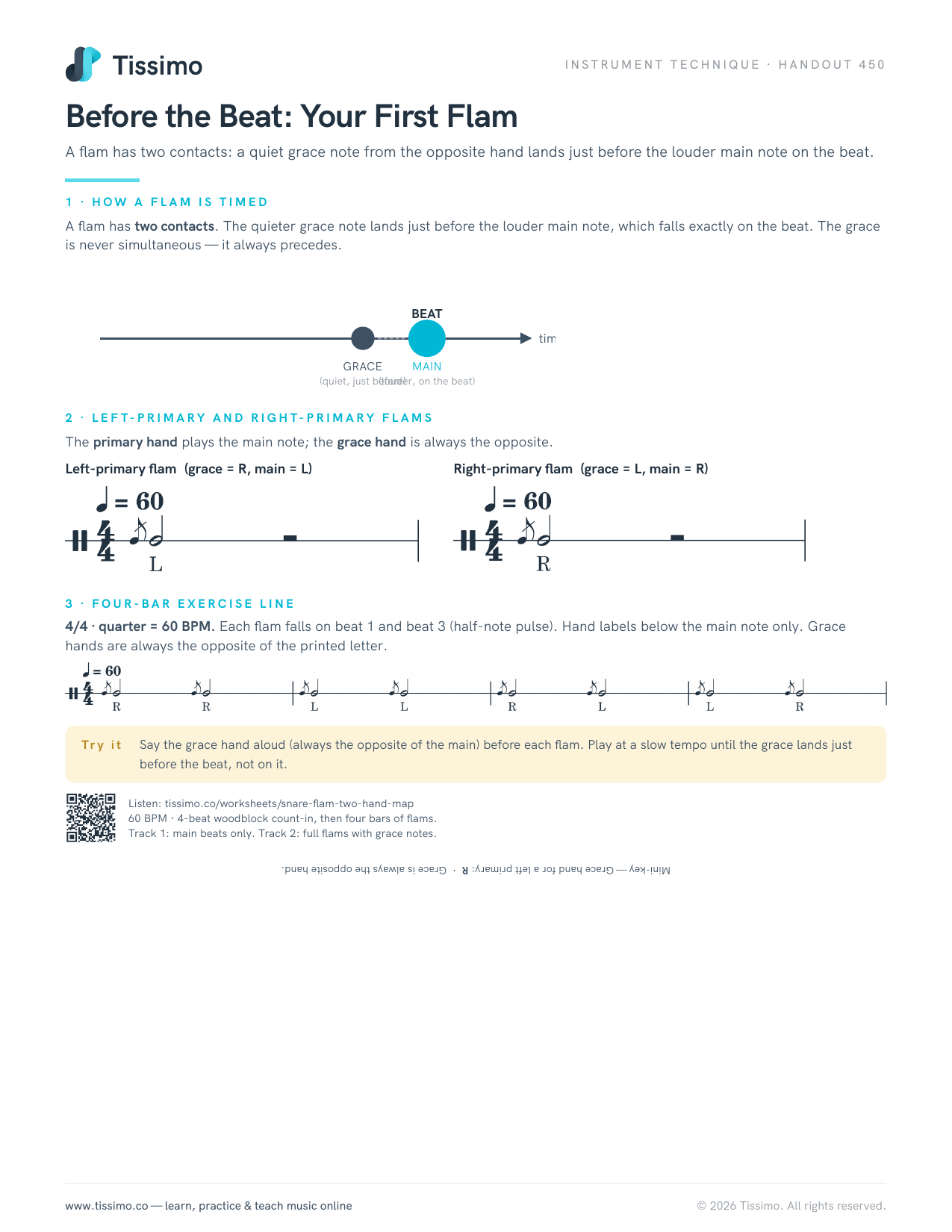 Before the Beat: Your First FlamA flam has two contacts: a quiet grace note from the opposite hand lands just before the louder main note on the beat.
 Which Hand Arrives First?For every flam, one hand is the primary (louder, on the beat) and the other is the grace (quieter, just before). These exercises test both.
Comments