Tempo Markings
Incalzando
Pronounced een-kahl-TSAHN-dohWritten as incalz.
Incalzando, written incalz., means 'chasing' or 'pressing on': gradually get faster, as if the music were hurrying after something. It is a close relative of stringendo.
Incalzando means "chasing" or "pressing on", from the Italian incalzare, to pursue closely. Written incalz., it asks for a gradual increase in speed, with the music pressing forward as if it were chasing something.
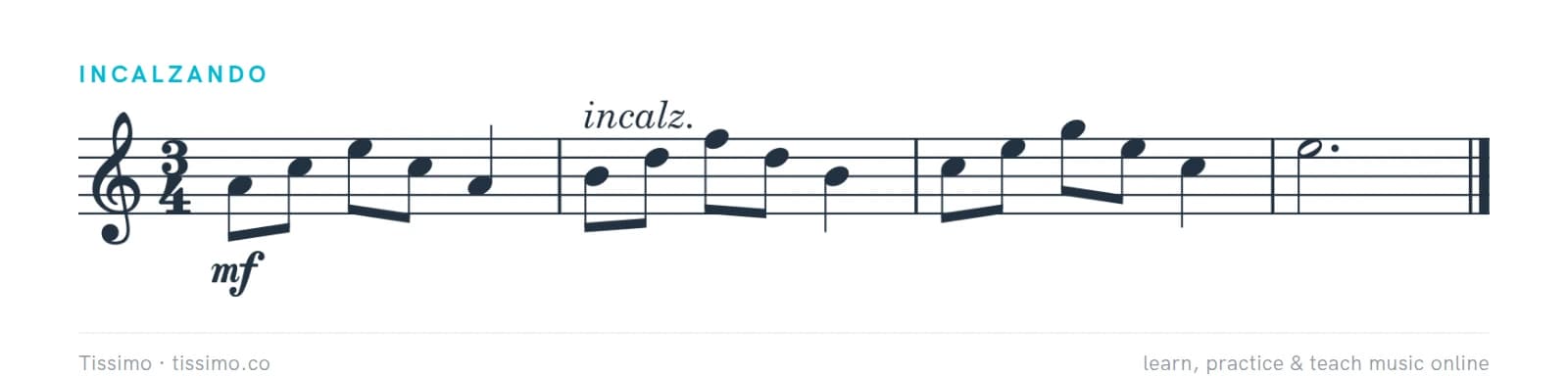
How it looks on the page
Incalzando is printed above the staff where the quickening begins. It ends where a new tempo word or a tempo appears, or at the climax it leads to.
How it differs from its relatives
Several Italian words ask you to speed up gradually, and the difference between them is mostly one of flavor:
- Accelerando: get faster, the neutral word.
- Stringendo: squeeze, press forward with growing tension.
- Incalzando: chase, press on.
- Affrettando: hurry.
Some references add that incalzando grows more vehement as well as faster, and it may come with a crescendo, but the word itself is about speed. If the composer wants louder, the dynamics will say so. The combination incalzando e stringendo is glossed as growing more vehement and more rapid.
Playing incalzando
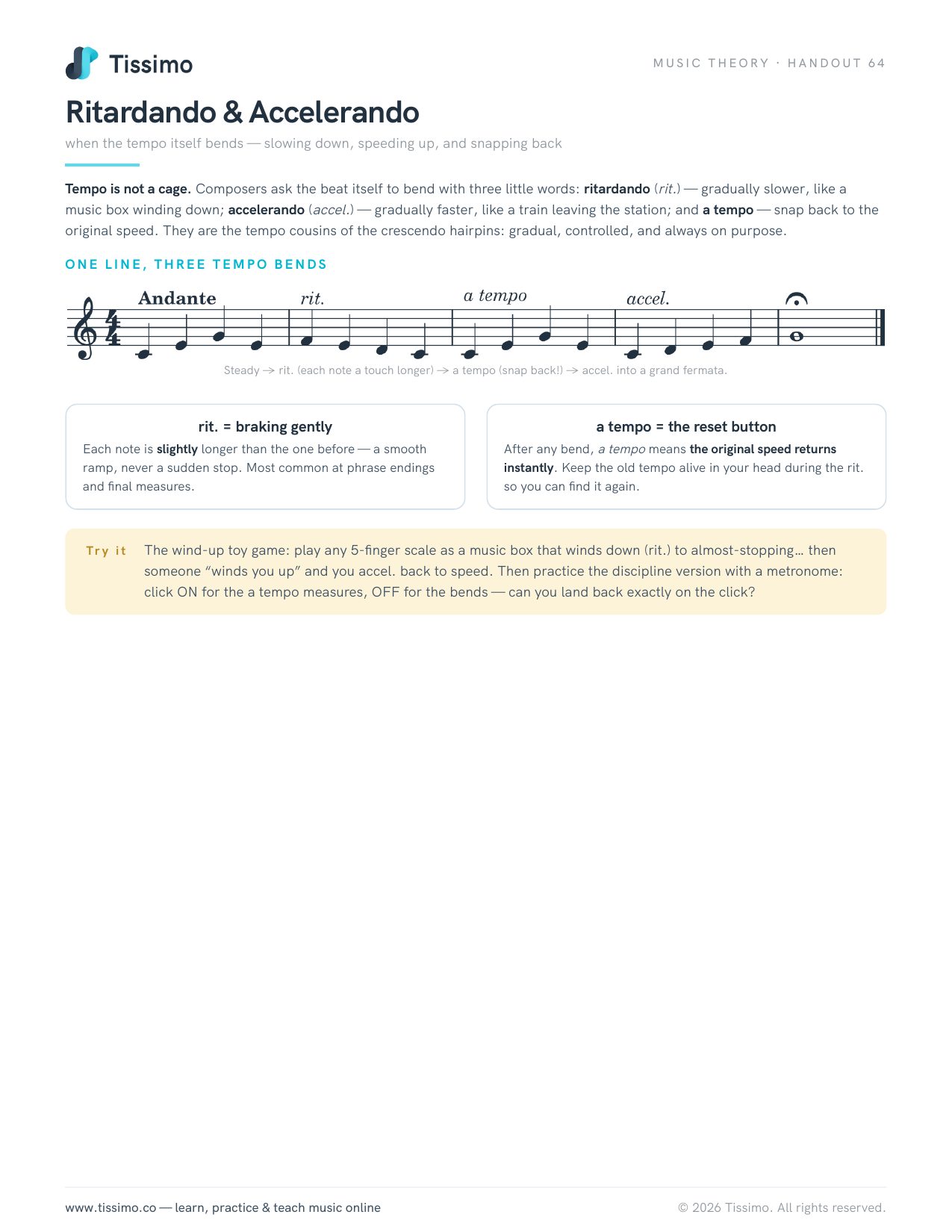
Plan the arrival: know how fast you will be at the end, and spread the quickening across the passage so it does not jump. Keep the pulse clear while it rises, and feel each beat lean toward the next. Ritardando & Accelerando practices the gradual change on its own.
Common questions
What is the difference between incalzando and stringendo?
Very little: both press the tempo forward gradually. Stringendo suggests squeezing and tension, incalzando chasing. Some references add that incalzando grows more vehement, but the dynamics will tell you if it should get louder.
Comments