Tempo Markings
Affrettando
Pronounced ahf-fret-TAHN-doh
Affrettando means 'hurrying': gradually speed up, with a sense of haste. It is close to accelerando and stringendo, and the opposite of rallentando.
Affrettando means "hurrying", from the Italian affrettare, to hurry. It asks you to quicken the tempo gradually, with a feeling of haste or eagerness. Affrettato, "hurried", is a related form.
How it looks on the page
Affrettando is printed in italics above the staff where the hurrying begins. Like the other gradual changes it lasts until a new instruction, such as a tempo, a new tempo word, or the end of the phrase.
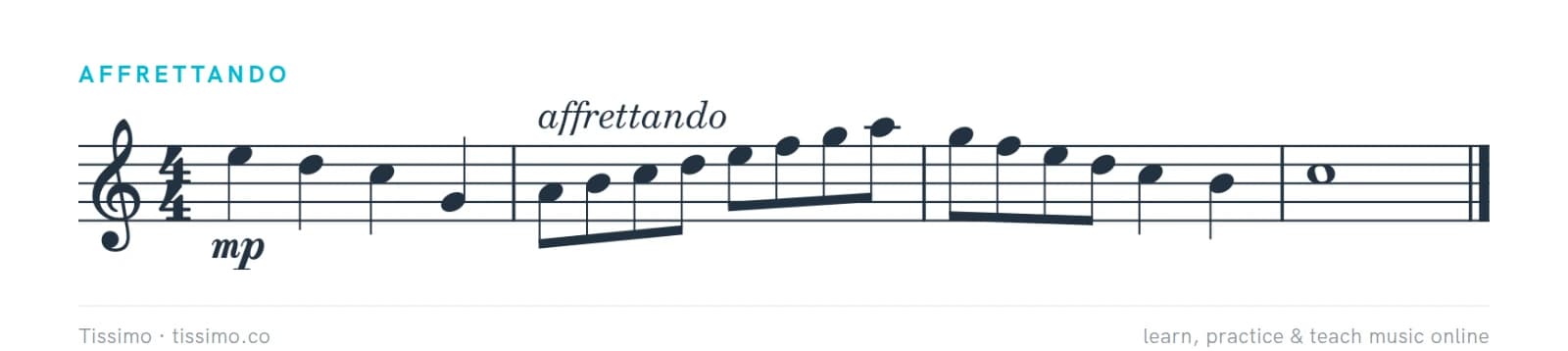
Affrettando and its relatives
Accelerando is the neutral word for getting faster. Stringendo adds tension, and incalzando a sense of chasing. Affrettando adds haste: the music seems eager to get somewhere. Dictionaries define these words with one another, so treat the differences as shades of character, not as rules. A sudden change, rather than a gradual one, would be più mosso.
Playing affrettando
- Start on time. The hurrying begins at the marking, not before.
- Hurry, don't scramble. Each beat comes a little sooner, but the rhythm inside the beat stays even.
- Know where it ends. Hurrying usually leads to an arrival; aim the last notes at it.
The opposite is rallentando, gradually slowing down. Practice both directions with Ritardando & Accelerando.
Common questions
What does affrettando mean in music?
"Hurrying": speed up gradually, with a sense of haste. It is close in meaning to accelerando and stringendo.
Comments