Rhythm & Meter
Dotted Half Note
A dotted half note is a half note with a dot after it. It lasts three quarter-note beats, two for the half note and one for the dot: exactly one full bar of 3/4.
A dotted half note is a half note with an augmentation dot written just to the right of its notehead. The dot adds half of the note's own value. A half note lasts two quarter-note beats, half of that is one beat, so a dotted half note lasts three beats. In British English it is called a dotted minim.
It is the longest single note that fits in a bar of 3/4, so phrases in triple meter, such as waltzes and minuets, often come to rest on one.
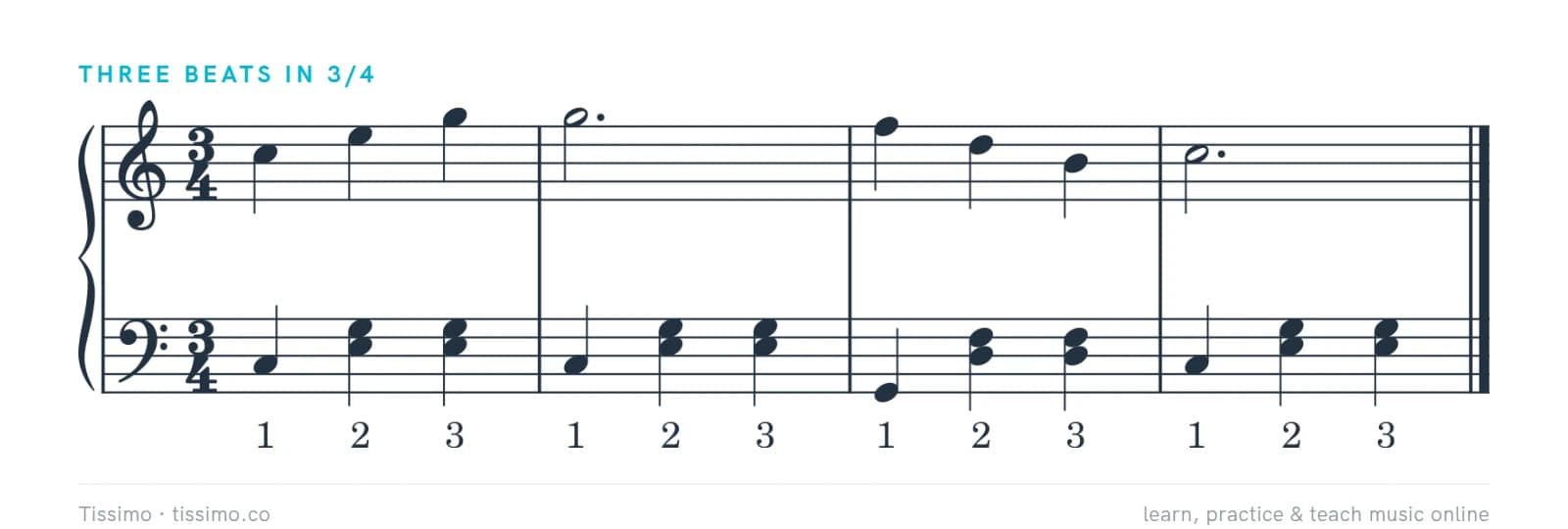
How to count it
Play the note on its first beat and hold it through two more: "1-2-3". Keep counting while you hold, so the next note starts exactly on the following beat and not a little early. In 4/4 a dotted half note often starts on beat 1 and is held through beat 3, which leaves one beat for another note or a rest.
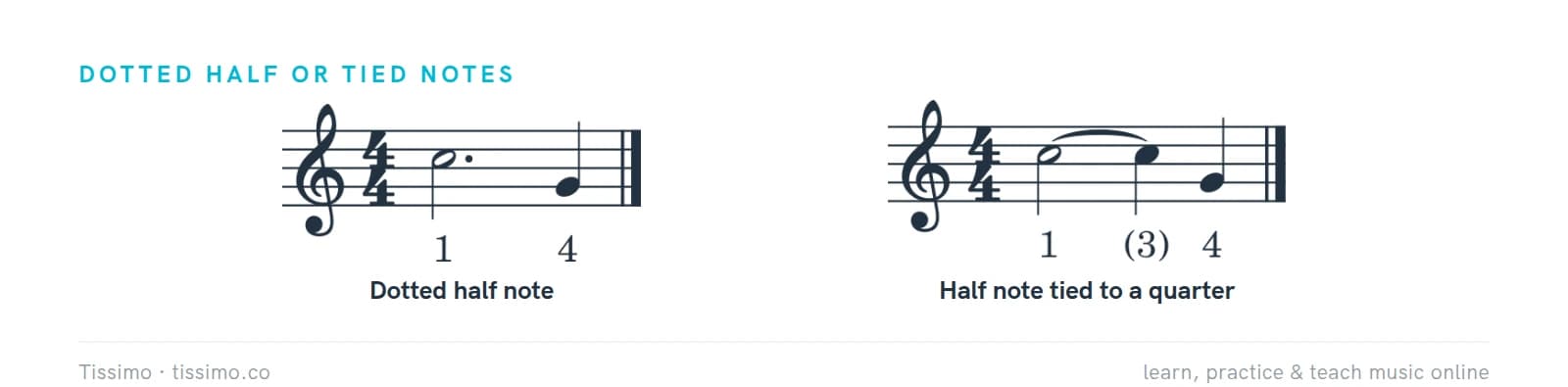
A dot instead of a tie
A dotted half note sounds exactly like a half note tied to a quarter note. The dot is simply the shorter way to write it, and notation guides generally prefer the dot wherever it can be used, because fewer symbols are quicker to read.
In other meters
The dot always adds half, but the number of beats depends on the time signature:
- In 3/4 and 4/4 it lasts three beats.
- In 6/8 it fills the whole bar: two dotted-quarter beats (see compound meter).
- In cut time (2/2) it lasts one and a half beats, because there the half note is the beat.
Watch out for
When the notehead sits on a line, the dot is placed in the space just above it, so look slightly higher than the notehead to find it. A dot directly above or below the notehead is a staccato mark, not an augmentation dot.
Rests follow their own conventions. A completely silent bar of 3/4 takes a whole rest, not a dotted half rest, and three silent beats in 4/4 are normally written as a half rest plus a quarter rest.
Practice the value with The Dotted Half Note and review The Half Note. See how 3/4 works in Time Signatures I: Simple Time, and count through long notes in Write the Counts.
Common questions
How many beats is a dotted half note?
Three beats when the quarter note gets the beat, as in 3/4 and 4/4: two for the half note and one for the dot. In 6/8 it fills a whole bar, and in cut time it lasts one and a half beats.
Is a dotted half note the same as three quarter notes?
It lasts as long as three quarter notes, but it is one sound held for three beats, not three separate notes. A half note tied to a quarter note sounds the same as a dotted half note.
Practice it: free worksheets
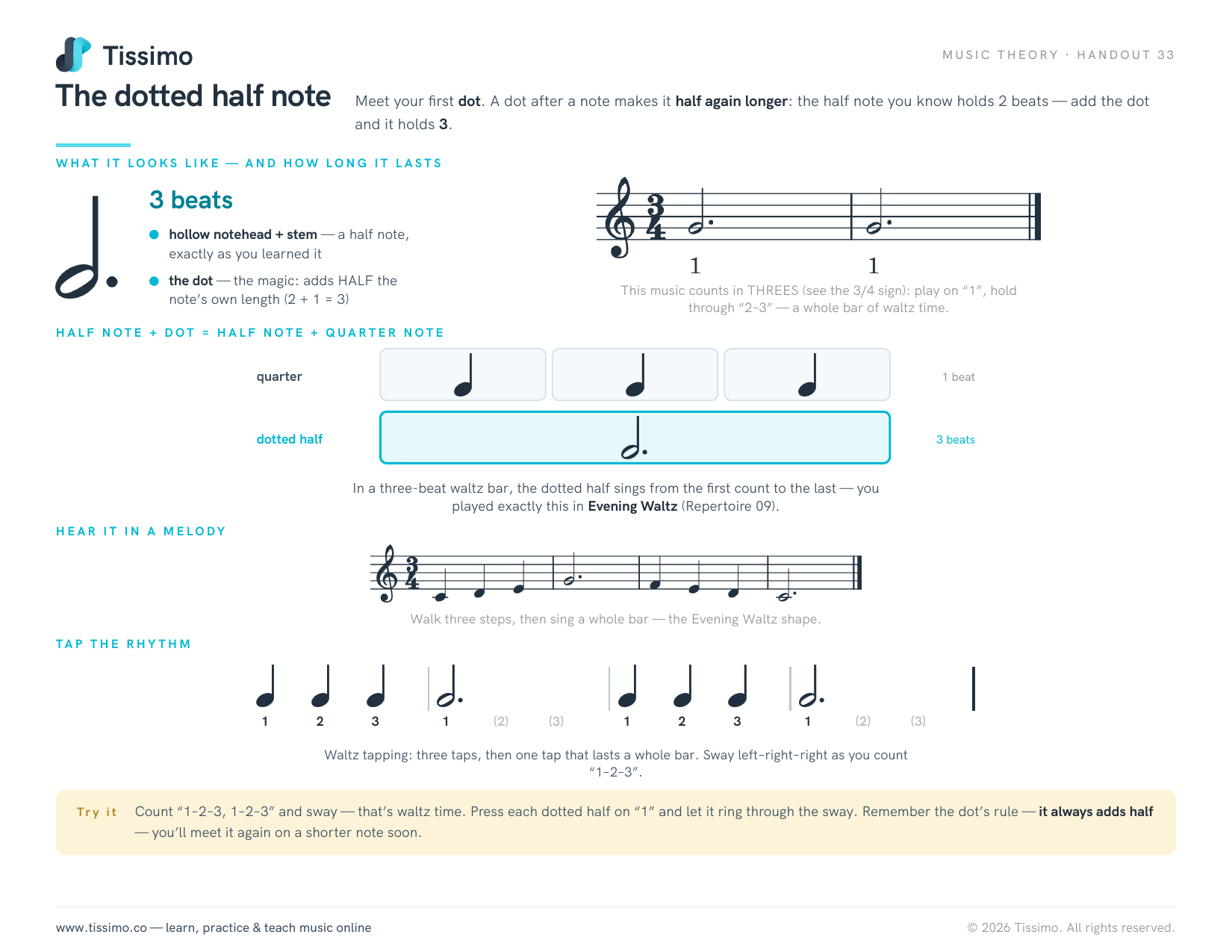 The dotted half noteMeet your first dot. A dot after a note makes it half again longer: the half note you know holds 2 beats — add the dot and it holds 3.
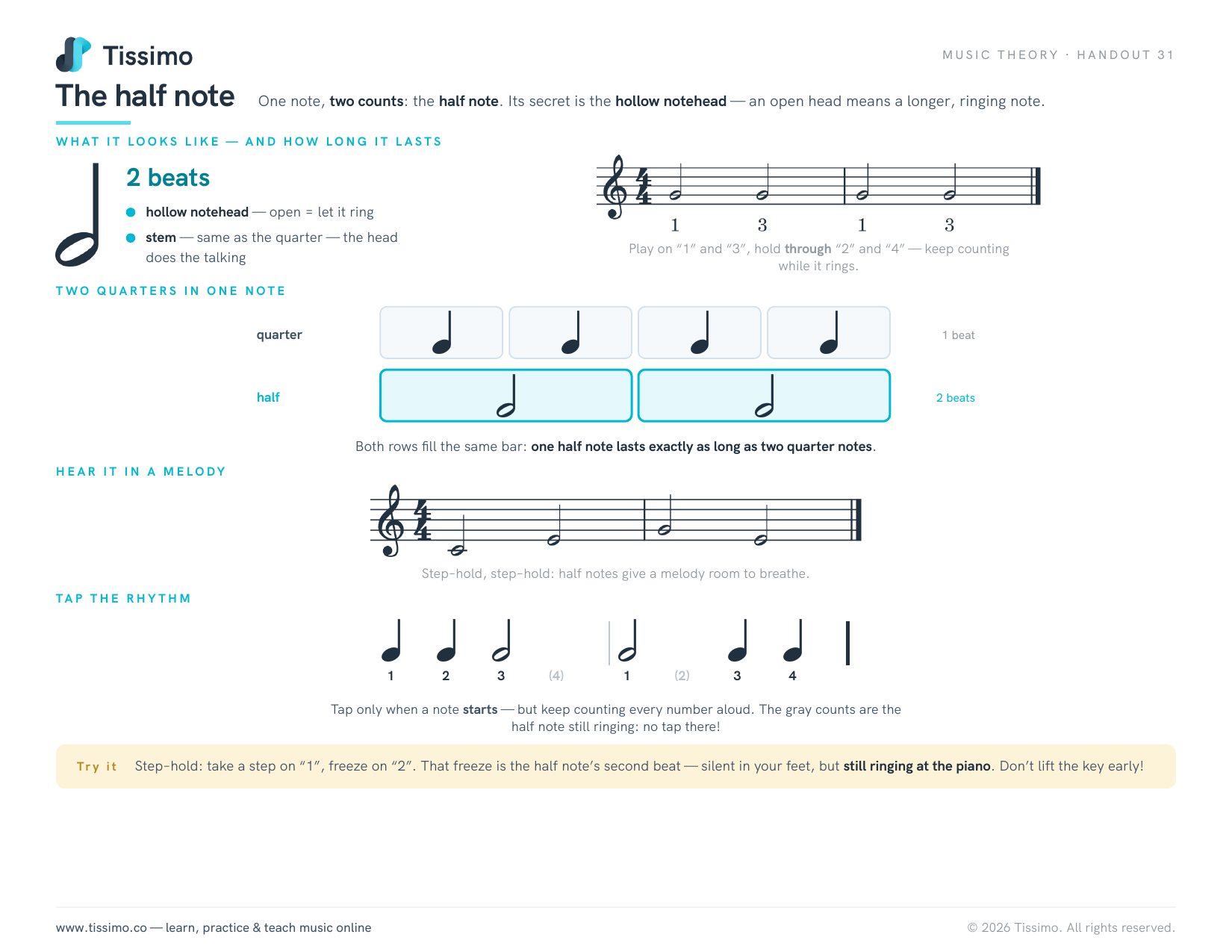 The half noteOne note, two counts: the half note. Its secret is the hollow notehead — an open head means a longer, ringing note.
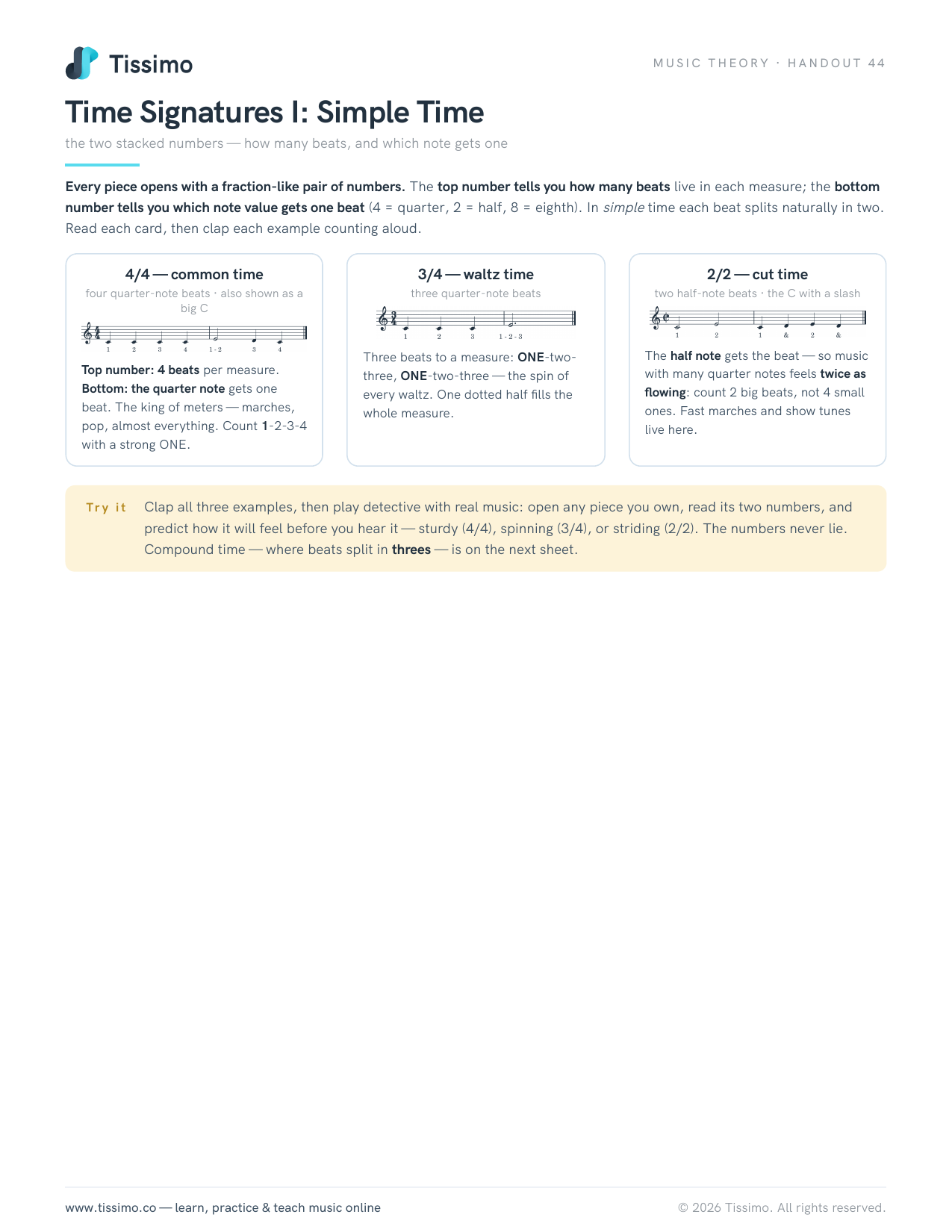 Time Signatures I: Simple Timethe two stacked numbers — how many beats, and which note gets one
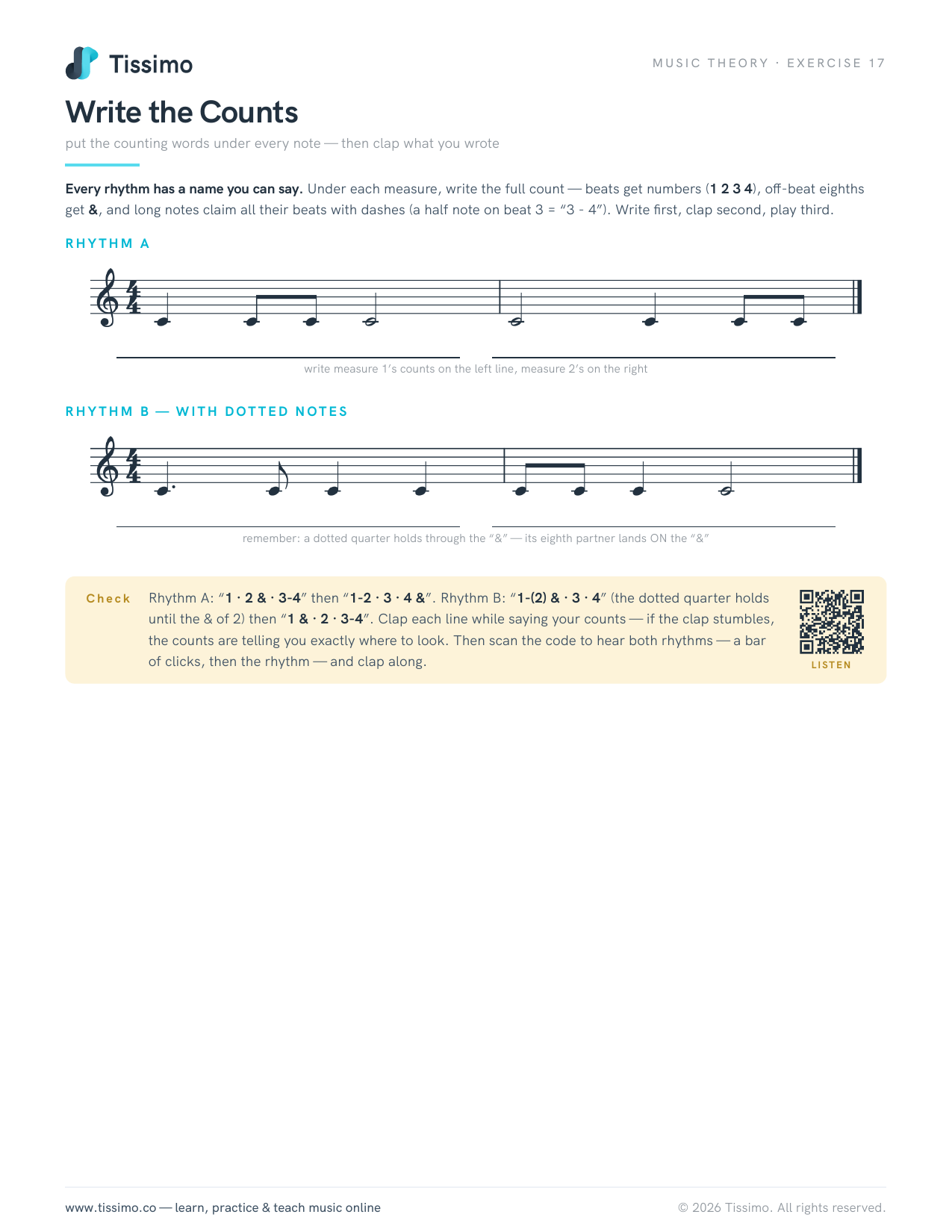 Write the Countsput the counting words under every note — then clap what you wrote
Comments