Instruments & Voices
Cornet
Pronounced kor-NET
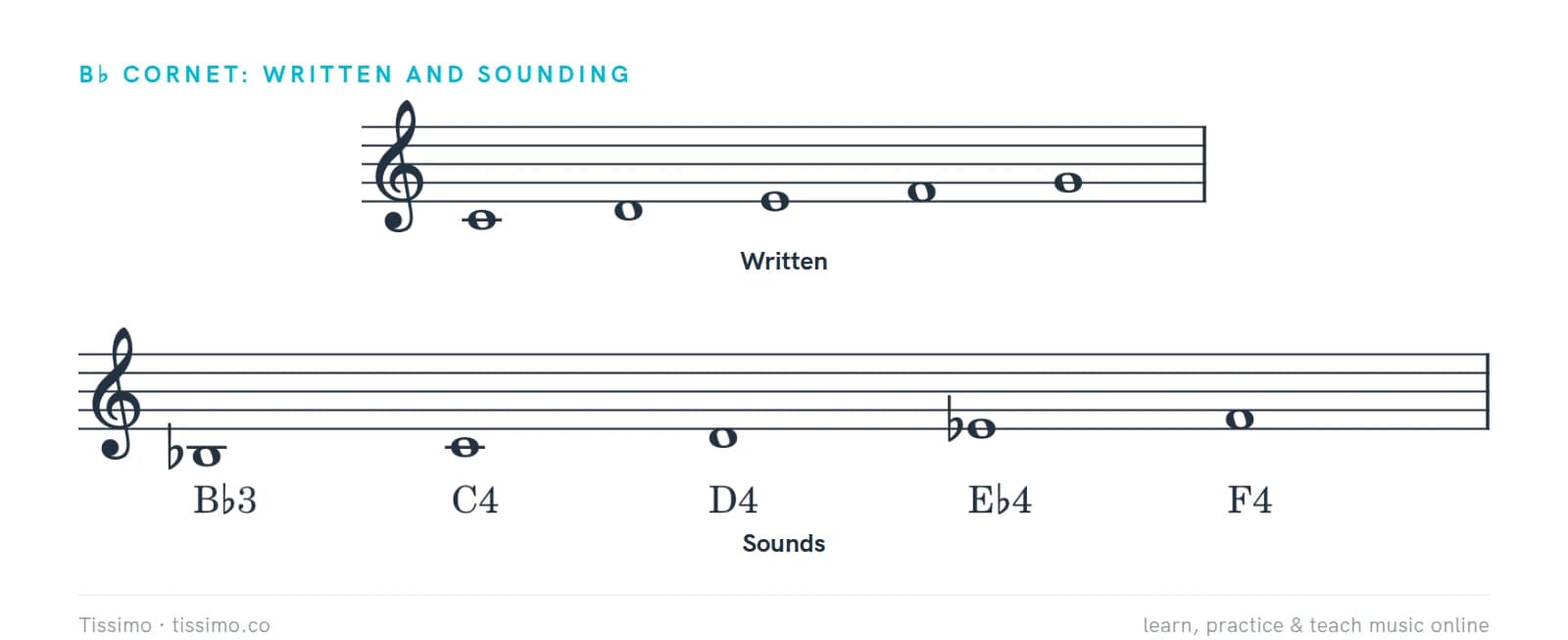
The cornet is a valved brass instrument in B-flat, more compact than the trumpet, with a more conical bore and a mellower tone. It uses the trumpet's fingerings and sounds a major second lower than written.
The cornet is a member of the brass family that looks like a trumpet with its tubing wound more tightly, so it is shorter and easier to hold. It has the same three valves and fingerings, but about two-thirds of its tubing is conical, widening gradually toward the bell, and it uses a deeper mouthpiece. Its tone is warmer and mellower than the trumpet's, with less bite. Its French name, cornet à pistons, refers to its piston valves.
Written and sounding pitch
The usual cornet is in B♭ and reads treble clef parts written a major second above concert pitch: written C sounds B♭, and a written C major scale sounds as a B♭ major scale. Its written range is the trumpet's, from about F♯3 to C6. Brass bands also use a smaller soprano cornet in E♭, pitched a perfect fourth higher.
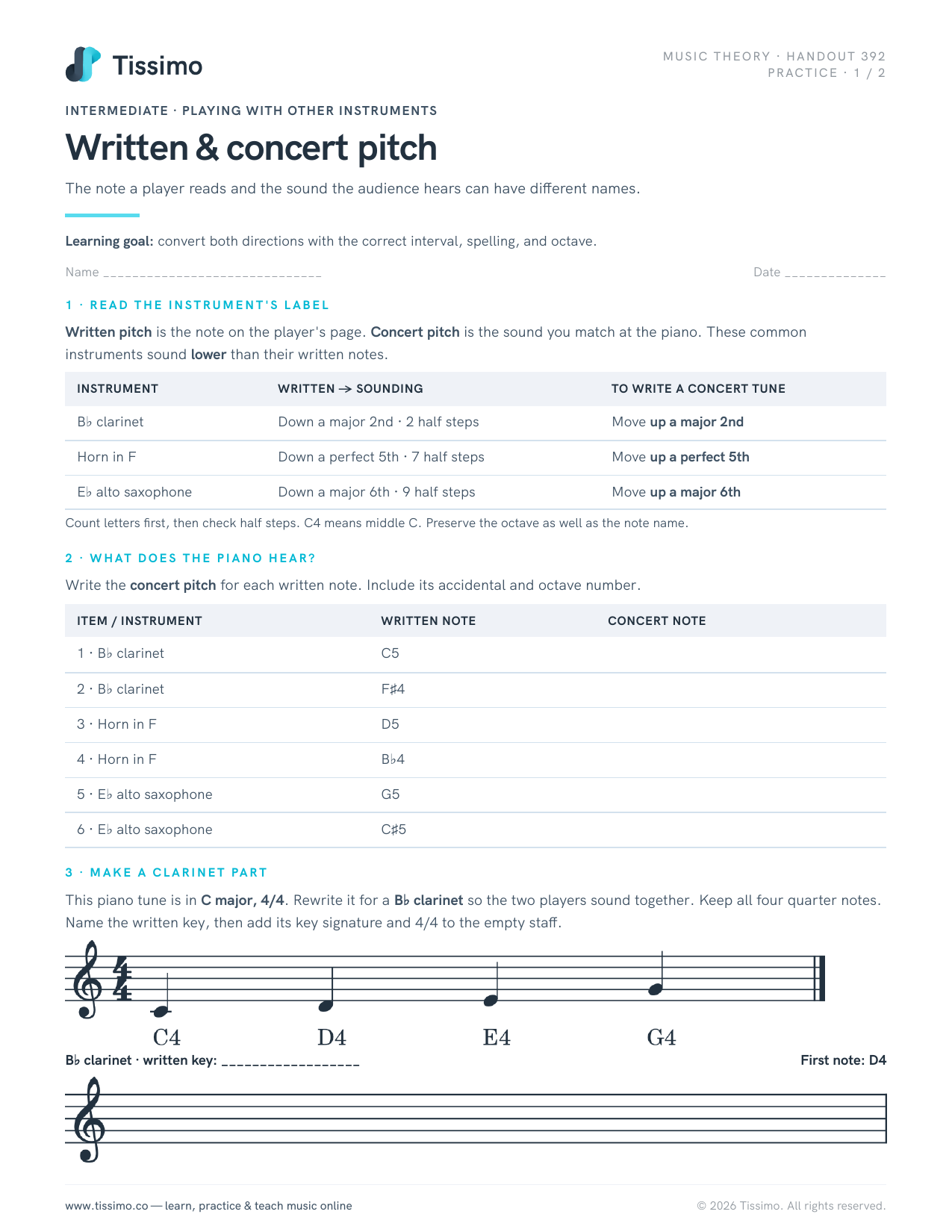
To practice turning cornet notes into concert pitch, use Written & Concert Pitch.
The cornet in bands
The cornet is the lead voice of the British-style brass band. A full band has one E♭ soprano cornet, four solo cornets, a repiano cornet, and second and third cornets, two each. In concert bands and some orchestral music there are separate cornet and trumpet parts, but cornet parts are often played on trumpets.
A common confusion
The cornet is not the cornett (two t's), a Renaissance and Baroque wind instrument with finger holes. The two are unrelated apart from the name. And although cornet and trumpet parts are interchangeable on paper, the instruments are not identical in sound: a band that asks for cornets wants their softer, rounder tone.
Common questions
What is the difference between a cornet and a trumpet?
Both are B♭ brass instruments with the same fingerings and written range. The cornet is more compact, its tubing is more conical and its mouthpiece deeper, so it sounds mellower; the trumpet's mostly cylindrical tubing gives a brighter, more brilliant sound.
Can a trumpet player play a cornet part?
Yes. The notes and fingerings are the same, and cornet parts are often played on trumpet. The sound will be brighter than the composer may have intended.
Comments