Notation & Symbols
Volti Subito (V.S.)
Pronounced VOHL-tee SOO-bee-tohWritten as V.S.
Volti subito, abbreviated V.S., is Italian for "turn quickly". Written at the bottom right of a page, it warns that the music continues straight onto the next page, so you must turn the page at once.
Volti subito means "turn quickly". You find it, almost always as V.S., at the bottom right-hand corner of a page of music, after the last bar. It tells you that the music continues on the next page with little or no rest, so the page turn has to be fast.
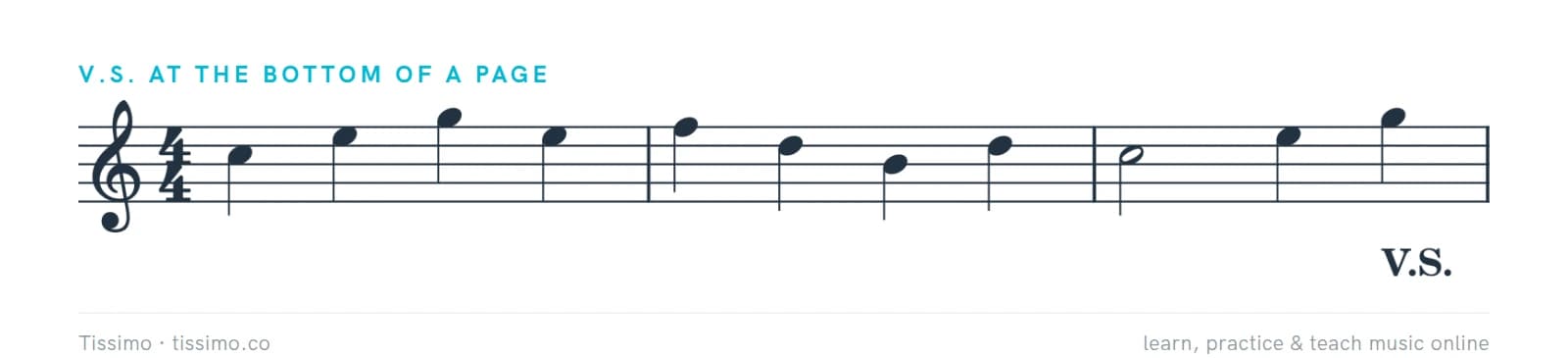
Printed or penciled
Some editions print V.S., and some publishers' house styles set it in bold capitals so it catches the eye. Often, orchestral and band players pencil it into their own parts as a reminder. Writing it in is part of preparing a part: when you see that a page ends in the middle of a busy passage, mark V.S. and plan the turn before the rehearsal.
Making a quick turn
- Memorize the last bar or two before the turn, so your eyes and one hand are free.
- Glance at the first bar of the next page in advance, if you can, and keep it in your head while you turn.
- Turn as early as the music allows, during a rest or a long note, rather than at the last moment.
- On music stands with loose sheets, check that the pages turn easily before you play.
In an ensemble, look for a rest just before or after the turn. A good part is laid out so that turns fall during rests; V.S. warns you when that was not possible.
Volti, volta and subito
Volti (turn) is not volta (time): the prima volta and seconda volta of first and second endings mean "first time" and "second time". And subito on its own, as in subito p, has nothing to do with pages; see subito. Signs that send you to another place in the music, such as da capo, dal segno or a coda, are road signs within the piece, while V.S. only tells you to turn the page.
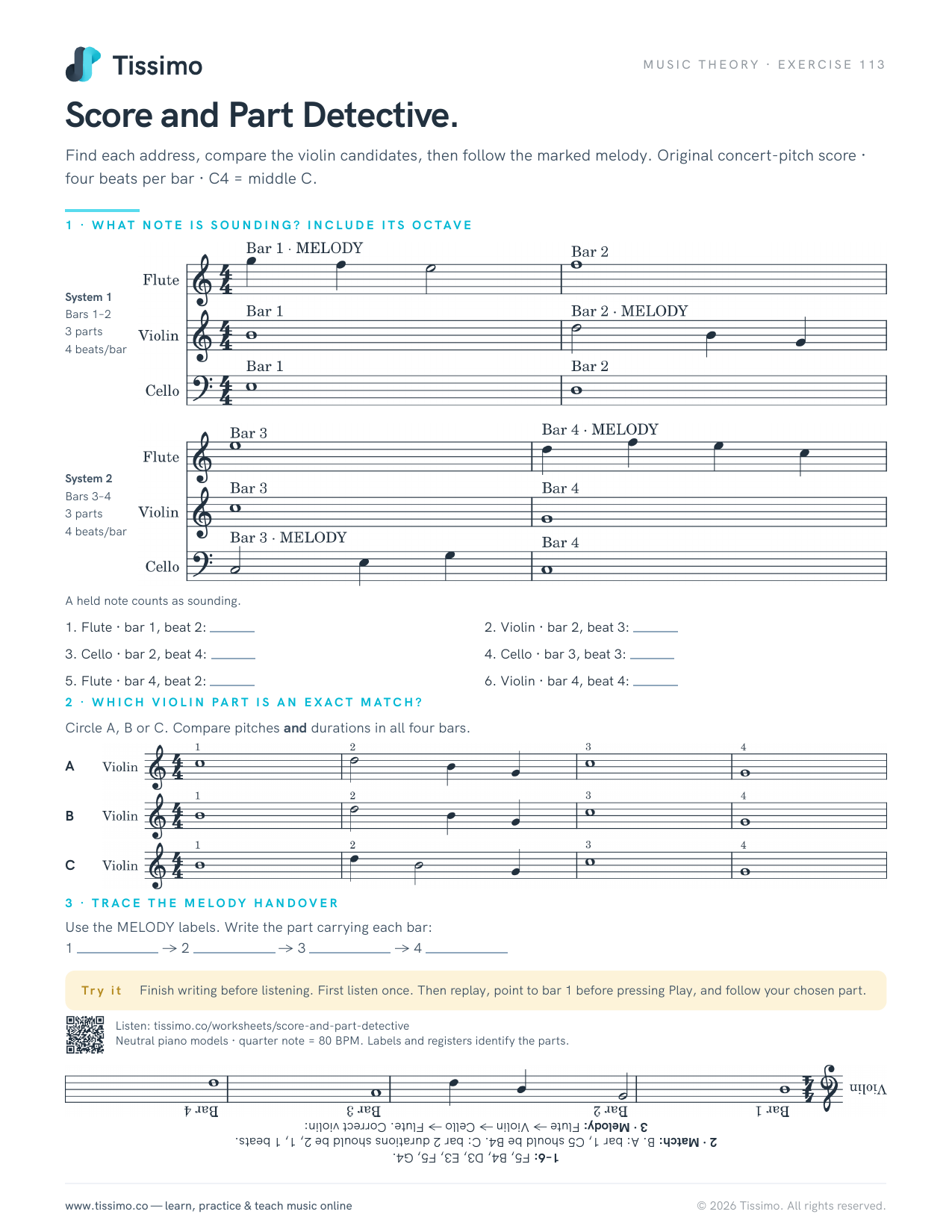
Practice finding your place in a score and its parts in Score and Part Detective.
Common questions
What does V.S. mean at the bottom of a page of music?
It stands for volti subito, Italian for "turn quickly": the music goes straight on at the top of the next page, so turn the page without delay.
Comments