Tempo Markings
Senza
Pronounced SEN-tsah
Senza is Italian for 'without'. It rules out the word after it: senza rit. means don't slow down, senza Ped. means no pedal, and senza sordino means without the mute, or, in Beethoven's piano music, without the dampers.
Senza means "without". It never stands alone: it rules out whatever comes after it. Often that is a habit you might fall into, such as slowing down at a cadence, or something you were using a moment ago, such as a mute or the pedal. It is printed in italics where it applies: above the staff with tempo words, below it with dynamics and pedaling.
Common senza markings
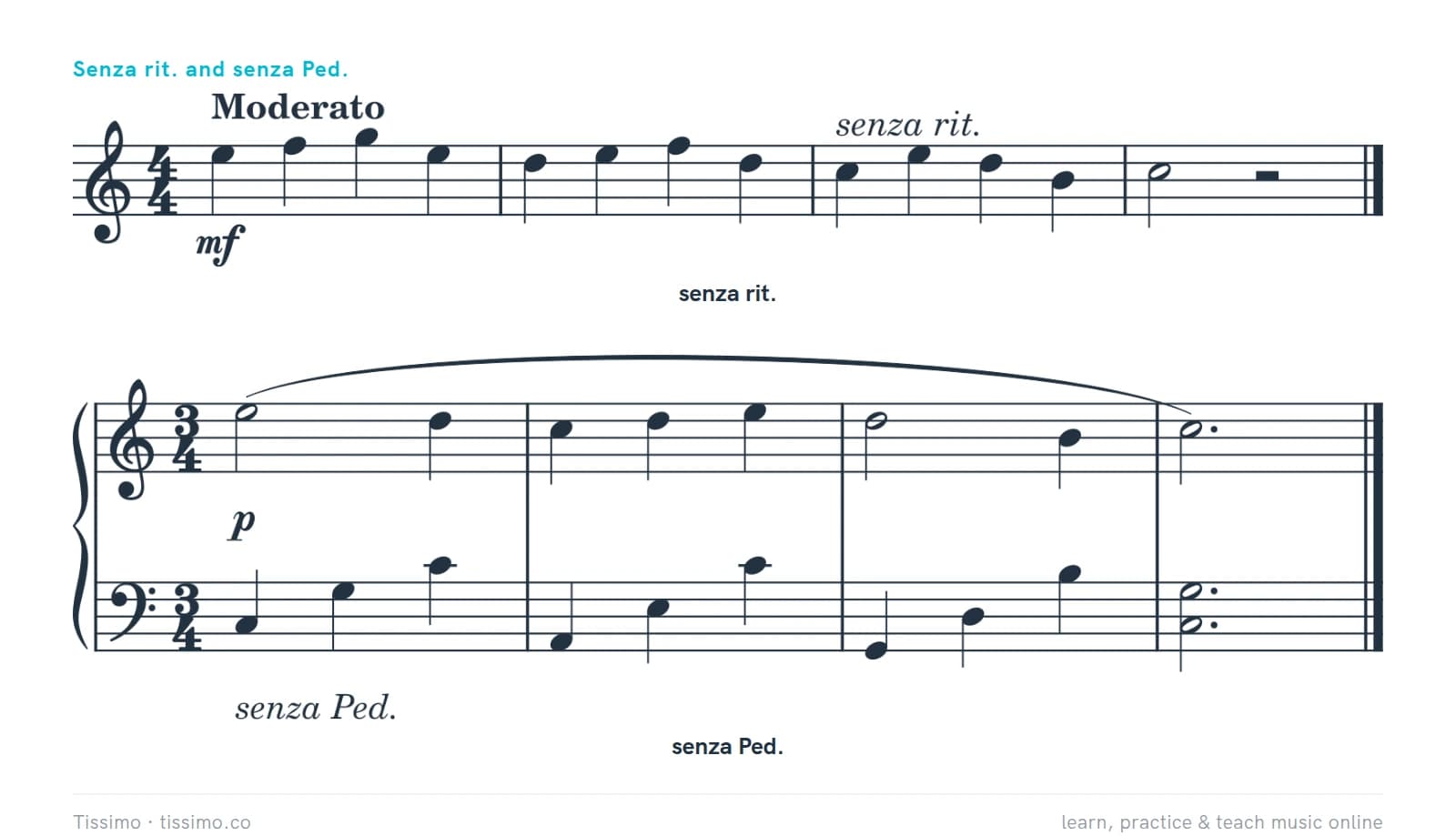
- Senza rit. or senza rallentare: do not slow down, even where you would expect to.
- Senza Ped. or senza pedale: no sustain pedal. Connect the notes with your fingers alone.
- Senza vibrato: a straight tone with no vibrato, for strings, winds and singers.
- Senza misura or senza tempo: in free time, without a strict beat. This goes further than rubato, which bends a beat that is still there.
- Senza sordino (or senza sordini): without the mute.
Playing senza
Senza usually warns you against something the music invites. A phrase that ends on a cadence invites a ritardando; senza rit. asks you to keep the beat to the last note. A flowing left hand invites the pedal; senza Ped. asks for a clean texture, with the melody joined by the fingers.
Senza sordino on the piano
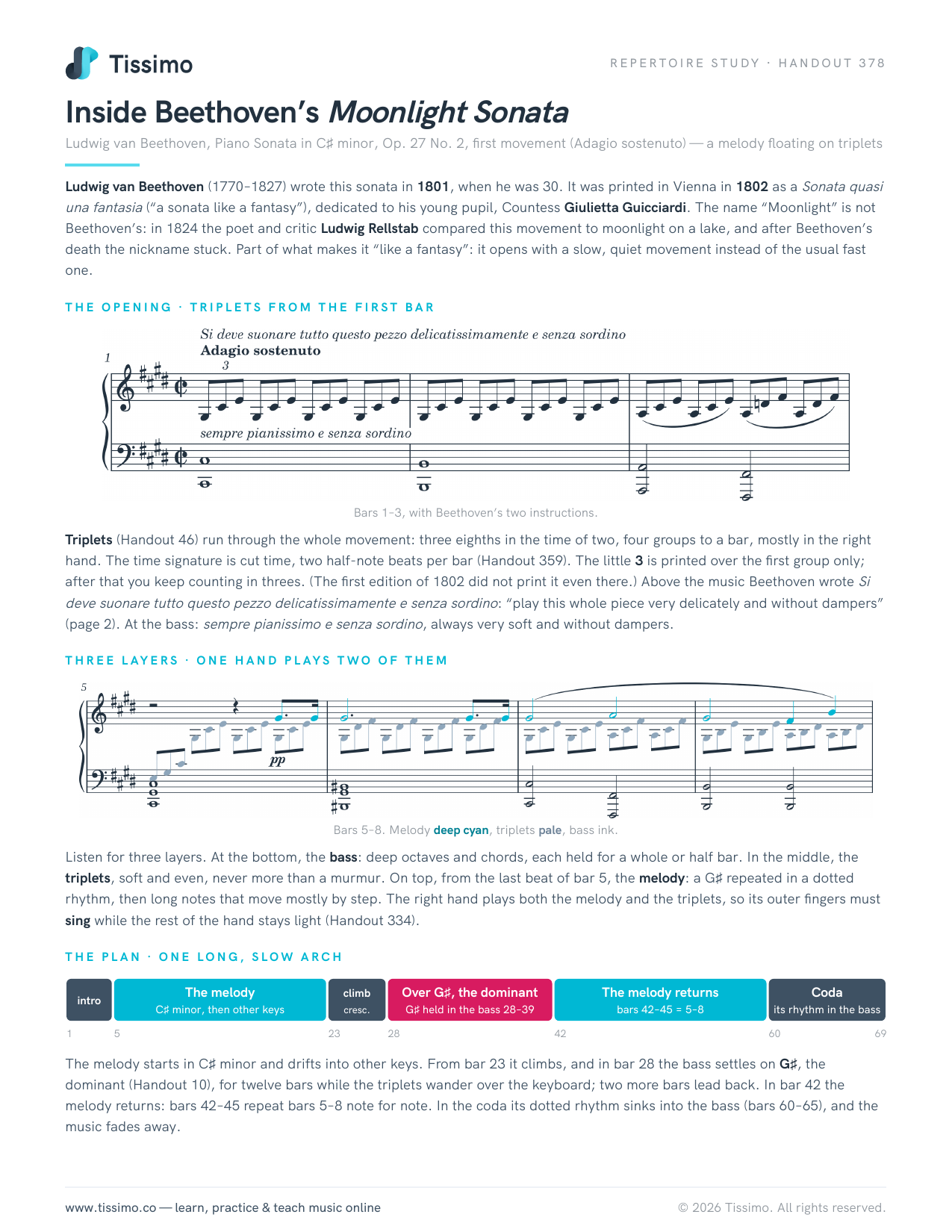
A sordino is a mute. On string and brass instruments, senza sordino means take the mute off. On the piano of Beethoven's time, the "mutes" were the dampers, the felt pads that stop the strings. So in Beethoven's piano music senza sordino means play with the dampers raised, that is, with the sustain pedal down. It does not mean "no pedal": that is senza Ped. Some later piano scores use con sordino (con sord.) for the soft pedal instead, so check the composer and the period before you decide which pedal is meant.
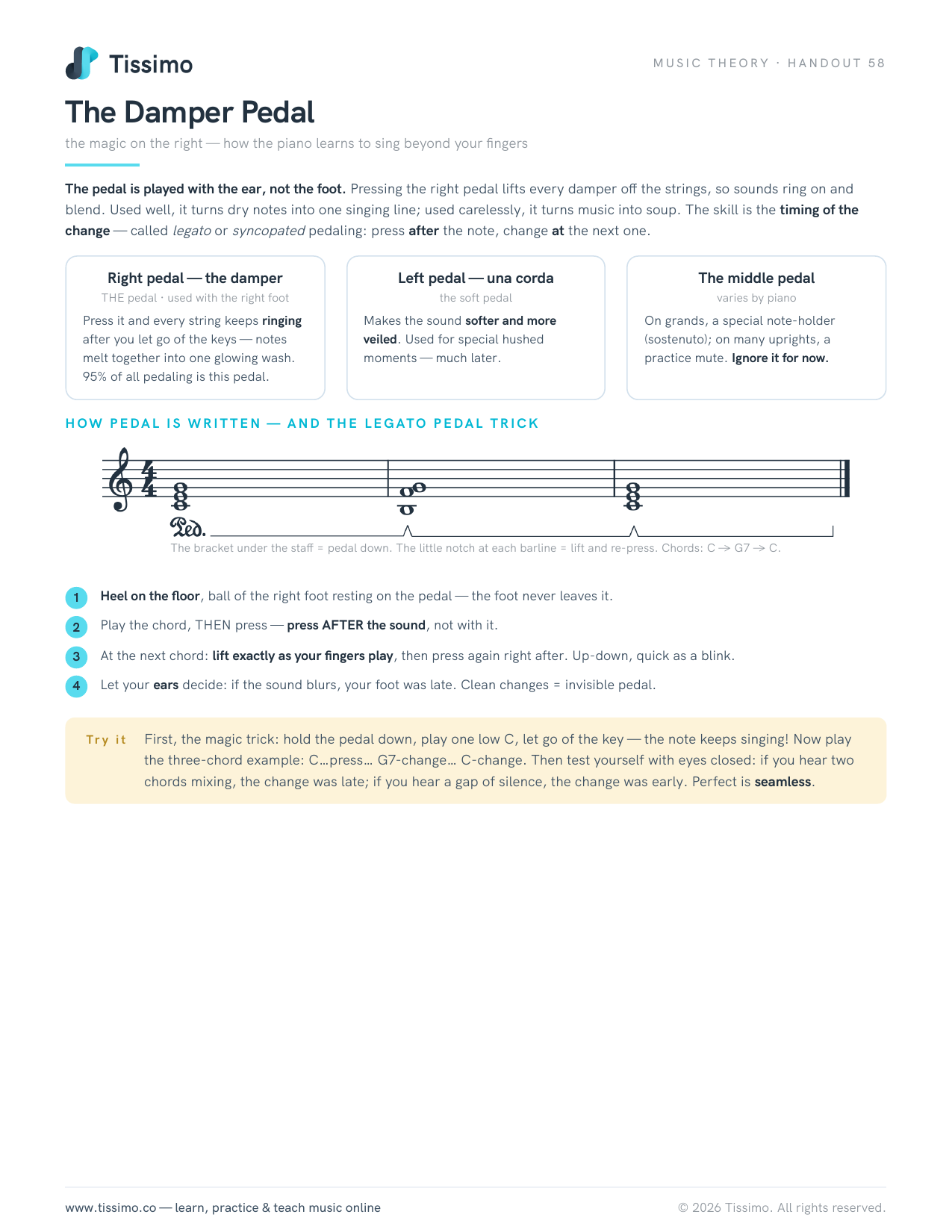
Beethoven's "Moonlight" Sonata opens with this instruction: sempre pianissimo e senza sordino, always very soft and without the dampers. Our Moonlight Sonata study explains what that means at the keyboard, and The Damper Pedal shows how the pedal lifts the dampers.
Common questions
What does senza sordino mean?
Without the mute. On strings and brass, take the mute off. On the piano in Beethoven's time, the "mutes" were the dampers, so it means play with the dampers raised: with the sustain pedal down, as at the start of his "Moonlight" Sonata. In some later piano scores con sordino means the soft pedal.
What does senza rit. mean?
Without slowing down: keep the tempo steady to the end of the phrase, even where a ritardando would feel natural.
Comments