Form & Structure
Requiem
Pronounced REK-wee-em
A requiem is a musical setting of the Roman Catholic Mass for the Dead, named after its opening words, "Requiem aeternam" ("eternal rest"). The word is also used for other large works in memory of the dead.
A requiem is music for the dead. In the Roman Catholic Church it is the Mass for the Dead (in Latin, Missa pro defunctis), and it takes its name from the first words of its opening text: "Requiem aeternam dona eis, Domine," "Grant them eternal rest, Lord." Composers have set it in many styles, from plainchant to concert works for soloists, choir and orchestra.
How a requiem differs from a Mass
A requiem shares some texts with an ordinary Mass setting, such as the Kyrie, Sanctus and Agnus Dei. But it leaves out the joyful Gloria and the Credo, and it adds texts of its own. A typical order in a large setting:
- Introit: "Requiem aeternam," followed by the Kyrie
- Sequence: the Dies irae ("Day of wrath"), a long poem about the Last Judgment, often divided into several movements such as "Tuba mirum" and "Lacrimosa"
- Offertory: "Domine Jesu Christe" ("Lord Jesus Christ")
- Sanctus (with the Benedictus)
- Agnus Dei
- Communion: "Lux aeterna" ("Eternal light")
- Libera me ("Deliver me")
Composers vary this plan. The Dies irae is usually the stormiest part, so a setting that leaves it out sounds calmer from beginning to end.
Famous requiems
- Mozart (1791) worked on his Requiem in the last months of his life and left it unfinished. The version usually performed was completed by his pupil Franz Xaver Süssmayr, and exactly how much of it goes back to Mozart's own ideas is still debated.
- Berlioz and Verdi wrote requiems on a grand scale, better suited to the concert hall than to a church service. Verdi's was first performed in 1874, on the first anniversary of the death of the writer Alessandro Manzoni, to whose memory it is dedicated.
- Fauré's Requiem leaves out the Dies irae except for its closing prayer, the "Pie Jesu," which becomes a quiet solo, and ends with "In Paradisum" ("Into paradise").
- Brahms, A German Requiem: not the Latin Mass at all, but passages from the Bible in Martin Luther's German translation.
- Britten, War Requiem (first performed in Coventry in 1962): the Latin text interwoven with poems about war by Wilfred Owen.
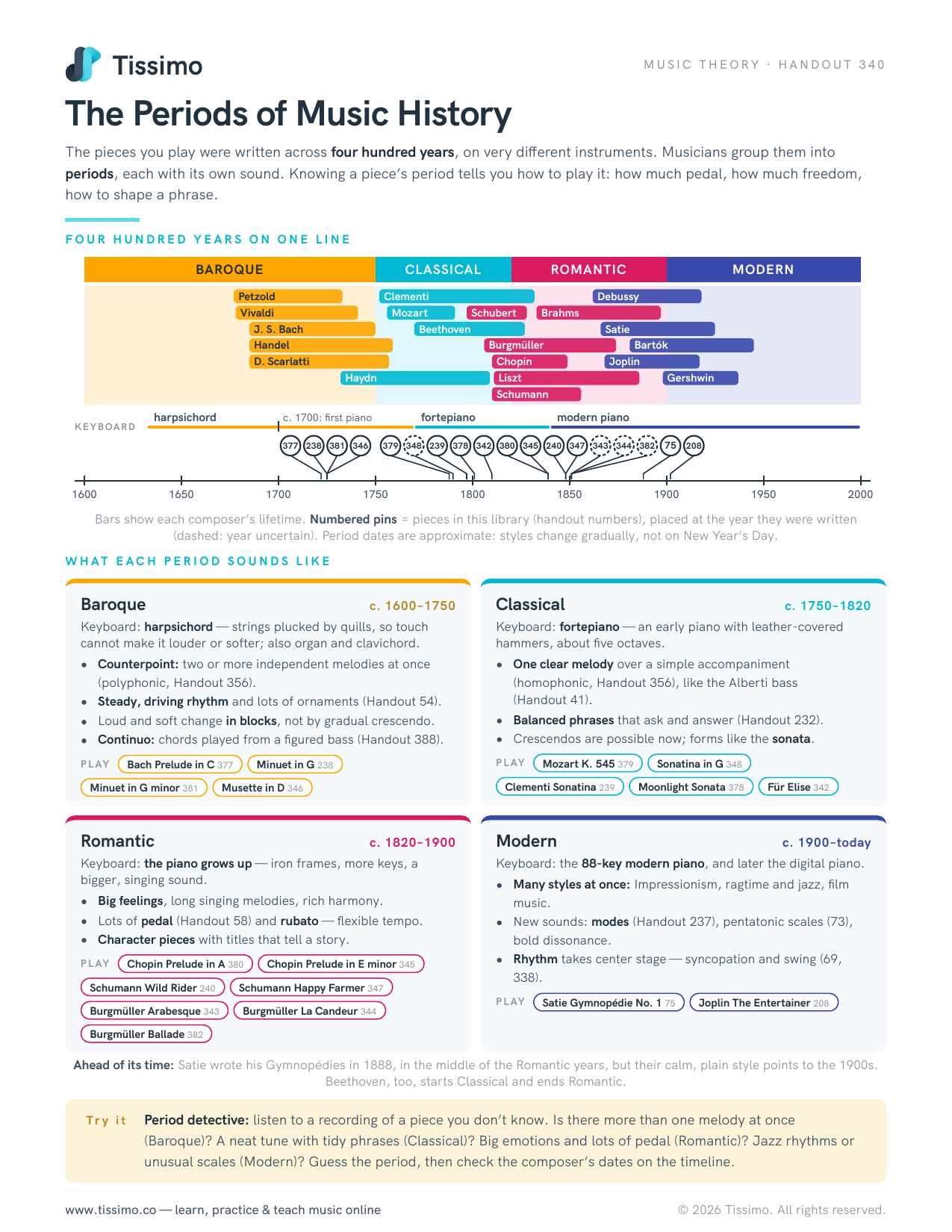
Palestrina and Dvořák are among the many other composers who set it. You can place the settings from Mozart's time onward with The Periods of Music History.
The word in other uses
Because of these works, requiem has come to mean any piece of mourning or remembrance. Britten's Sinfonia da Requiem is for orchestra alone, with no words at all.
Common questions
What is the difference between a requiem and a Mass?
A requiem is the Mass for the Dead. It shares some texts with an ordinary Mass, such as the Kyrie, Sanctus and Agnus Dei, but it leaves out the Gloria and the Credo and adds texts of its own, such as the Dies irae.
Did Mozart finish his Requiem?
No. He died in December 1791 with the work unfinished. The version usually performed was completed by his pupil Franz Xaver Süssmayr.
Comments