Chords & Harmony
Quartal Harmony
Quartal harmony emphasizes chords or voicings built mainly in fourths, rather than the thirds of ordinary triads and seventh chords. The bass and musical context help determine how these sonorities function.
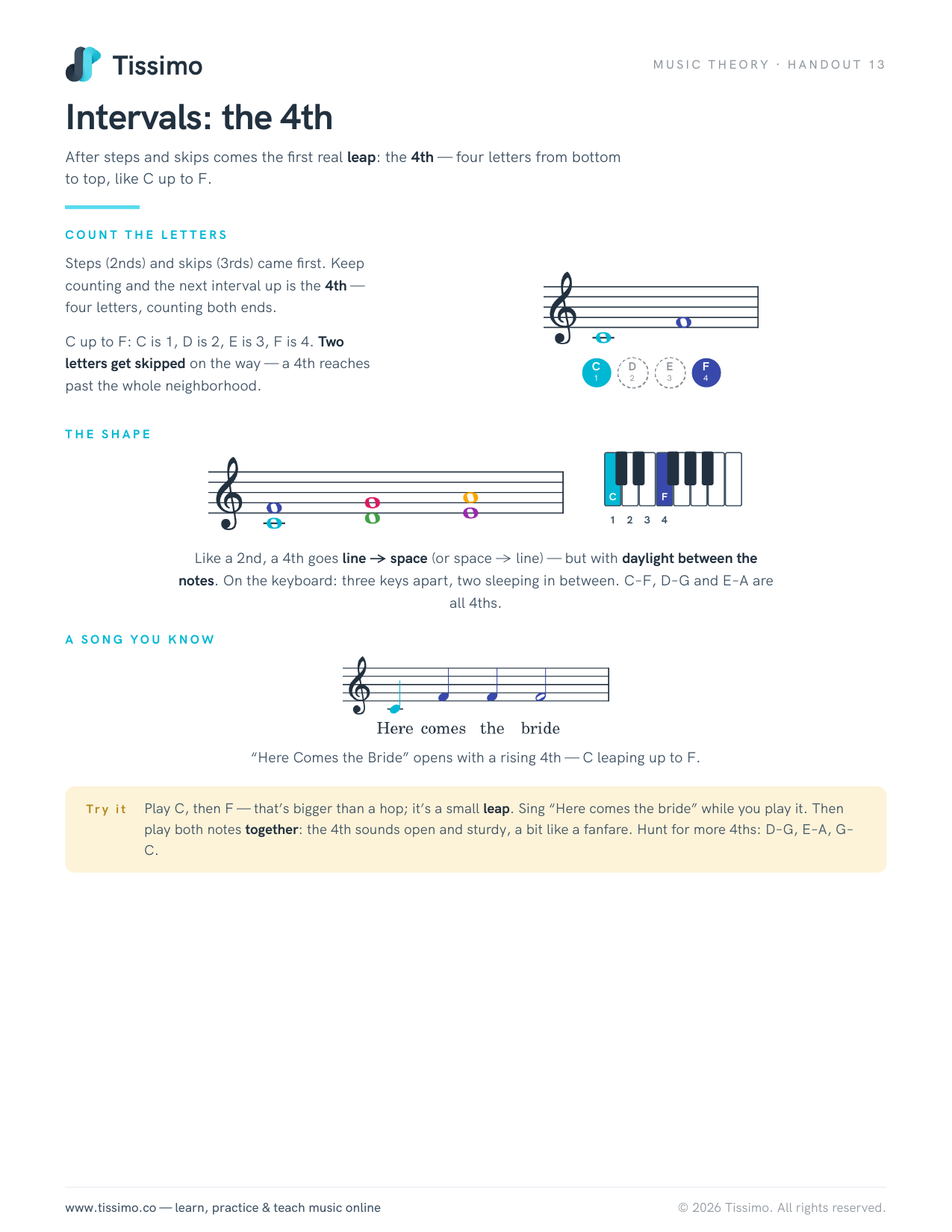
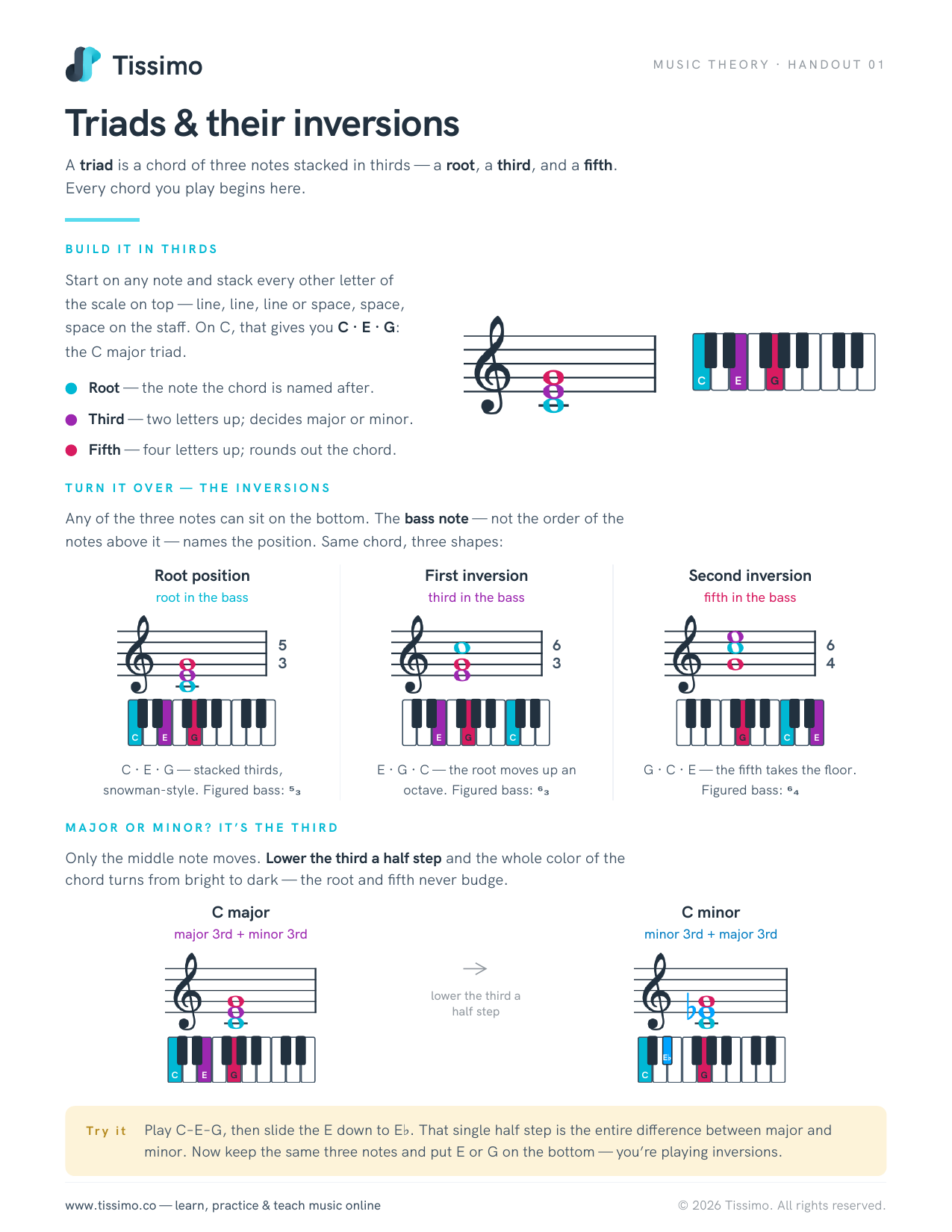
Quartal harmony organizes chord tones mainly in fourths. A simple stack is C4–F4–B♭4: C to F and F to B♭ are both perfect fourths. This differs from the stacked thirds of C–E–G, a familiar major triad.
Fourths are a starting point
Quartal writing need not consist exclusively of perfect fourths. Composers and arrangers combine fourths with other intervals, or build stacks from the notes of a particular scale. In C major, F–B–E contains an augmented fourth followed by a perfect fourth. The term describes a prominent interval pattern rather than one fixed chord formula.
A quartal voicing also need not replace tonal harmony altogether. Its notes may fit an extended chord, a suspended sound or a modal setting. The bass, melody and surrounding chords help the ear interpret it. A single fourth inside an inverted triad does not automatically make the passage quartal.
Related stacking ideas
Tertian harmony is based on thirds. Quintal harmony emphasizes fifths. Fourths and fifths are inversions of one another, so rearranging notes between octaves can make the two approaches closely related in sound and pitch content.
Try it
Play C4–F4–B♭4, then move the entire shape up a whole step to D4–G4–C5. Compare that parallel motion with C4–E4–G4 moving to D4–F4–A4. Finally, keep one quartal shape fixed while changing a low bass note. Listen for how the bass changes your sense of the chord's identity.
Common questions
Is every chord containing a fourth quartal?
No. Quartal harmony emphasizes fourths as a building or voicing principle. An isolated fourth, such as the one in a second-inversion triad, does not establish that principle by itself.