Tempo Markings
Doppio Movimento
Pronounced DOHP-pyoh moh-vee-MEN-toh
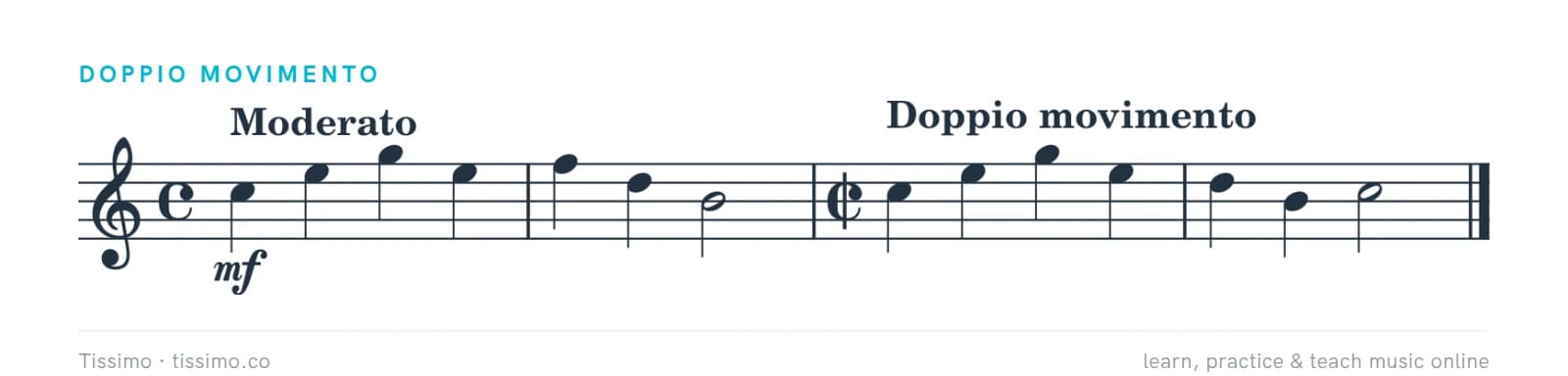
Doppio movimento means 'double speed': play twice as fast as before. It often comes with a change from common time to cut time, so the new half-note beat moves at the speed of the old quarter note.
Doppio movimento means "double motion" and asks for twice the tempo of the music before it. Unlike più mosso, which only says "faster", it names an exact ratio, two to one, so the new tempo comes straight from the old one. Dictionaries also give doppio tempo for the same instruction.
How it looks on the page
The words are printed above the staff where the new tempo begins, often in bold like a tempo word. Doppio movimento often appears where the time signature changes from common time (C) to cut time (¢). The half note of the new section then moves at the speed the quarter note had, so every quarter note now lasts half as long. The beat you count keeps its speed, but each beat holds twice as much music.
Playing it
- Carry the old beat across. Before the change, feel the quarter note. After it, give that same pulse to the half note.
- Check with a metronome. If the old tempo was ♩ = 66, the new one is ♩ = 132: the click for the new half note is the old quarter-note click.
- Practice the new section on its own. Its notes look like ordinary values but sound twice as fast, so learn them at the new speed before you join the two passages.
A common confusion
Doppio movimento is not a double-time feel. A double-time feel changes the drum groove while the tempo and the chords stay where they were; doppio movimento changes the tempo itself, so everything moves twice as fast. It is also more exact than accelerando, which speeds up gradually. Like l'istesso tempo, it is a fixed relationship between two tempos, the kind of connection that metric modulation spells out with a note-value equation.
Two Beats in a Bar: 2/4 & Cut Time explains how cut time is counted, and Count in Two practices it.
Common questions
What does doppio movimento mean?
"Double speed": play twice as fast as the music before it. When the time signature changes from C to ¢ at the same point, the new half note moves at the speed of the old quarter note.
Practice it: free worksheets
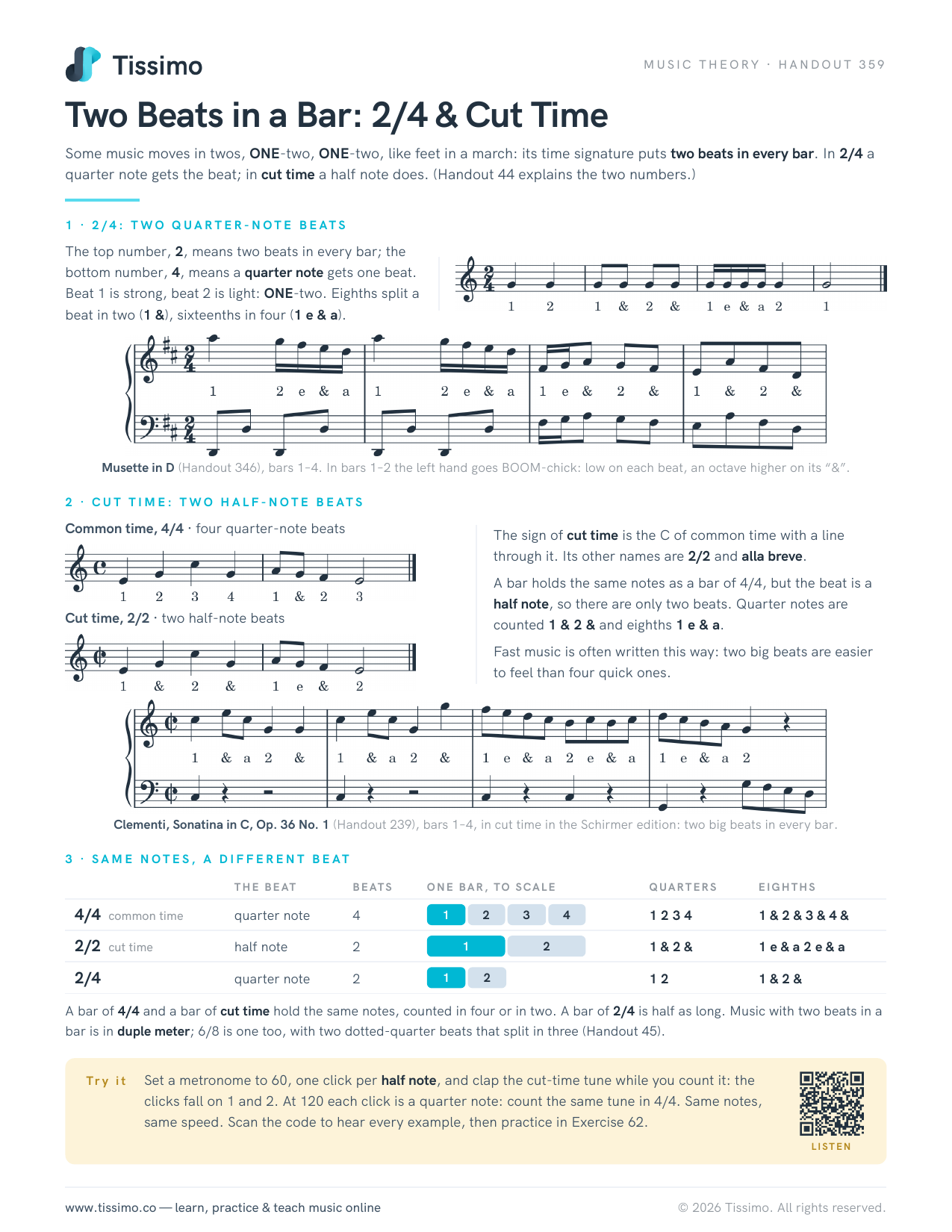 Two Beats in a Bar: 2/4 & Cut TimeSome music moves in twos, ONE-two, ONE-two, like feet in a march: its time signature puts two beats in every bar. In 2/4 a quarter note gets the beat; in cut time a half note does. (Handout 44 explains the two numbers.)
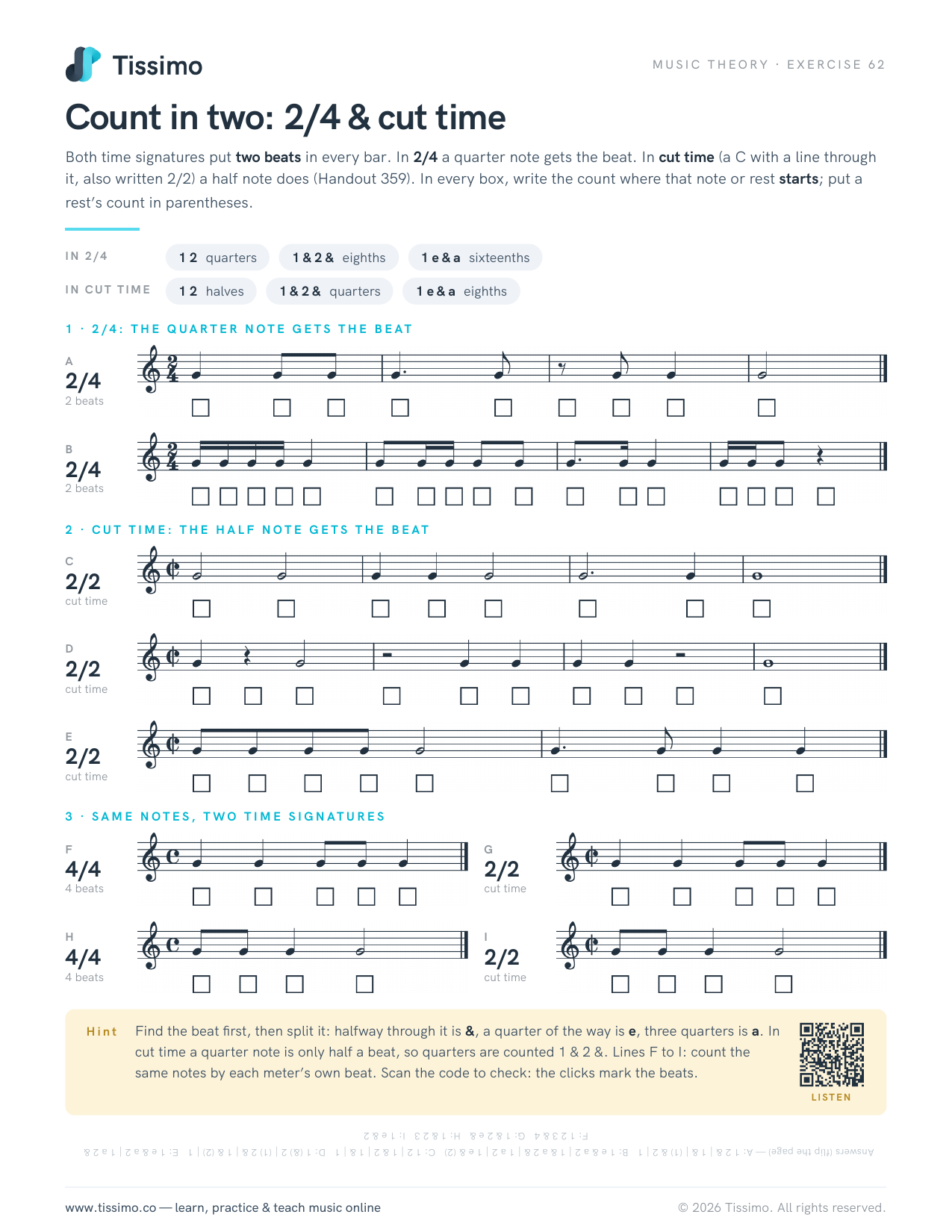 Count in two: 2/4 & cut timeBoth time signatures put two beats in every bar. In 2/4 a quarter note gets the beat. In cut time (a C with a line through it, also written 2/2) a half note does (Handout 359). In every box, write the count where that note or rest starts; put a rest’s count in parentheses.
Comments