Tempo Markings
L'istesso Tempo
Pronounced lee-STES-soh TEM-poh
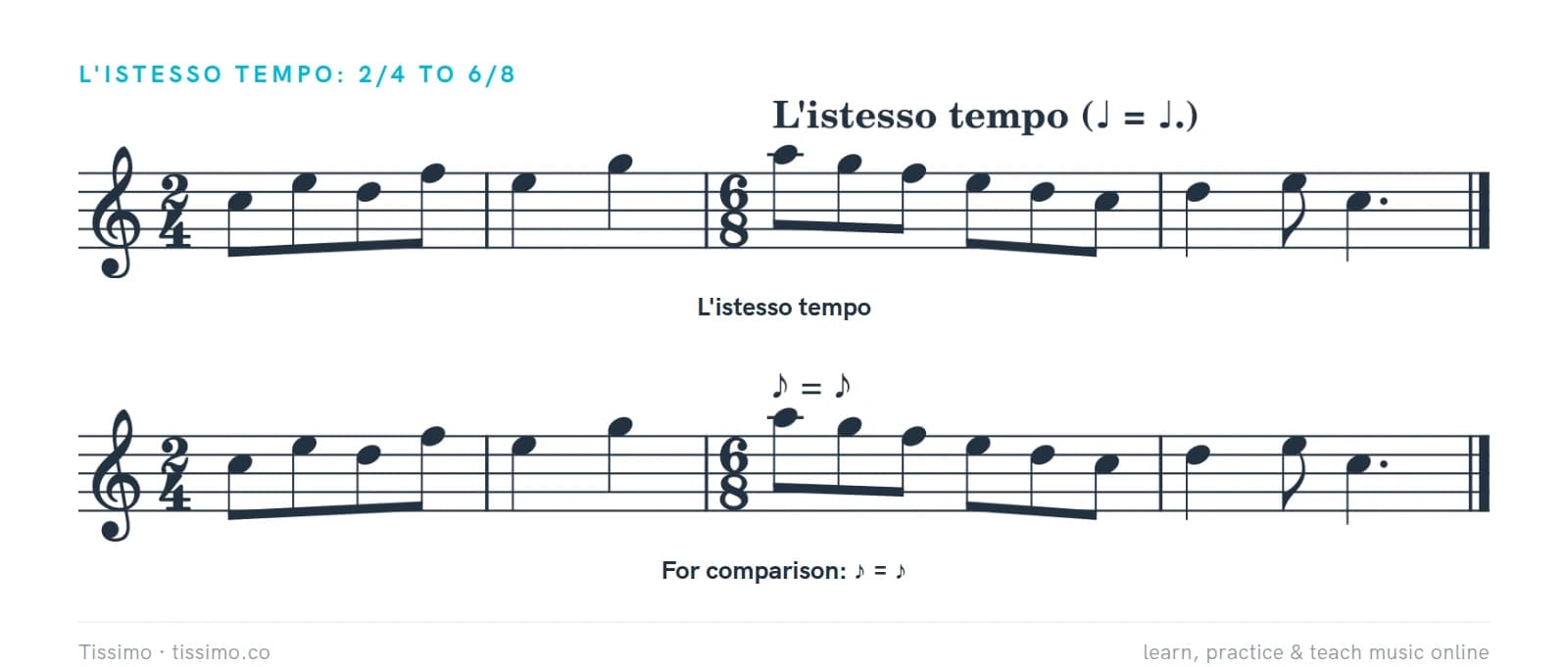
L'istesso tempo means 'the same tempo': at a change of time signature the beat keeps its speed. Going from 2/4 to 6/8, the dotted-quarter beat of 6/8 lasts as long as the old quarter.
L'istesso tempo means "the same tempo". It usually appears where the time signature changes, and it tells you that the beat keeps its speed even though the note value that carries it changes. Lo stesso tempo is the same instruction in more standard Italian.
How it looks on the page
The words are printed above the staff at the bar where the new meter begins. Many scores add a note-value equation that names the two beats, such as ♩ = ♩. going from 2/4 into 6/8: the old quarter-note beat equals the new dotted-quarter beat. The equation usually reads old value = new value.
What changes and what doesn't
In 2/4 each beat is a quarter note split into two eighths. In 6/8 each beat is a dotted quarter split into three. With l'istesso tempo you still count "one, two" at the same speed; only the division changes. So the eighth notes move faster in 6/8, three to the beat instead of two. Coming back from 6/8 to 2/4 the same way (♩. = ♩), the eighths slow down again.
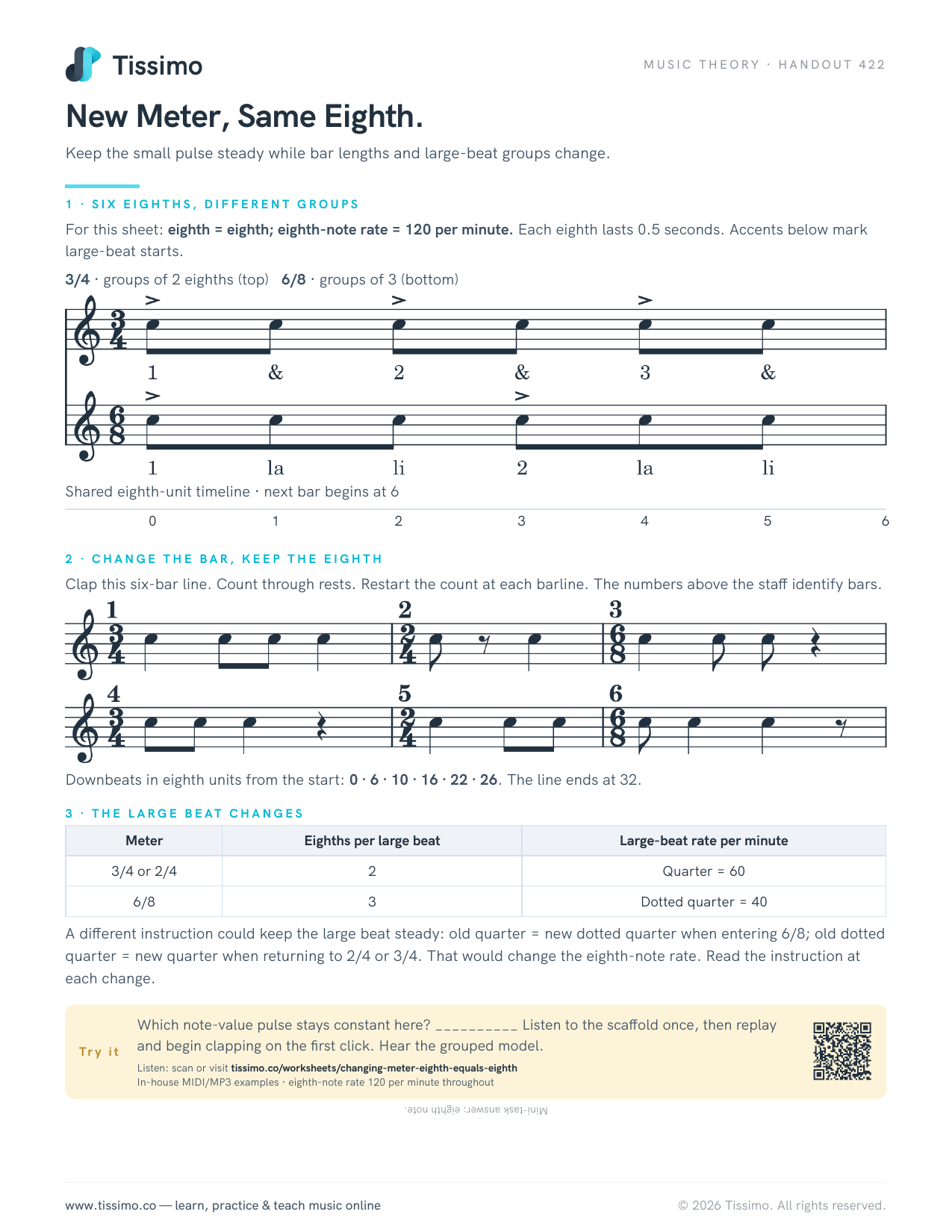
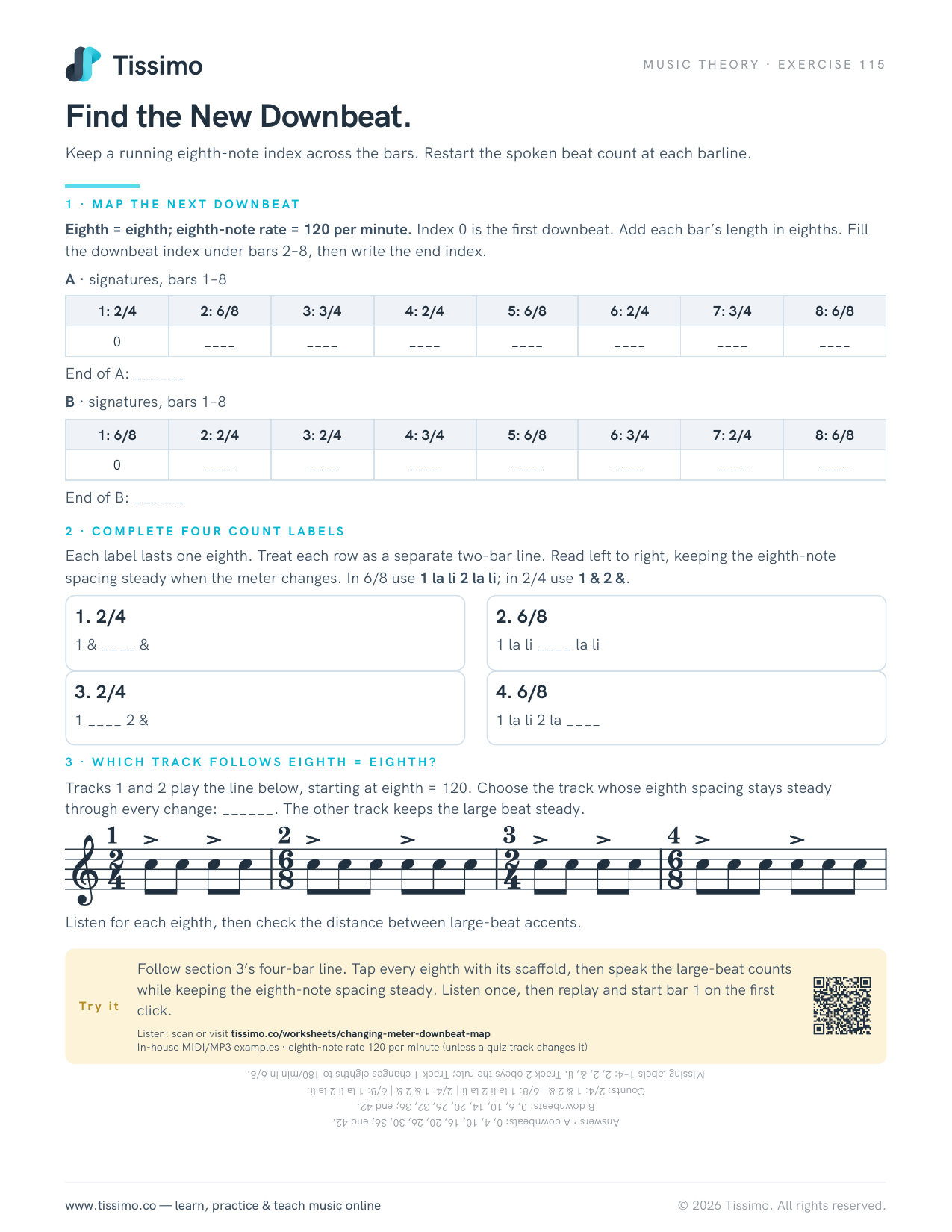
To practice, tap the beat with your foot and keep it steady across the barline while your hands switch from two eighths to three. New Meter, Same Eighth explains the other choice, eighth = eighth, and Find the New Downbeat has a listening question that compares the two.
L'istesso tempo or metric modulation?
Metric modulation uses an equation to reach a new beat speed, as when an old triplet note becomes the new beat and the tempo rises. L'istesso tempo keeps the old beat speed. Some teachers count the quarter = dotted quarter change as a kind of metric modulation too, so look at the equation rather than the name. It also differs from Tempo primo and a tempo, which bring back a speed after a change. L'istesso tempo says that nothing about the beat speed changes in the first place. For the meter change itself, see changing meter.
Common questions
What does l'istesso tempo mean?
"The same tempo": the beat keeps its speed when the time signature changes. From 2/4 to 6/8, the new dotted-quarter beat lasts as long as the old quarter note.
Does the eighth note stay the same in l'istesso tempo?
Not when the beat changes between two and three eighths. The beat stays the same, so in 6/8 three eighths fit where two did in 2/4, and each one is faster. A score that wants steady eighths writes ♪ = ♪ instead.
Comments