Instruments & Voices
Digital Piano
A digital piano is an electronic instrument built to play and feel like an acoustic piano: usually 88 weighted keys, recorded (sampled) piano sounds, a sustain pedal, and speakers or headphones.
A digital piano has no strings. When you press a key, sensors measure how fast it goes down, and the instrument plays a recorded piano note at a matching loudness and tone through its speakers or your headphones. Because nothing vibrates but the speaker, it never needs tuning, and with headphones you can practice without disturbing anyone.
Keys that feel like a piano
The keys are what separate a digital piano from most other keyboards. They are weighted: weights, small hammers and levers in the key mechanism resist your fingers the way an acoustic piano action does, so the touch you build carries over to a real piano.
- Hammer action: a small lever-and-hammer mechanism in each key copies the feel of a piano action.
- Graded weighting: the low keys are heavier and the high keys lighter, as on an acoustic piano.
- Sensors: two or more sensors under each key measure its speed (the note's velocity) and help fast repeated notes speak.
Learn how the acoustic mechanism works in How the Piano Works.
The sound
Most digital pianos play samples: recordings of each key of a real grand piano, sometimes with the sounds of the strings resonating together recorded separately. Some models calculate the sound instead (physical modeling). Most also include other sounds, such as organ, harpsichord, vibraphone and strings.
The spec sheet lists a polyphony figure, such as 64, 128 or 256: the most notes the instrument can sound at once. Every note still ringing counts, including notes held by the sustain pedal, so heavy pedaling uses it up fastest.
Pedals and connections
Look for a sustain pedal and a headphone socket. Most models also connect to a computer, tablet or phone through MIDI (often over USB), so you can use apps, record or play software instruments.
Digital piano or keyboard?
A portable keyboard usually has 61 lighter, unweighted keys, many sounds and automatic accompaniment that plays a band along with your chords. It is fun for exploring sounds, but it does not train piano touch. A stage piano is a digital piano designed for live performance and easy to carry. If your goal is piano, choose 88 weighted keys and a sustain pedal; you can find your way around them with The Piano Keyboard.
A common confusion
A digital piano is not an electric piano. An electric piano, such as the Rhodes, makes its sound mechanically, with hammers striking metal tines or reeds, and uses pickups to amplify it. A digital piano plays recordings, including recordings of electric pianos.
Common questions
Is a digital piano good for learning piano?
Yes, if it has 88 weighted keys, touch sensitivity and a real sustain pedal. Those let you build the same control you need on an acoustic piano. Lighter, unweighted keyboards are fine for exploring music, but they do not train piano touch.
What does polyphony mean on a digital piano?
The largest number of notes it can sound at the same time, such as 64, 128 or 256. Notes held by the sustain pedal count too, so a higher number helps when you pedal through fast passages.
Practice it: free worksheets
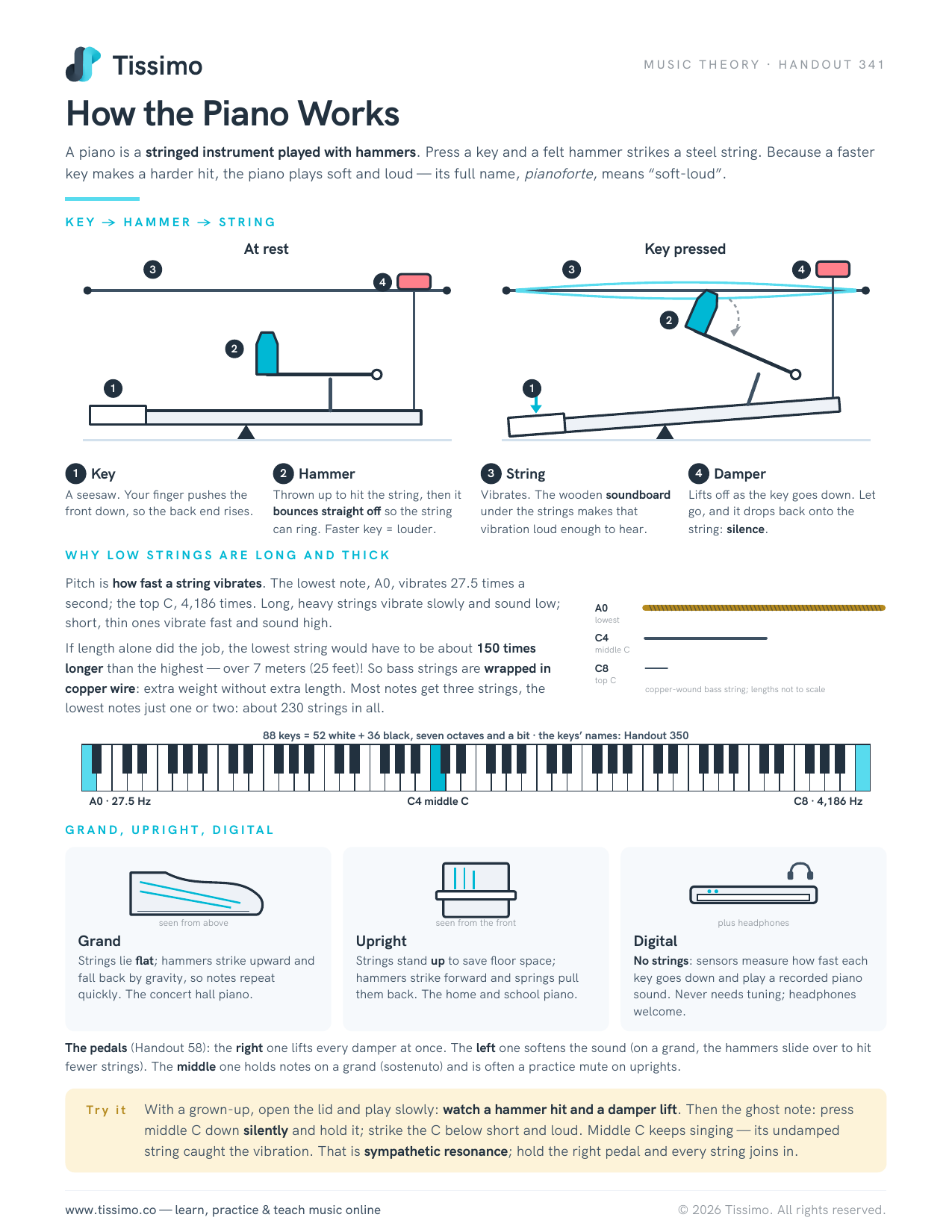 How the Piano WorksA piano is a stringed instrument played with hammers. Press a key and a felt hammer strikes a steel string. Because a faster key makes a harder hit, the piano plays soft and loud — its full name, pianoforte, means “soft-loud”.
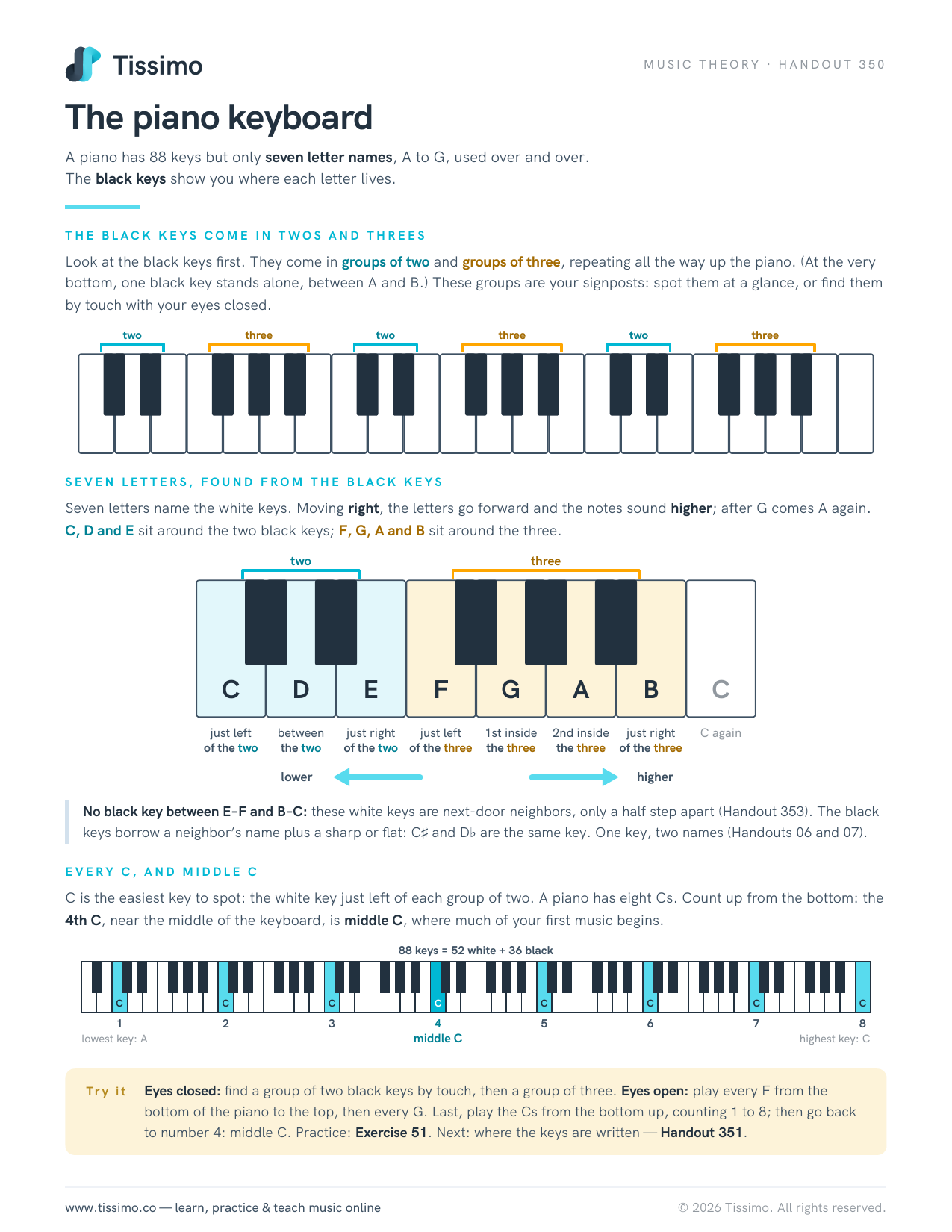 The piano keyboardA piano has 88 keys but only seven letter names, A to G, used over and over. The black keys show you where each letter lives.
Comments