Tempo Markings
Meno
Pronounced MEH-noh
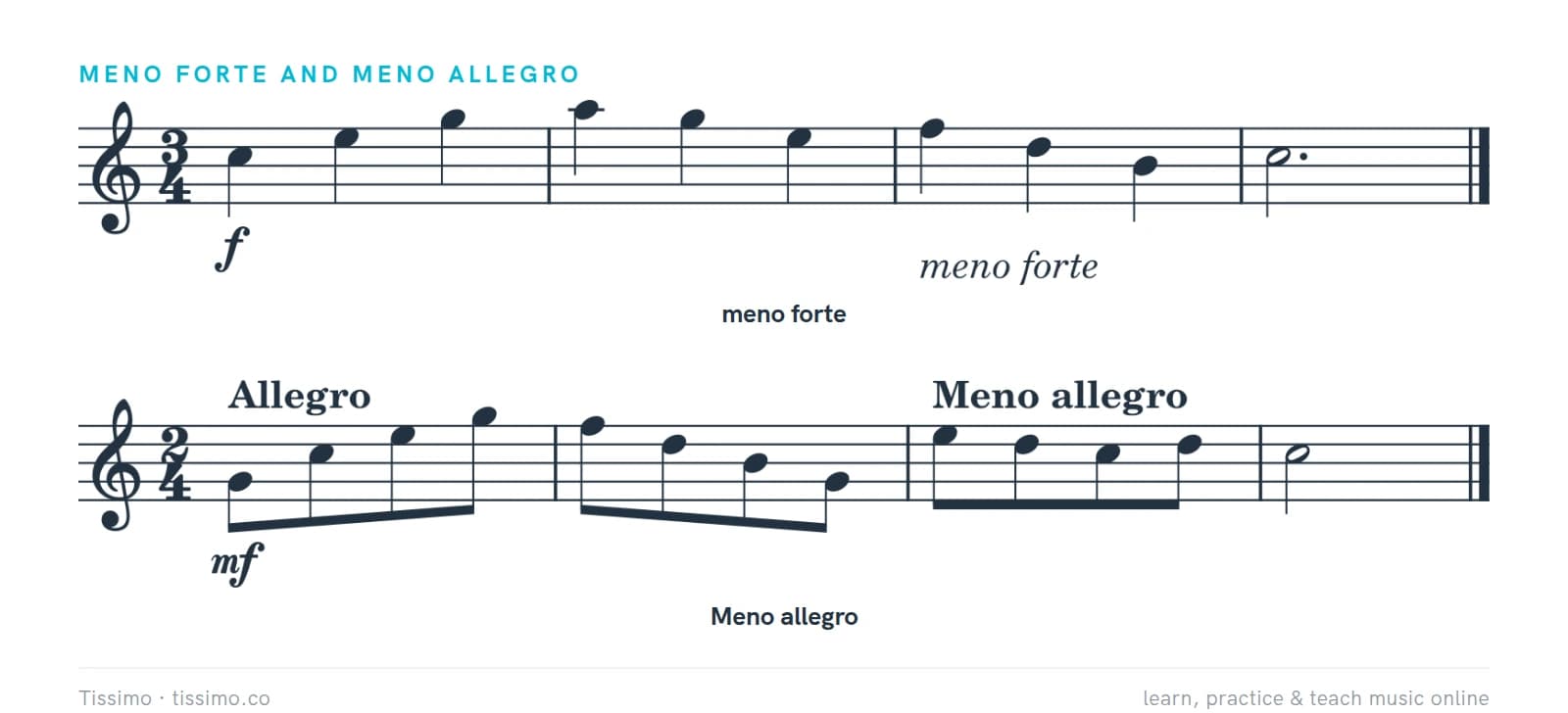
Meno is an Italian modifier meaning 'less'. It takes away some of the word after it: meno f is less loud than before, and meno allegro and meno mosso are less fast, so slower.
Meno means "less". It is the opposite of più, "more", and it works the same way: it changes the word that follows it, and that word decides what you take away. Meno f is less loud, meno allegro less fast. Read meno together with its word.
How it looks on the page
Meno is printed just before its word, where the change begins. With a tempo word it stands above the staff, often in bold at the start of a new section: Meno allegro, or Meno mosso, probably the most common meno marking, which has its own entry. With a dynamic it stands below the staff, as in meno f. The change happens at the marking, not gradually, and lasts until the next instruction.
Less than what?
Meno compares with what you were just doing. Meno f after f steps down a little, toward mf. It is not a decrescendo, which fades gradually; meno sets a new level at once. Meno allegro keeps the lively allegro character at a calmer speed.
Think it through with a slow word, though. "Less slow" would mean a little faster. Read the whole phrase before you decide which way to move.
Meno with poco and più
- Poco meno: a little less. Poco meno mosso is a little slower, and poco meno alone is usually read as short for it (see poco).
- Meno and più are a pair: one subtracts, the other adds. Neither says how much, so let the music decide.
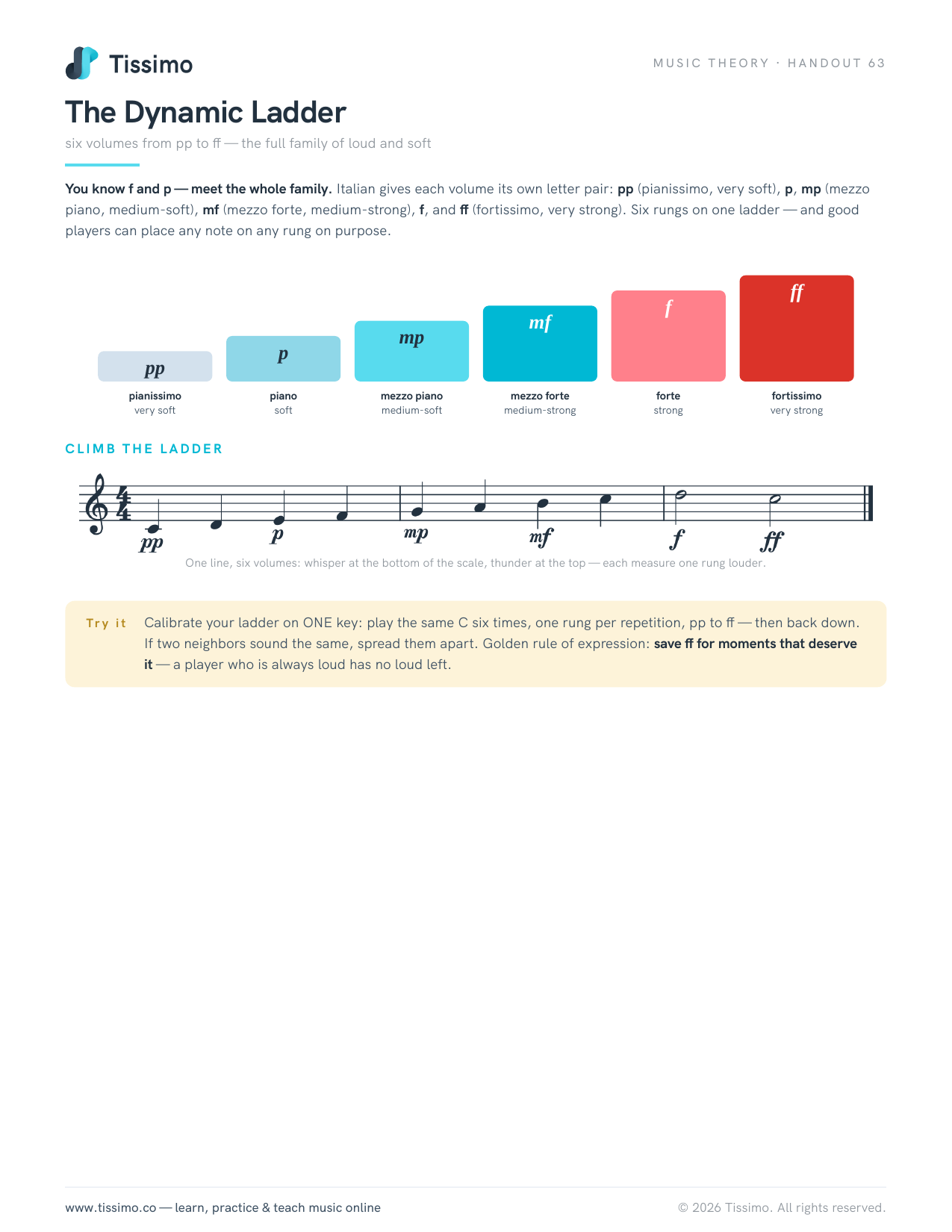
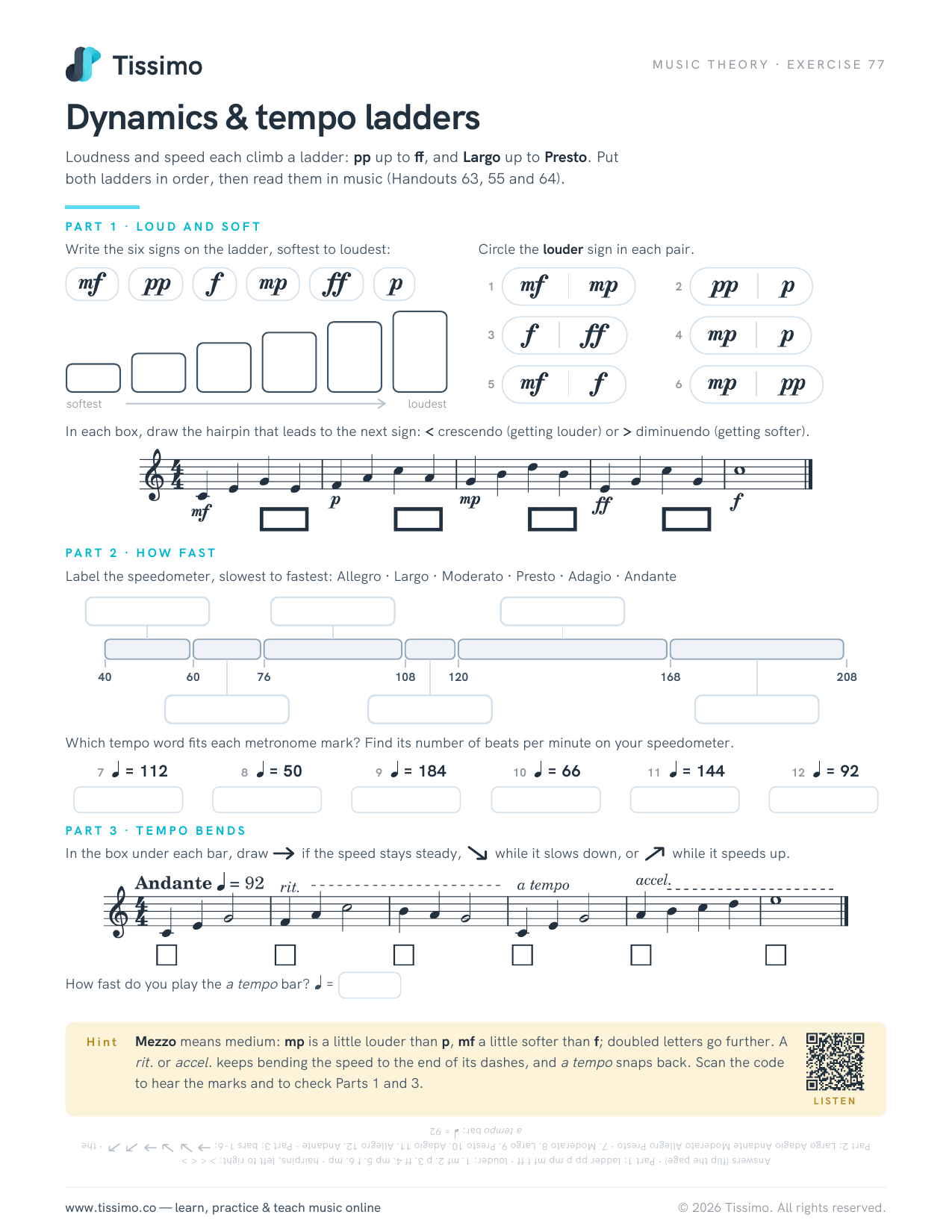
To practice the steps, play one phrase on a rung of the Dynamic Ladder, then repeat it meno f, one small step lower. Dynamics & Tempo Ladders puts both the dynamics and the tempo words in order.
Common questions
What does meno mean in music?
"Less": it lowers whatever word follows it. Meno f is less loud than before; meno mosso and meno allegro are less fast, so slower. The opposite is più, "more".
Comments