Tempo Markings
Più
Pronounced pyoo
Più is an Italian modifier meaning 'more'. It adds more of the word after it: più f is louder than before, più mosso is faster, and più lento is slower, so the direction depends on that word.
Più means "more". Like molto and poco, it works on the word that follows it, and that word decides what changes. With a tempo word it changes the speed, with a dynamic the loudness, with an expression word the character. So più does not mean "faster" or "louder" by itself: più lento is slower and più p is softer.
How it looks on the page
Più is printed just before its word, at the point where the change begins. With a tempo word it usually stands above the staff, often in bold at the start of a new section: Più lento, Più allegro, or Più mosso, which has its own entry. With a dynamic it stands below the staff, as in più f. The new speed or level starts on the marked note and lasts until the next instruction. For a gradual change, the composer adds cresc., rit. or poco a poco instead.
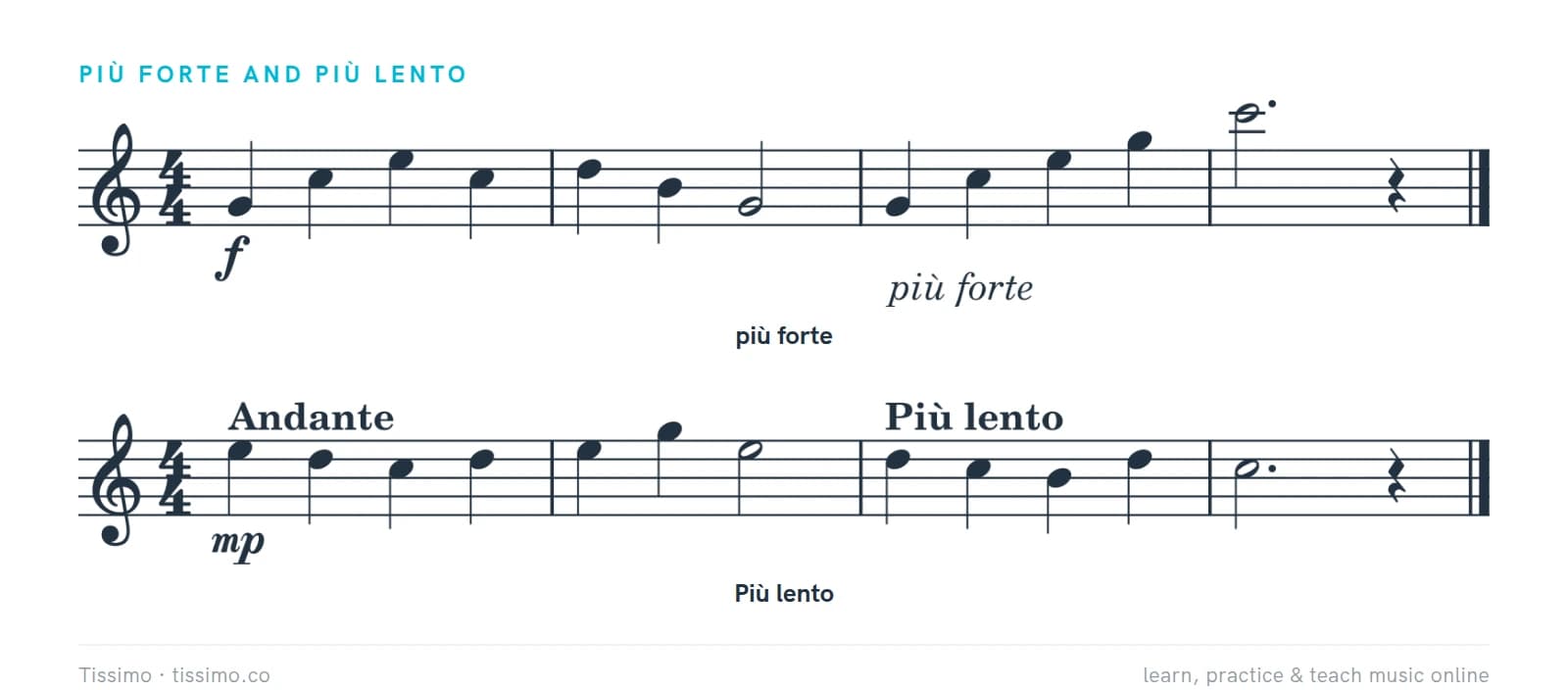
Reading più: more than what?
Più compares with what you were just doing. Più f after f means louder than that forte, not simply "loud". Più lento in an Andante means slower than that Andante. A few combinations come up often:
- Sempre più: more and more, as in sempre più forte, louder and louder (see sempre).
- Poco più: a little more. The poco entry plays più mosso and poco più mosso side by side.
- Più forte possibile and più piano possibile: as loud as possible, as soft as possible.
- Più alone, with no word after it, is usually read as short for più mosso.
Più, molto and meno
Molto means "very" and names a degree: molto allegro is very fast wherever it appears. Più names a change from the music before it. The opposite of più is meno, "less".
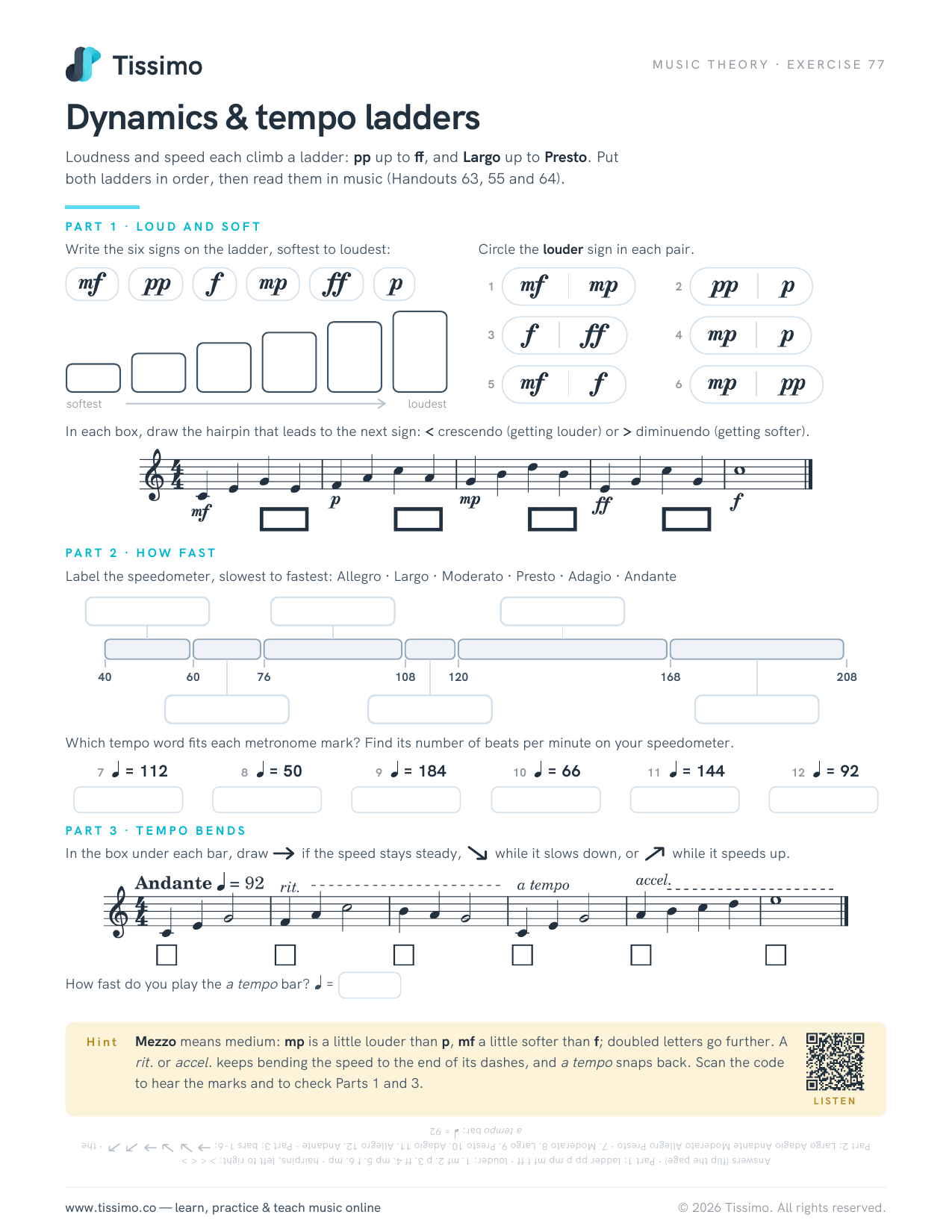
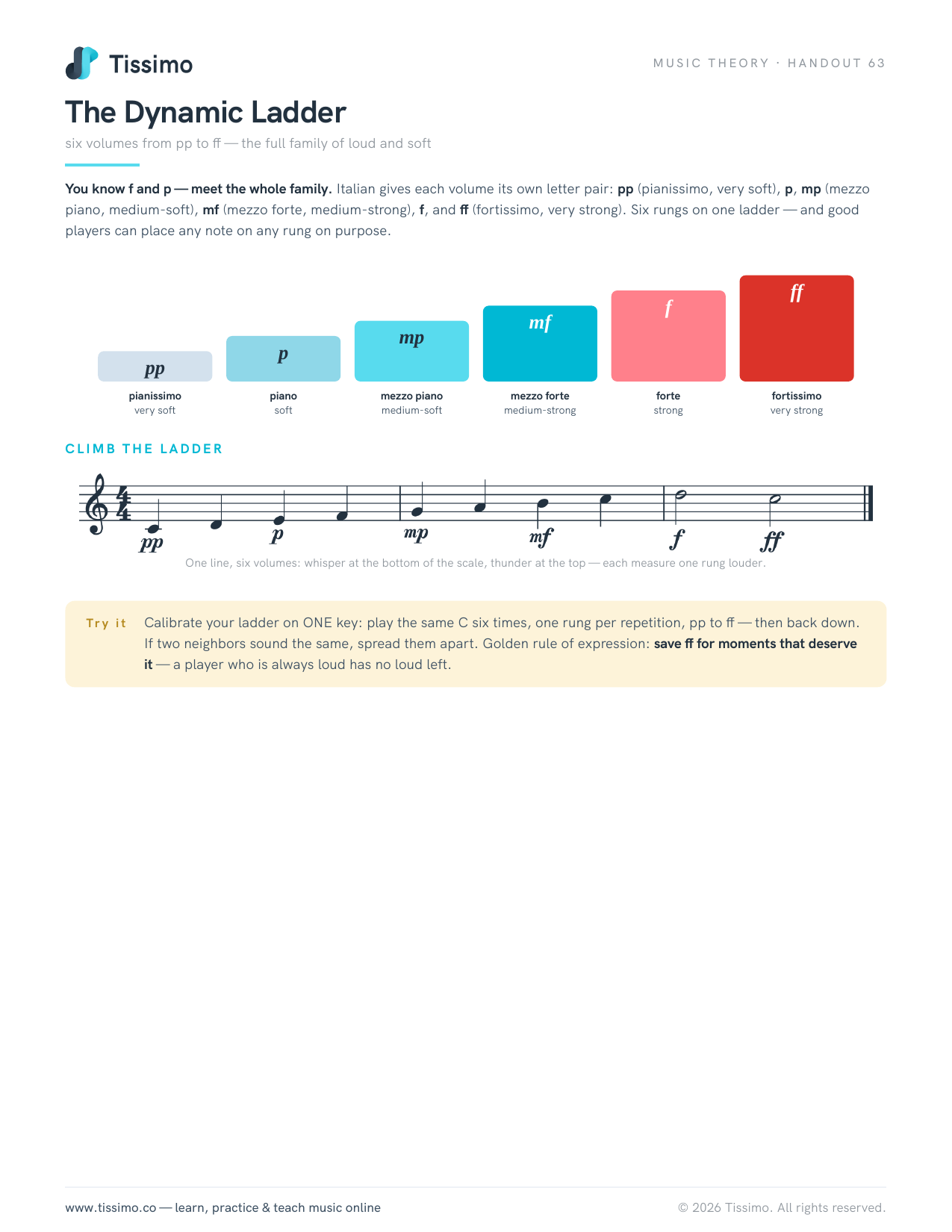
To practice, put the levels in order on the Dynamics & Tempo Ladders sheet or the Dynamic Ladder handout, then read più as a step up from wherever you stand.
Common questions
Does più mean faster?
Only when the next word is about speed. Più means "more": più mosso and più allegro are faster, but più lento is slower and più p is softer. Più alone is usually read as short for più mosso.
Comments