Tempo Markings
Lunga
Pronounced LOON-gah
Lunga is Italian for 'long'. Printed with a fermata, as fermata lunga or simply lunga, it asks for an extra-long hold; pausa lunga or lunga pausa is a long pause, a held silence.
Lunga means "long". It is the feminine form of lungo, and it takes that form because the words it usually goes with, fermata and pausa, are feminine in Italian. In a score it asks for more time than usual on a hold or a silence.
Fermata lunga
A fermata already asks you to hold a note, a chord or a rest longer than its written value. When the word lunga is printed with it, as fermata lunga or simply lunga above the sign, the hold should be clearly longer than a normal fermata, well beyond the written value. As with any fermata, the score gives no exact length: the player or the conductor decides. In the example, the recording holds the lunga fermata about twice as long as the plain one.
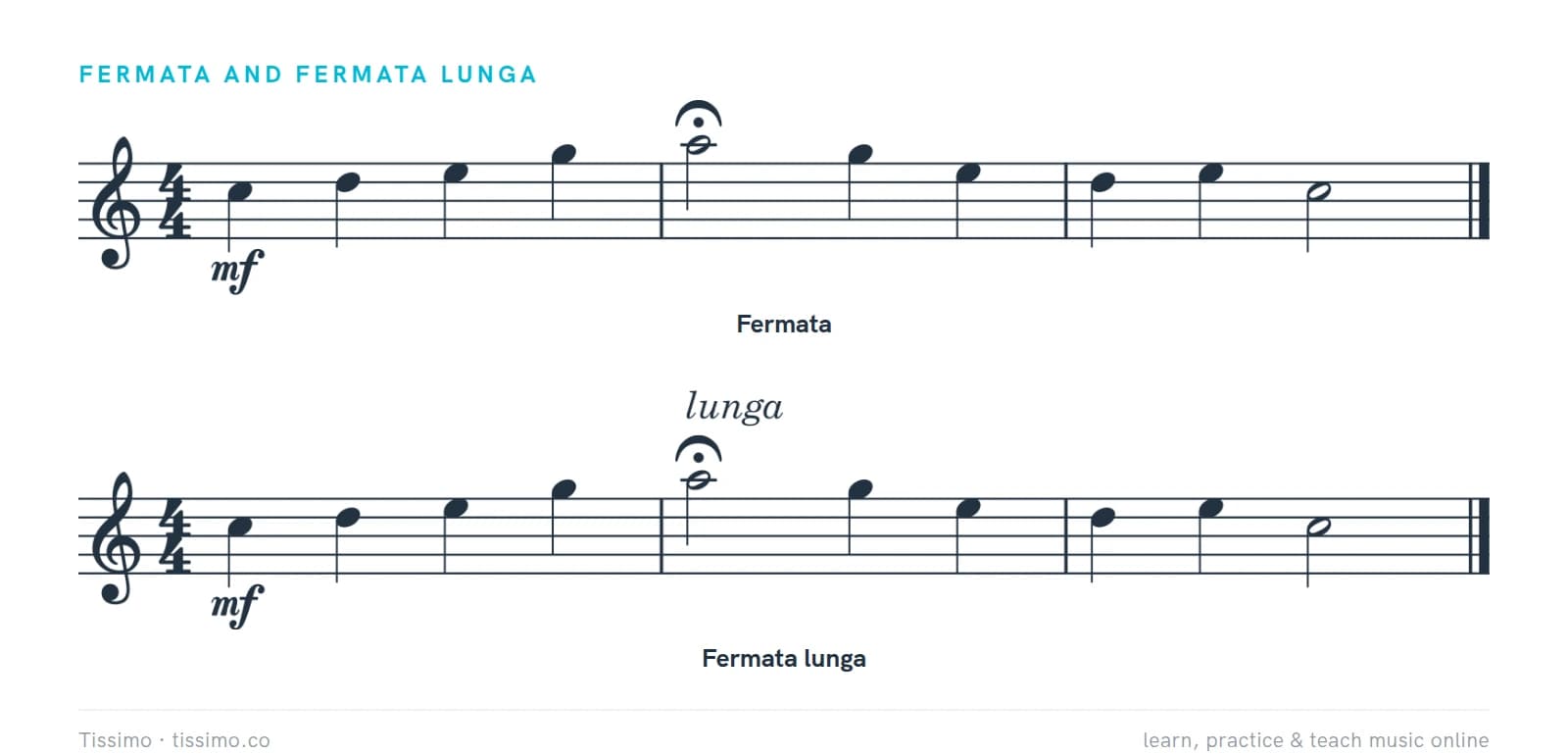
Pausa lunga
Pausa lunga or lunga pausa means "a long pause". In Italian pausa also means a rest, so the marking asks for a long silence. In ensemble music it works like a general pause (G.P.): the whole group stops together and waits for the conductor to bring it back in. A long pause is sometimes abbreviated L.P., and it usually lasts longer than a caesura, the short break shown by two slanted lines.
Playing a lunga hold
- Count through the written value first, so you know where the beat would have been, then keep holding.
- Choose a length the sound can carry. On the piano a held note fades on its own; singers and wind players need enough breath to finish it.
- Plan the restart. Decide how you will come back in, and in an ensemble watch for the conductor's cutoff.
A common confusion
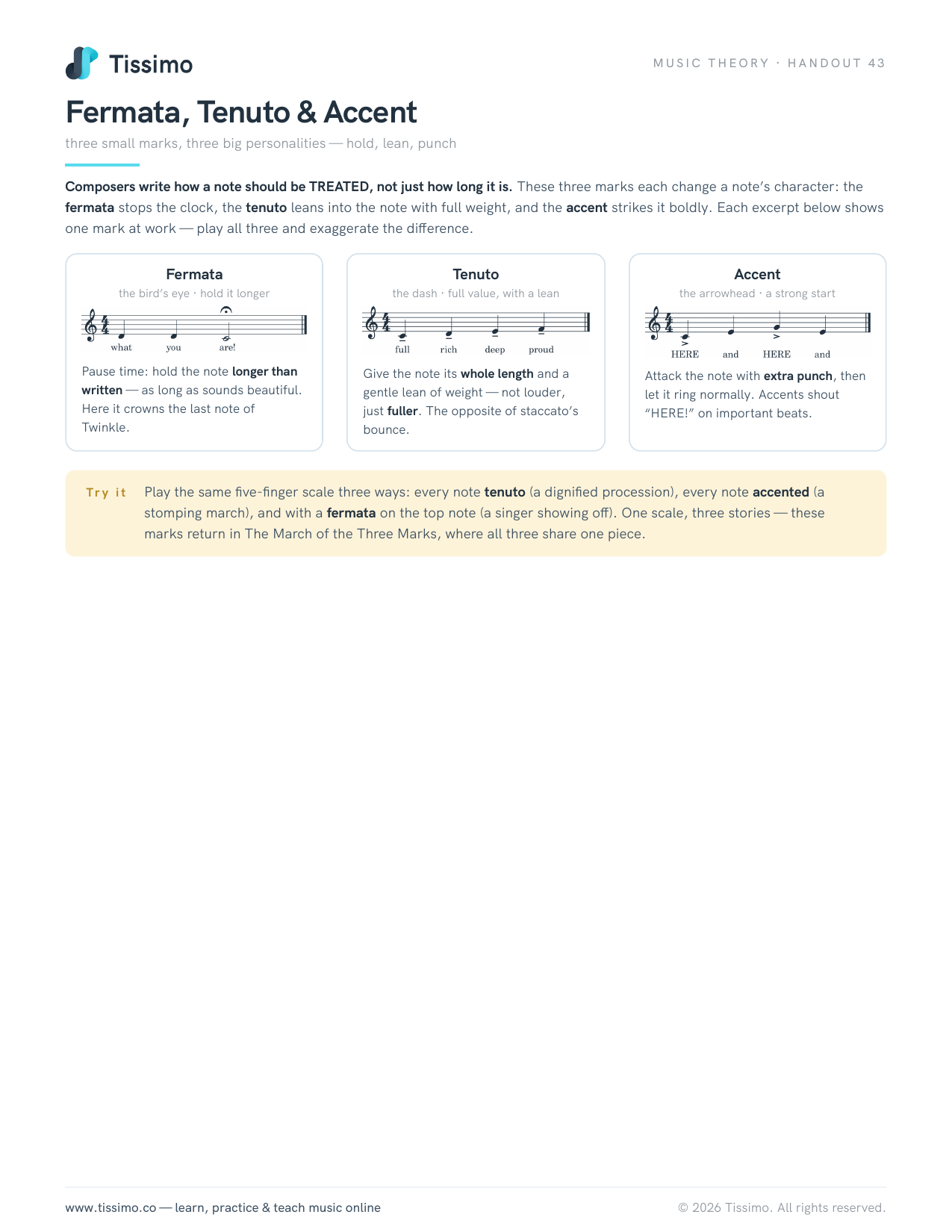
Lunga is not a tempo word, and it does not slow the music around it: only the marked note or rest gets longer. After the hold, the music goes on in its tempo. Practice fermatas of different lengths with Fermata, Tenuto & Accent.
Common questions
What does lunga mean over a fermata?
"Long": hold the note or rest clearly longer than a normal fermata. The score gives no exact length; the player or the conductor decides.
Comments