Tempo Markings
Largamente
Pronounced lar-gah-MEN-tehWritten as larg.
Largamente means 'broadly': play in a broad, full, sustained style, giving every note its full weight. It is a manner of playing, not a gradual slowing like allargando.
Largamente means "broadly". It asks for a broad, full, sustained style: full tone, every note held for its whole length, nothing rushed. It is sometimes shortened to larg.
How it looks on the page
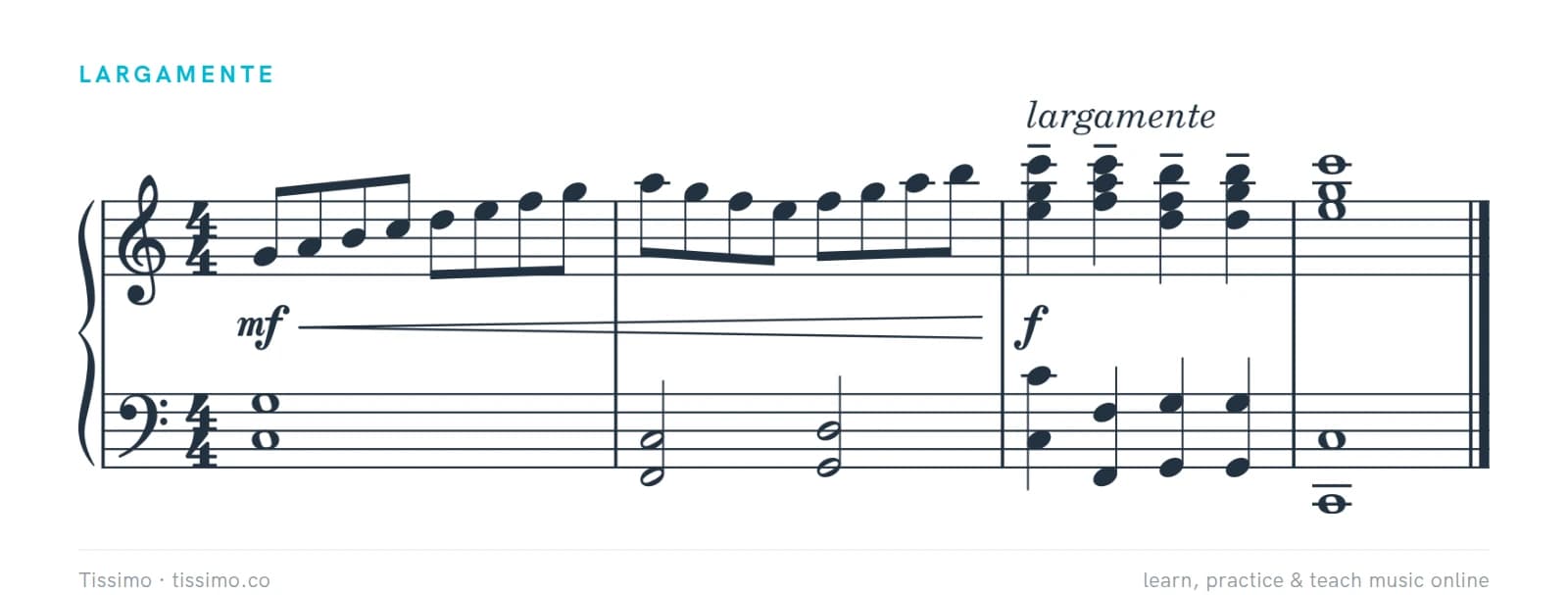
Largamente is printed above the staff where the broad style begins, often at a climax or a grand theme, and it may come with a loud dynamic and tenuto marks on the notes, as in the example. It holds until the music changes character.
Does largamente slow down?
References disagree a little. Some say largamente does not imply a change of tempo at all; others describe it as slowish and dignified. A safe reading: treat it first as a way of playing, broad and sustained, and if you take a little more time, take it at once, at the marking, not by slowing gradually. In the example the recording does exactly that.
Largamente and allargando
The two words come from the same root, largo, "broad", but they do different jobs. Allargando is a gradual process: get broader, slowing down step by step, usually toward a climax. Largamente is a style that is already there from the marking on. Largo is a slow tempo word in its own right.
Playing largamente
Common questions
What is the difference between largamente and allargando?
Largamente is a style: broad and sustained from the marking on. Allargando is a process: get gradually broader and slower, usually toward a climax.
Comments