Tempo Markings
Comodo (Tempo Comodo)
Pronounced KOH-moh-doh
Comodo means 'comfortable': play at an easy, unhurried pace. Tempo comodo is a comfortable speed, and allegro comodo is a relaxed allegro that never feels pushed.
Comodo means "comfortable" or "convenient", and in music it asks for an easy, unhurried pace. It is also spelled commodo in older scores. On its own as Tempo comodo it names a comfortable speed; it also qualifies a tempo word, as in Allegro comodo.
How it looks on the page
Comodo is printed with the tempo word at the start of a piece or section, usually above the staff: Allegro comodo. The adverb comodamente, "comfortably", means the same.
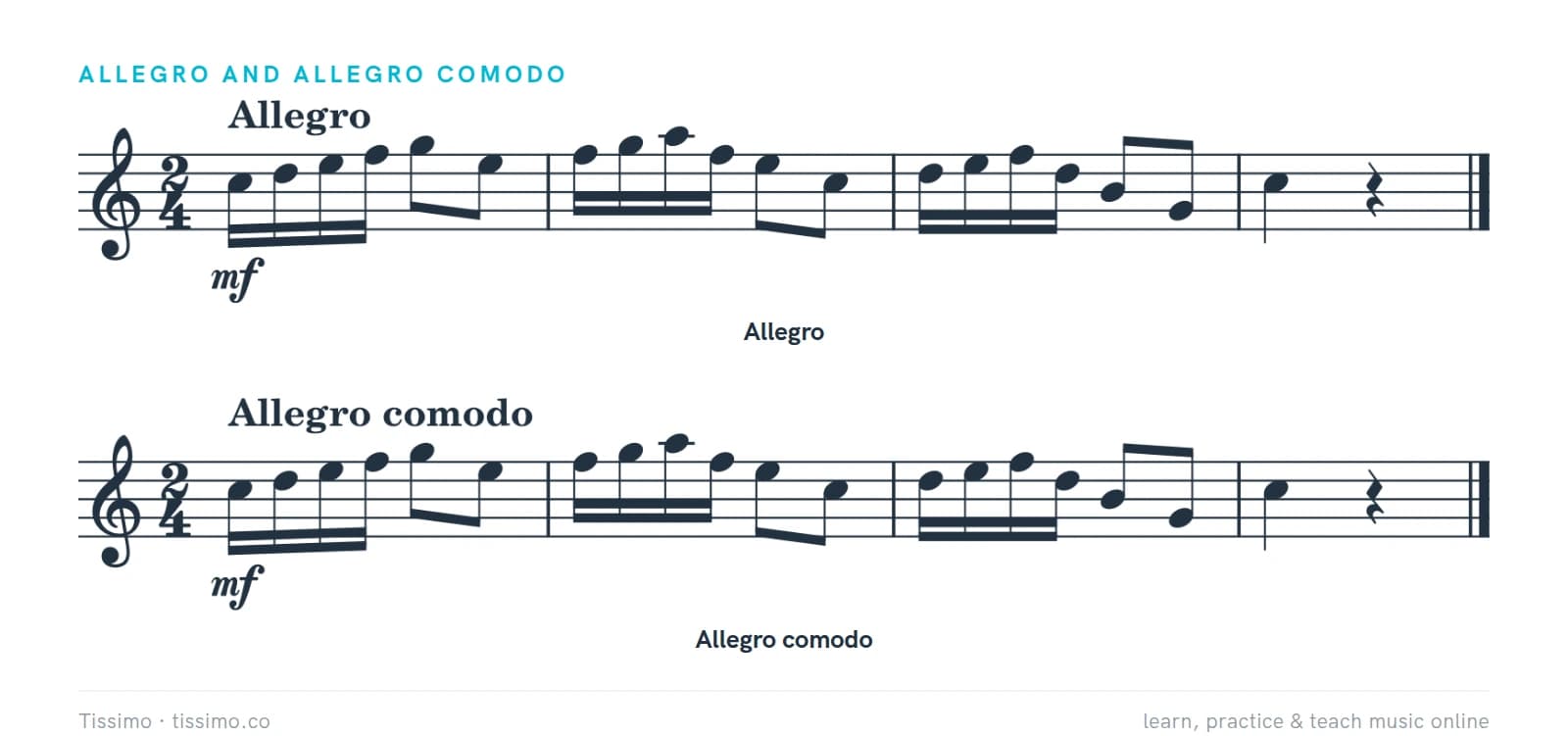
Choosing a comodo tempo
Comodo does not give a number. It tells you how the speed should feel: relaxed, with room for every note. A good method is to find the hardest bar of the passage, take a speed at which it sits easily, and keep that speed for the whole section. In an Allegro comodo the music is still lively, but you should never sound as if you are racing. Some dictionaries describe tempo comodo as a speed chosen to suit the player, so you have more say than with a fixed metronome mark.
A common confusion
Comodo is not "slow" and not "lazy". Allegro comodo is still an allegro; it is simply not pushed. It is also different from moderato, which names a middle speed. Comodo names a feeling of ease inside whatever tempo word it joins. Its effect is close to ma non troppo, "but not too much": both keep an allegro from running away.
Common questions
Does comodo mean slow?
No. It means comfortable: an easy, unhurried pace within the tempo word it joins. Allegro comodo is still fast, just never pushed.
Comments