Technique & Performance
Sul Ponticello
Written as sul pont.
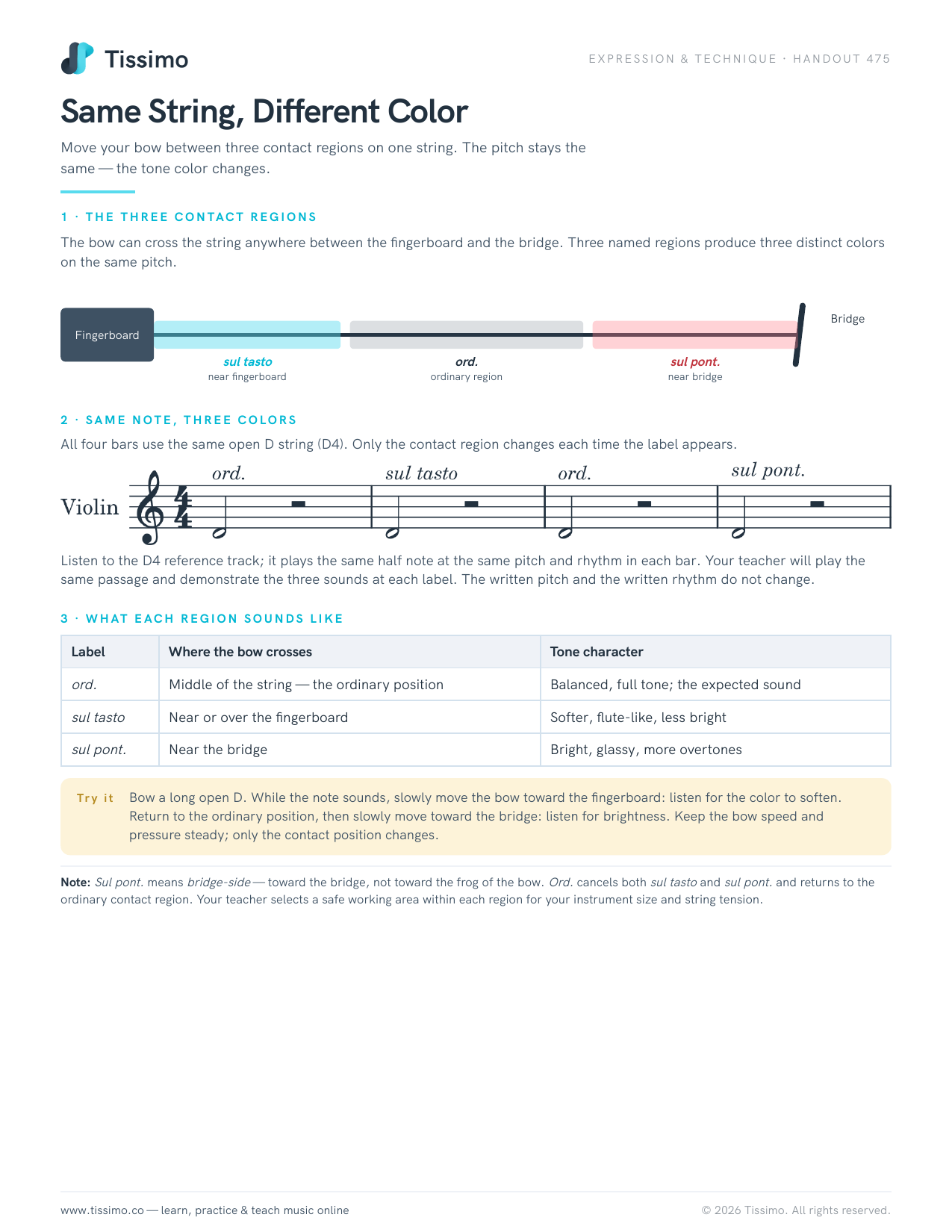
Sul ponticello tells a string player to bow near the bridge, bringing out upper partials for a bright, glassy or sometimes scratchy tone. It changes the bow's contact point, not the written pitches.
Sul ponticello directs a bowed-string player toward the bridge, where the bow's contact with the string produces a more overtone-rich sound. The result may be glassy, metallic or deliberately rough, depending on the instrument and how the bow is used. It is a change of timbre, not simply a request to play louder.
Where the bow touches
For an ordinary sul ponticello instruction, the hair contacts the strings near the bridge, not the wooden bridge itself. Special contemporary effects may have more specific directions in the score. There is no single distance in millimeters that works for every string, instrument and passage.
Bow speed and weight interact with the contact point. Moving toward the bridge while keeping every other movement unchanged is not a complete recipe for the desired sound. Work with a teacher on a controlled tone rather than pressing harder until the instrument scratches.
Reading the instruction
The abbreviation sul pont. is common. Poco and molto can request a smaller or greater degree of the effect; a score may define a particular progression between contact points. The notation can accompany long notes, short strokes or tremolo. It does not choose an up-bow or down-bow.
A return marked ordinario or ord. normally restores ordinary contact in this context. Continue to observe separate dynamics, articulations and other instructions.
Compare the colors
Sul tasto moves the contact toward or over the fingerboard for a more veiled sound. Col legno changes which part of the bow touches the strings. These are different decisions: near the bridge does not mean using the stick instead of the hair.
Common questions
Does sul ponticello mean bowing the bridge itself?
Normally the bow hair contacts the strings near the bridge. Bowing the wooden bridge is a different special effect and needs explicit context or instructions.
Does sul ponticello change the notes or make them louder?
The written pitches remain the target. The instruction changes tone color by emphasizing upper partials; it does not replace a dynamic marking or prescribe one fixed loudness.