Tempo Markings
Possibile
Pronounced pohs-SEE-bee-leh
Possibile is Italian for 'possible'. It pushes the word beside it to the limit: il più forte possibile is as loud as possible, il più piano possibile as soft as possible, and lento possibile as slow as possible.
Possibile means "possible". In a score it comes with another word, which it pushes as far as it will go. The full form is il più ... possibile, "the most ... possible", but markings are often shorter, such as più forte possibile or lento possibile.
Common possibile markings
- Il più forte possibile, or più forte possibile: as loud as possible.
- Il più piano possibile, più piano possibile, or p possibile: as soft as possible.
- Il più presto possibile: as fast as possible.
- Lento possibile: as slow as possible.
- Allegro tanto possibile: fast, as much as possible (see tanto).
What "possible" means
Possible means possible for the music, not only for your fingers or your breath.
- As soft as possible is the softest sound in which every note still speaks. On the piano, a key pressed too gently may not sound at all.
- As loud as possible is the loudest sound that stays full and controlled rather than harsh.
- As fast as possible is the fastest tempo at which the notes still sound clear, the same limit that prestissimo asks you to find.
A common confusion
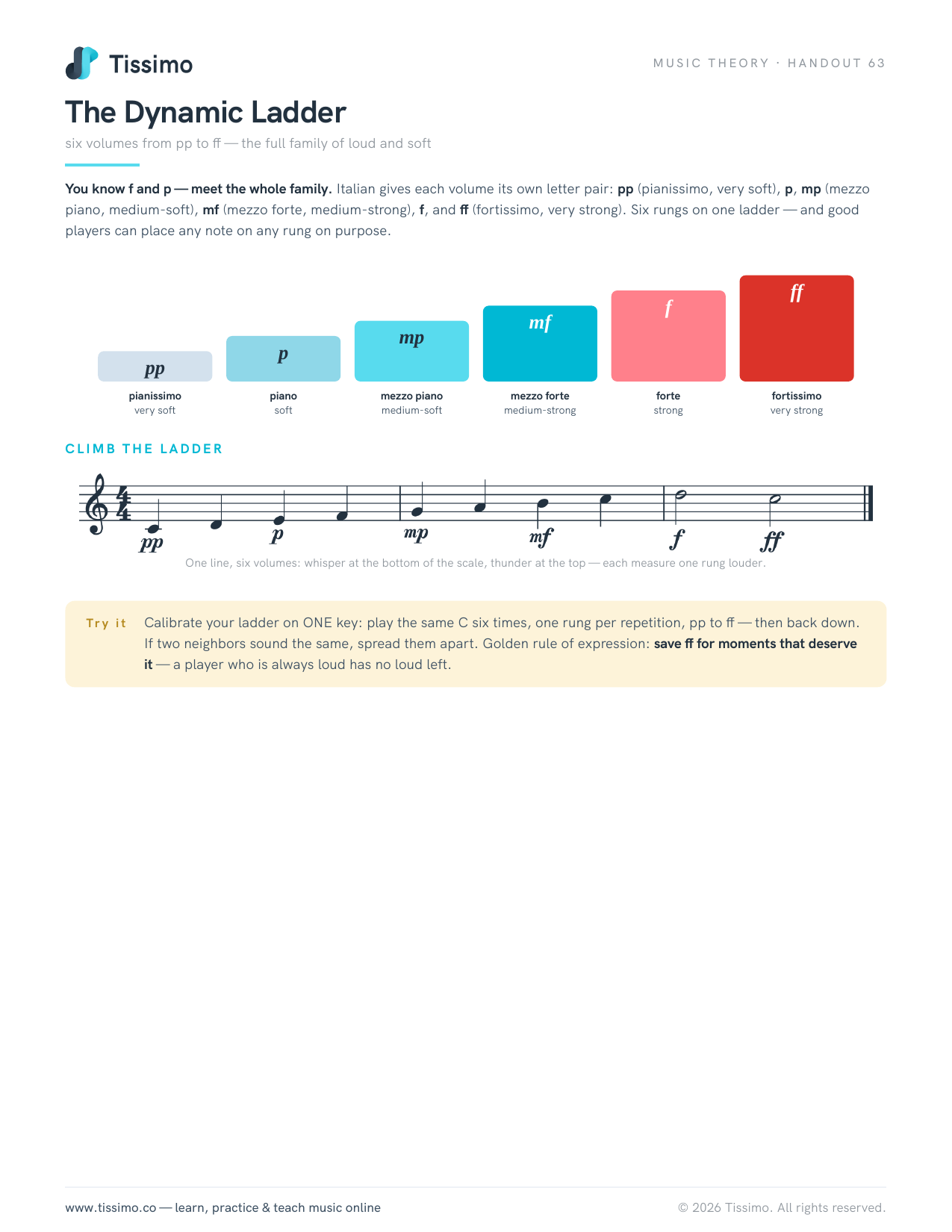
Possibile is relative, like every dynamic. It does not name a fixed level beyond pianissimo or fortissimo: the softest possible sound in a large hall, where it still has to carry, is not the softest possible sound in a practice room. Judge it in the place where you play, and keep something in reserve for the moment the marking appears. On the Dynamic Ladder, possibile sends you to the very ends of the ladder, past pp or ff.
Common questions
What does più forte possibile mean?
"As loud as possible": the loudest sound that stays full and controlled. Più piano possibile is the opposite, as soft as possible. See also più.
Comments