Notation & Symbols
Attacca
Pronounced ah-TAHK-kah
Attacca, written at the end of a movement or section, means go straight on to the next one without a pause. It often appears as attacca subito, "go on at once".
Attacca tells you not to stop. Written at the end of a movement or a section, it means the next one follows immediately: no break to tune, rest or turn pages at leisure. The fuller form attacca subito means the same, with extra urgency, and some scores name what follows, as in attacca subito il seguente, "go on immediately to the next".
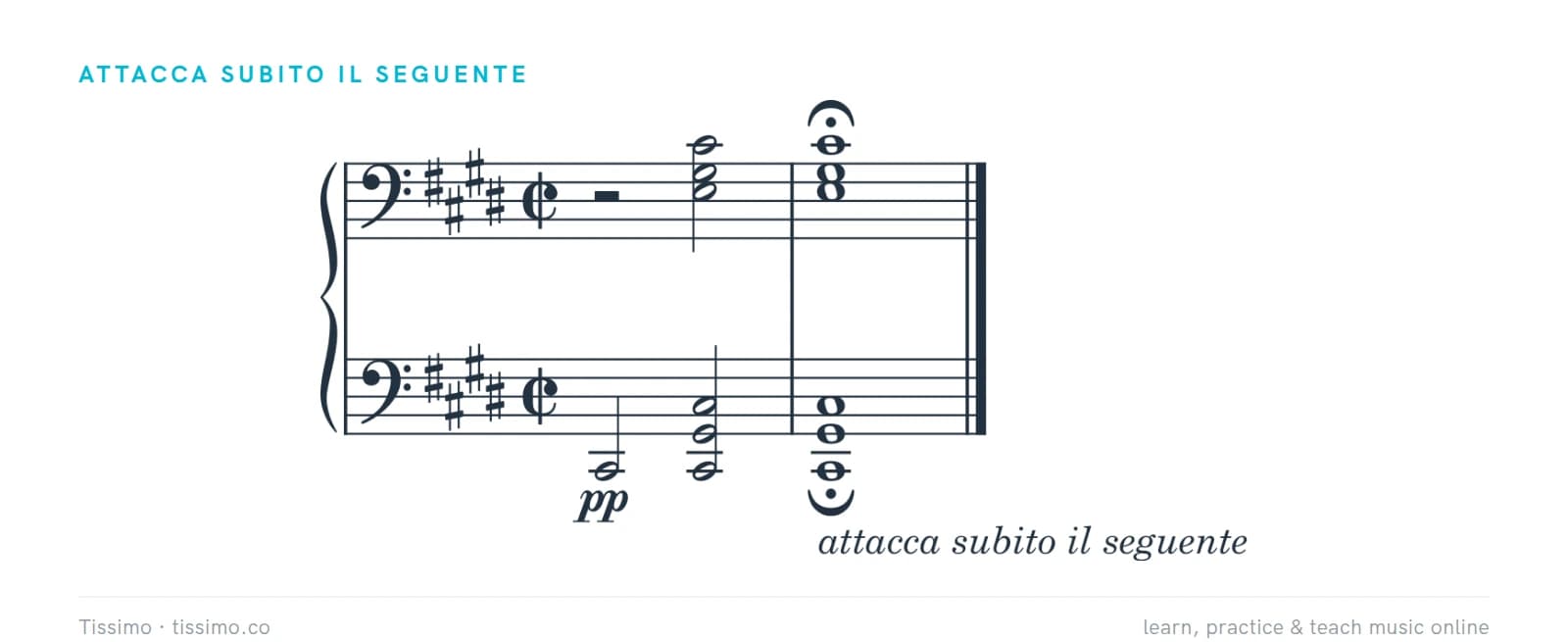
Where you meet it
Attacca usually sits at the end of the last bar of a movement, next to the final bar line. Composers use it to join movements or sections into one continuous span of music. Beethoven ends the first movement of his "Moonlight" Sonata with attacca subito il seguente, so the quiet last chord of the Adagio leads straight into the next movement.
How to play an attacca
- Finish the movement as written. A fermata on the last chord is still held for its full length; attacca concerns what happens after it.
- Then begin the next movement without the usual pause, at its own new tempo and character.
- Prepare in advance: have the next page ready, know the new tempo and, on a wind or string instrument, decide where you will breathe or change the bow.
- In an ensemble, the conductor or leader shows the moment to go on, so everyone moves together.
Attacca, subito and segue
Subito means "suddenly" and changes something at once, as in subito p; on its own it does not join two movements. Segue ("it follows") is a close relative of attacca: it also means go on without a break, and it can name what follows, as in segue il coro. The English word attack, the way a note begins, is a different idea (see articulation).
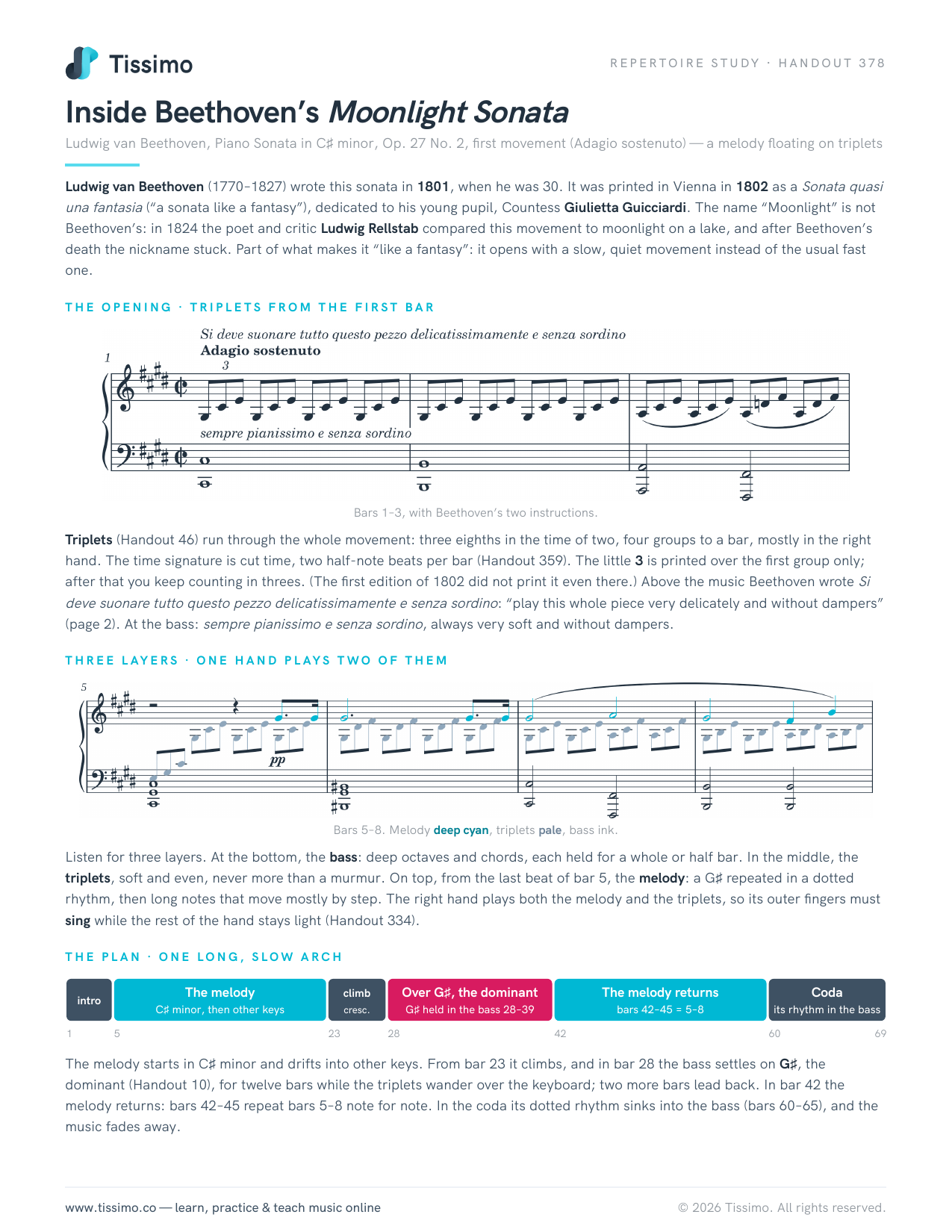
For the plan of the whole movement, from its opening triplets to the coda, see Inside Beethoven's Moonlight Sonata.
Common questions
What does attacca mean in music?
Go straight on to the next movement or section without a pause. It is written at the end of the music that comes first.
Is attacca the same as subito?
No. Subito means suddenly and makes any change instant, such as subito p. Attacca joins one movement or section to the next. They often appear together: attacca subito, go on at once.
Comments