Tempo Markings
Veloce
Pronounced veh-LOH-cheh
Veloce is Italian for 'swift': play quickly and nimbly. It can mark a whole section or a single fast passage, such as a run.
Veloce means "swift", "fast" or "nimble". It can head a whole section or stand over a single passage, such as a quick run, to say that those notes should fly. The adverb velocemente means the same, and velocissimo means very swift.
How it looks on the page
Veloce is printed in italics above the staff where the swift passage begins. It may come with a soft dynamic such as pianissimo, or with leggiero, as in the example: a swift passage is easier to keep even when it is light.
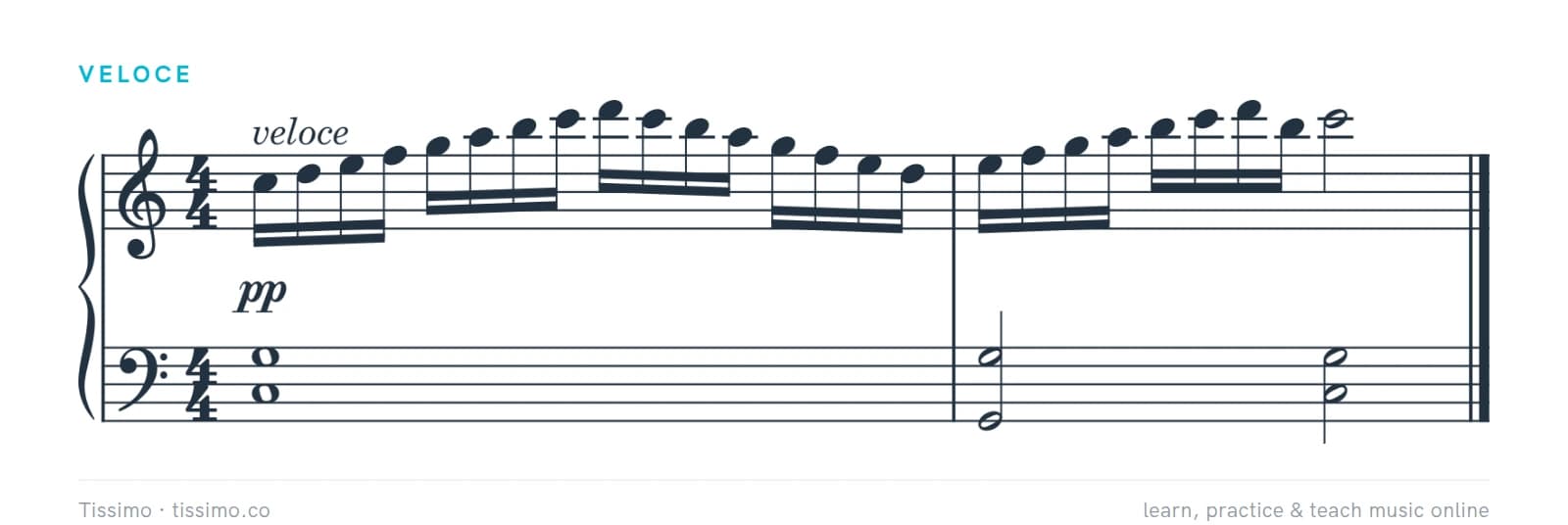
Playing veloce
- Lightness first. Keep the fingers close to the keys and the hand relaxed; a swift run sounds faster when it is even and light than when it is loud.
- Think in groups. Feel each beat's four sixteenths as one gesture, aiming for the first note of the next group.
- Practice slowly, in dotted rhythms, then bring it up to speed in stages with a metronome.
Veloce or presto?
Presto is a tempo word for a whole piece or section: very fast. Veloce describes the motion itself, swift and nimble, and a composer may use it for one passage as well as for a whole section. Neither gives a number. Its opposite in spirit is lento, slow.
Common questions
What is the difference between veloce and presto?
Presto is a tempo for a whole piece or section: very fast. Veloce means swift and nimble, and it can mark a single quick passage, such as a run, as well as a whole section.
Comments