Melody, Texture & Counterpoint
Phrase Elision
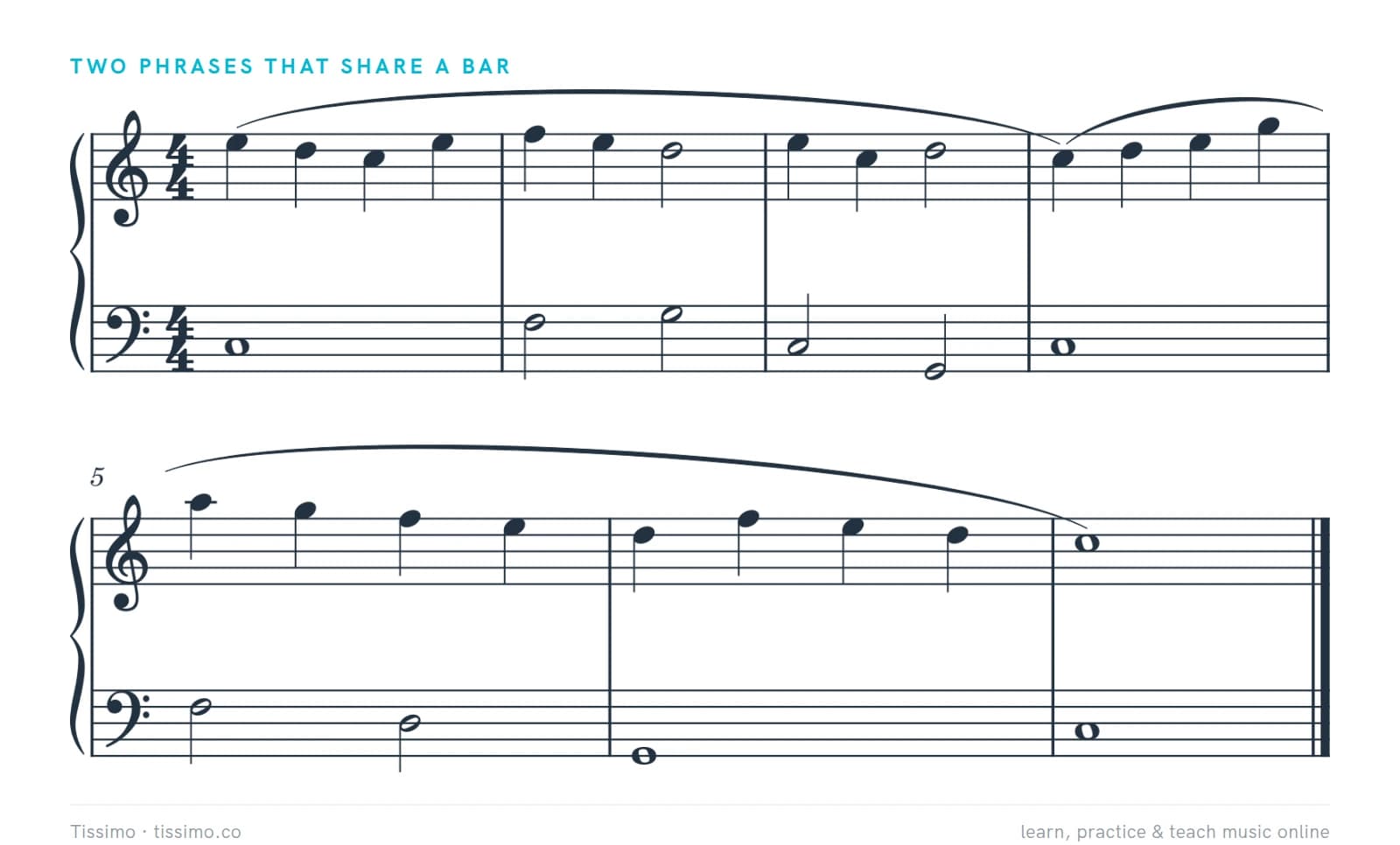
A phrase elision joins two phrases by overlapping them: the bar or chord that ends the first phrase, usually its cadence, is at the same time the beginning of the next phrase.
A phrase elision happens when one phrase ends at the very moment the next one begins. The final bar of the first phrase, usually the chord of its cadence, is at the same time the first bar of the second phrase. Elision means leaving something out: what is left out here is the separate bar, or the gap, that would normally come between the two phrases. The cadence that does this double duty is called an elided cadence.
How it sounds
In a plain period or a pair of four-bar phrases you hear an ending, often a little breath, and then a new start. With an elision the music arrives home and sets off again in the same instant. Two four-bar phrases joined this way last seven bars instead of eight, and the passage feels as if it runs straight through its own cadence. Composers use the effect to keep up momentum, to launch a new section with a bang, or to surprise a listener who expected a rest.
How to spot one on the page
- Find the cadence: the chord progression that ends the first phrase, such as V to I.
- Look at what happens on the arrival chord. If a new melody, a new texture, a louder dynamic or a new accompaniment pattern starts right there, the cadence is probably elided.
- Count the bars. Phrases that seem one bar short, such as a seven-bar unit built from two four-bar ideas, are a clue.
One textbook example comes from the first movement of Mozart's Eine kleine Nachtmusik, K. 525.
Overlap or elision?
Many textbooks use phrase overlap and elision as two names for the same thing. Some theorists keep them apart: they call it an overlap when the shared moment belongs equally to both phrases, and an elision when the ending is cut off and replaced by the new beginning, for instance when a soft cadence is swallowed by a loud new start. The word elision is also used in other senses, for example for a "harmonic elision", where an expected chord is skipped, so check what a book means.
Playing through an elision
Do not breathe, lift or slow down at an elided cadence, as you might at the end of a phrase. Let the arrival note or chord carry straight into the new phrase, and shape the dynamics so that the listener hears both the ending and the fresh start. Practice finding phrase endings with Phrase and period and Repeat, Continue, or Answer?, then look for places where an ending and a beginning share a bar.
Common questions
What is an elided cadence?
A cadence whose final chord also begins the next phrase. The phrase ends and the next one starts on the same beat, so there is no gap between them.
Practice it: free worksheets
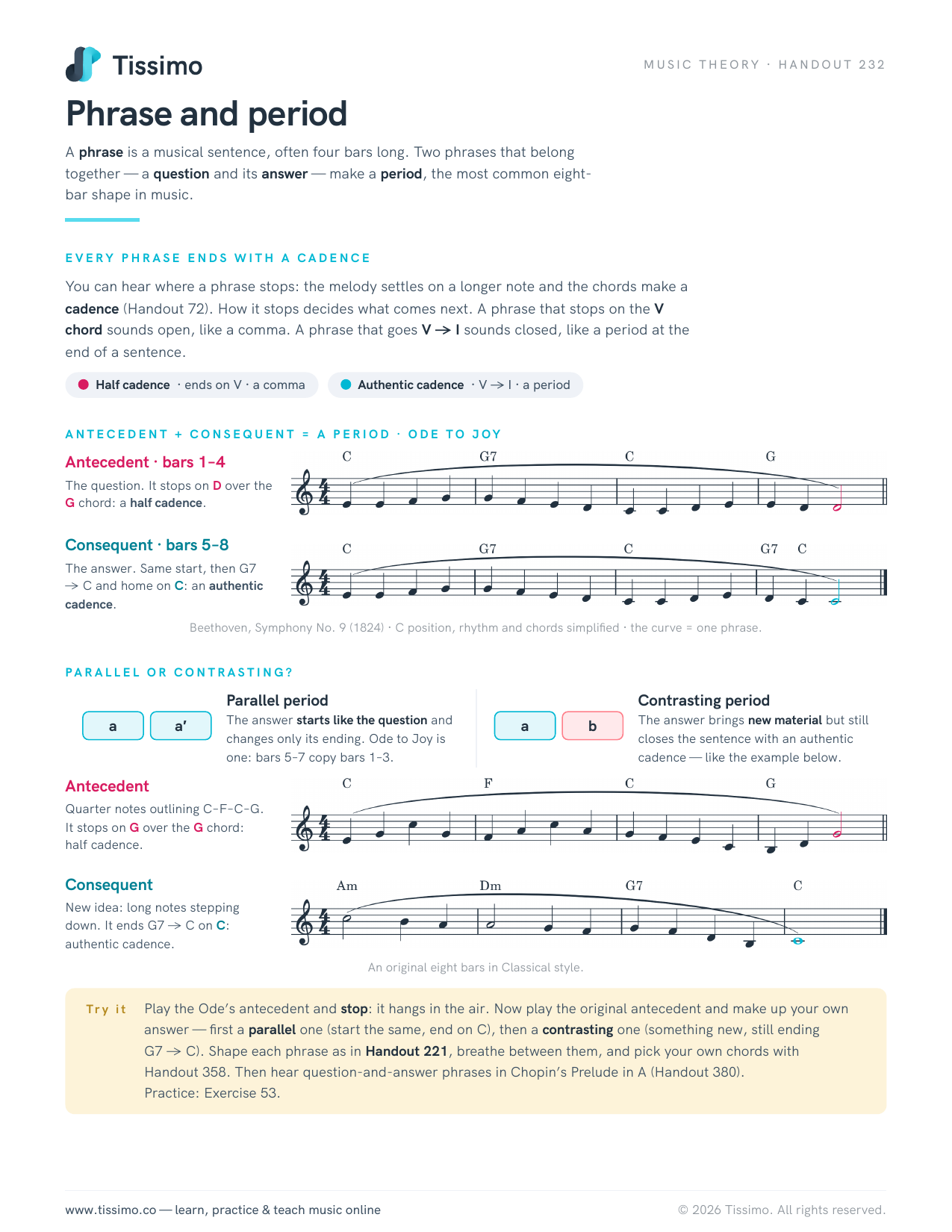 Phrase and periodA phrase is a musical sentence, often four bars long. Two phrases that belong together — a question and its answer — make a period, the most common eight-bar shape in music.
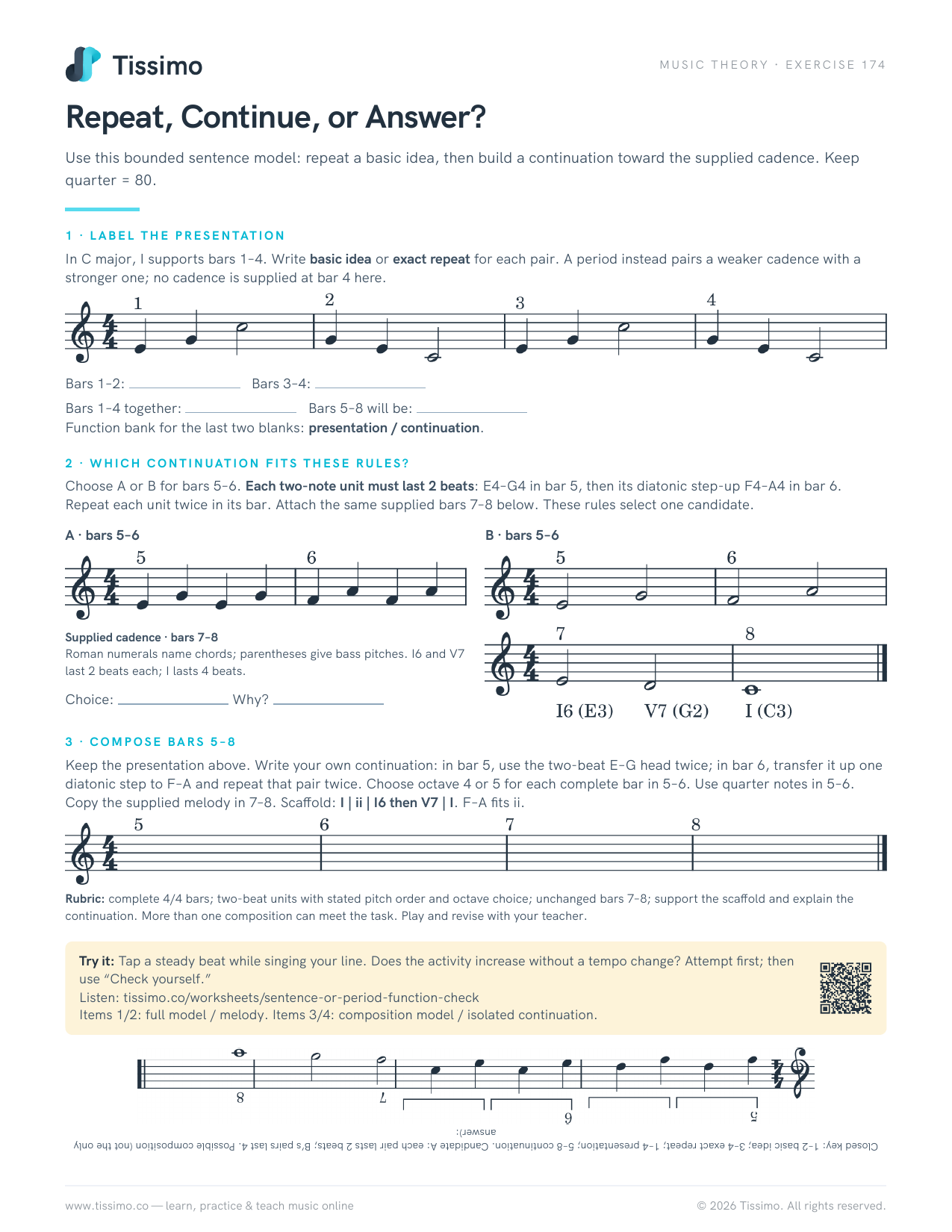 Repeat, Continue, or Answer?Use this bounded sentence model: repeat a basic idea, then build a continuation toward the supplied cadence. Keep quarter = 80.
Comments