Form & Structure
Pre-Chorus
A pre-chorus is an optional song section between a verse and a chorus. It prepares the chorus, often increasing anticipation through changes in melody, harmony, rhythm or texture.
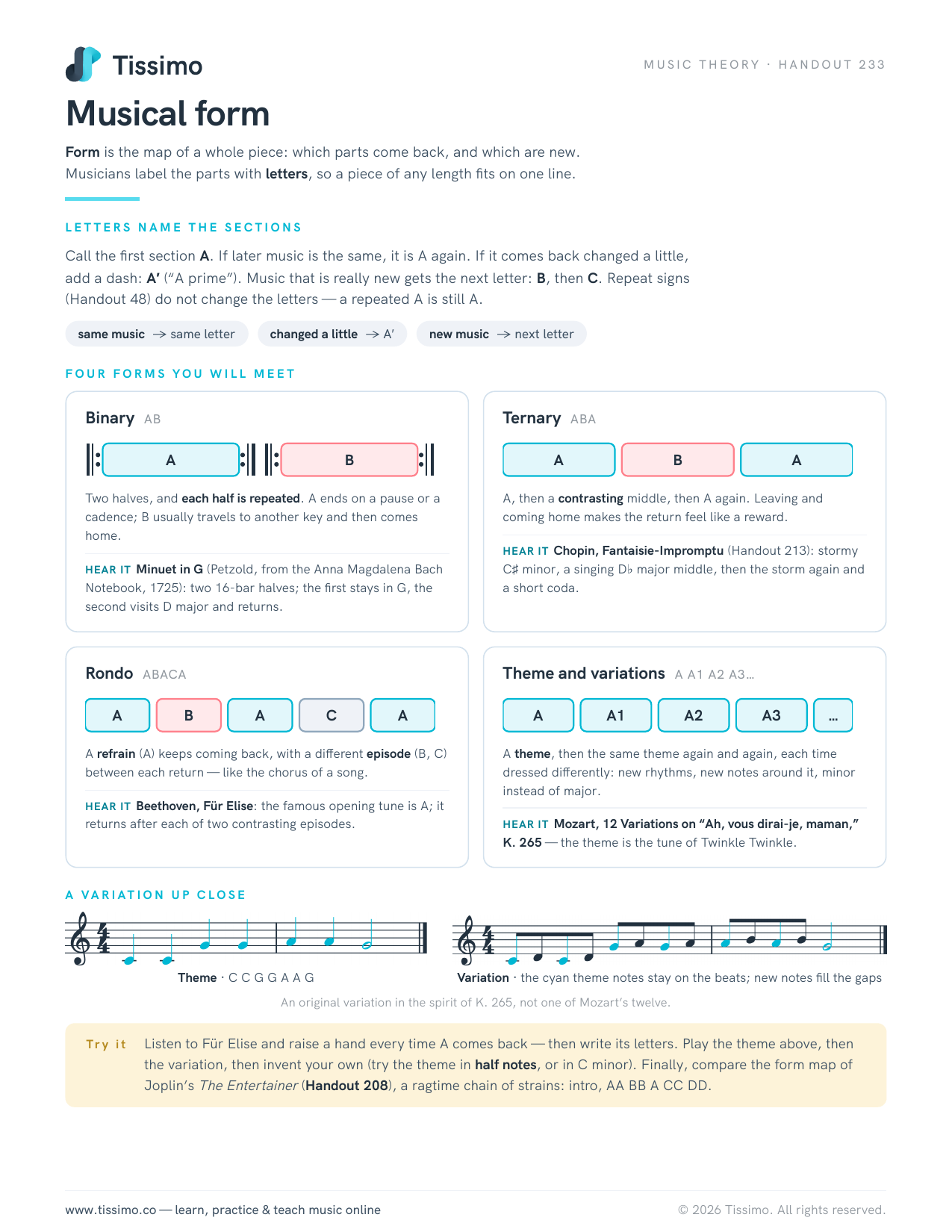
A pre-chorus connects a verse to a chorus while making the chorus feel like an arrival. It is an optional part of verse–chorus form: many songs go straight from verse to chorus.
How it creates anticipation
A pre-chorus can shift the chords, move the melody higher, repeat shorter phrases or make the rhythm more active. These changes encourage the listener to expect the next section. Building anticipation does not simply mean turning up the volume; an arrangement can also hold back instruments before the chorus enters.
The pre-chorus often returns when the verse–chorus cycle repeats. Its lyrics may stay the same or change. It need not appear before every chorus: a song can move from one chorus directly into another, or take a different route near the ending.
Pre-chorus or bridge?
The distinction is one of function, not just length. A pre-chorus prepares the chorus from the verse. A bridge in this form usually offers a later contrast after earlier cycles. Neither label means the section must contain exactly eight bars.
Try it
Mark three points in a recording: the start of the verse, the moment its pattern changes, and the chorus entrance. Replay the middle passage and describe one specific change you hear. Then compare the next cycle. If the chorus arrives without that passage, leave the pre-chorus out of your map instead of assuming it must be there.
Common questions
Does a song need a pre-chorus before every chorus?
No. The pre-chorus is optional. A song may omit it entirely, or use it in some verse–chorus cycles and not others.