Dynamics & Expression
Terraced Dynamics
Terraced dynamics are changes of loudness made in steps, such as forte straight to piano, instead of by gradual crescendo or diminuendo. The term is used mostly about Baroque music.
Terraced dynamics are changes in loudness made in steps rather than slopes: one passage is f, the next is p, and the change happens all at once, with no crescendo or decrescendo in between. Picture the levels as terraces on a hillside: you step from one flat level to the next. The term is used mostly about Baroque music. It is a modern label, found in later histories and textbooks rather than in the writings of Baroque musicians; the German form is Terrassendynamik.
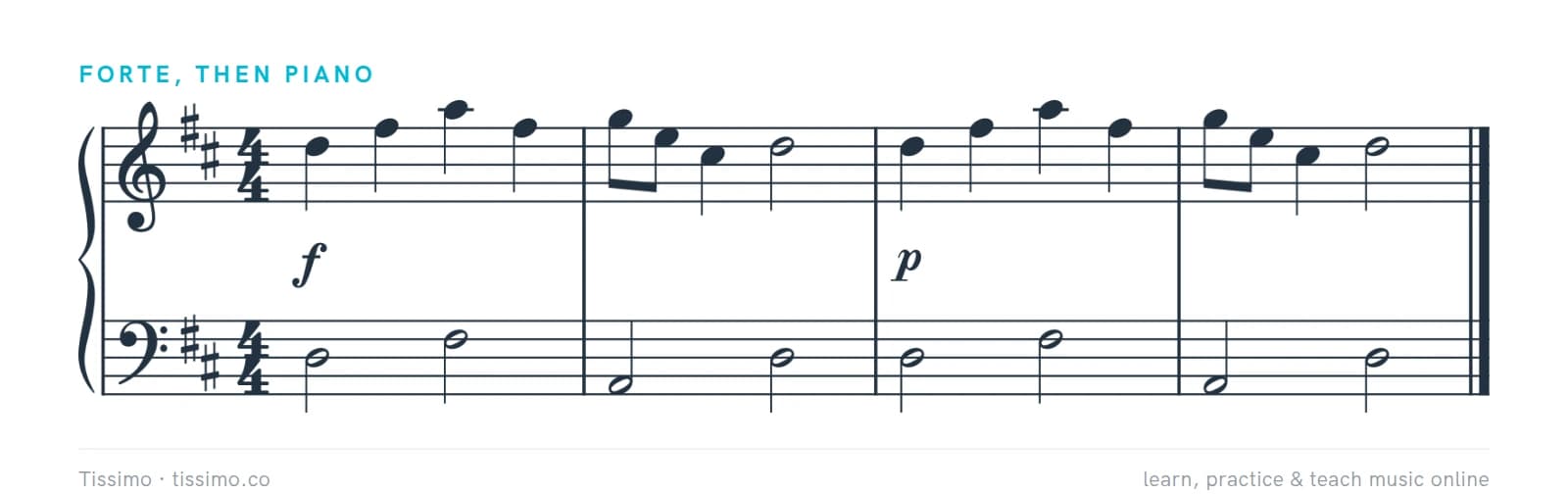
Where the steps come from
- Changes of scoring. In a Baroque concerto, passages for the full ensemble alternate with passages for one or a few soloists, so the volume changes as players drop out and come back in.
- Keyboards with stops and manuals. On the harpsichord, pressing a key harder does not make it louder, but the player can change the sound by switching stops or moving to the other keyboard (manual). The organ works the same way. Bach published his Italian Concerto in 1735 for "a harpsichord with two manuals", and modern editors read its forte and piano marks as telling the player which manual to use.
- Echoes. A phrase repeated softly, as in the example above, is one of the most familiar uses of a sudden change.
A label, not a rule
Many textbooks list terraced dynamics among the features of the Baroque era, and the Periods of Music History chart describes Baroque loud and soft as changing "in blocks". That is a fair summary of much keyboard and concerto writing, but not the whole story. Singers, string players and wind players of the time could swell and fade a note or a phrase, and how strictly Baroque music was "terraced" is debated by historians and performers. So treat terraced dynamics as one typical sound of the period, not as a rule that forbids gradual shaping: shape dynamics to the phrase and the texture, as the Baroque music entry advises.
Playing terraced dynamics on the piano
- Make the step clean. Change level exactly where the new phrase begins, without creeping up or down beforehand.
- Keep the tempo. A softer echo is not a slower one.
- Change the color too. A p echo can sound lighter and farther away, not only quieter.
To practice the other way of changing level, with hairpins between the signs, try Dynamics & tempo ladders.
Common questions
What are terraced dynamics in Baroque music?
Sudden changes between levels of loudness, such as f straight to p, instead of gradual crescendos. They come from changes of scoring (full ensemble against soloists) and from keyboards whose loudness changes with stops and manuals rather than touch. How strictly Baroque music worked this way is debated.
Practice it: free worksheets
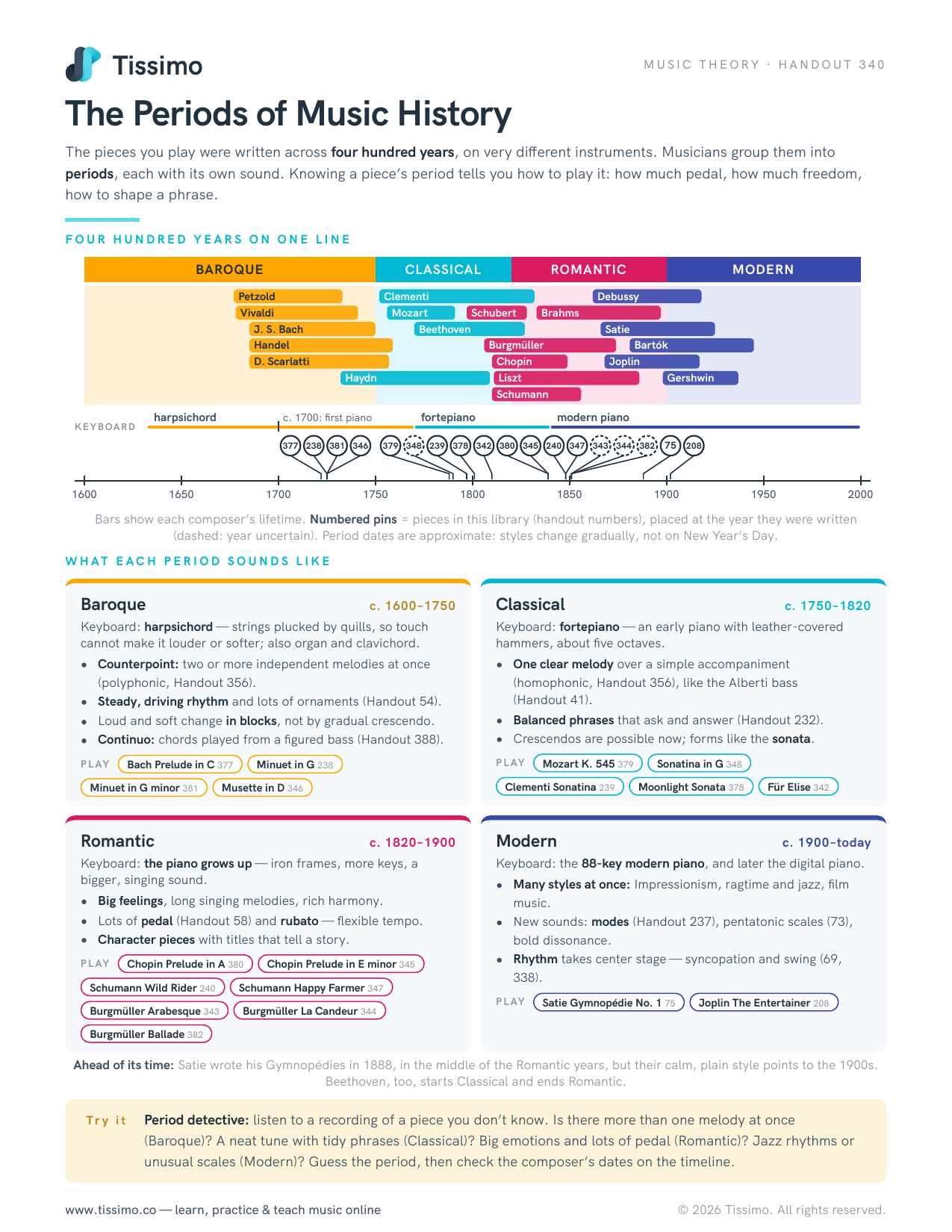 The Periods of Music HistoryThe pieces you play were written across four hundred years, on very different instruments. Musicians group them into periods, each with its own sound. Knowing a piece’s period tells you how to play it: how much pedal, how much freedom, how to shape a phrase.
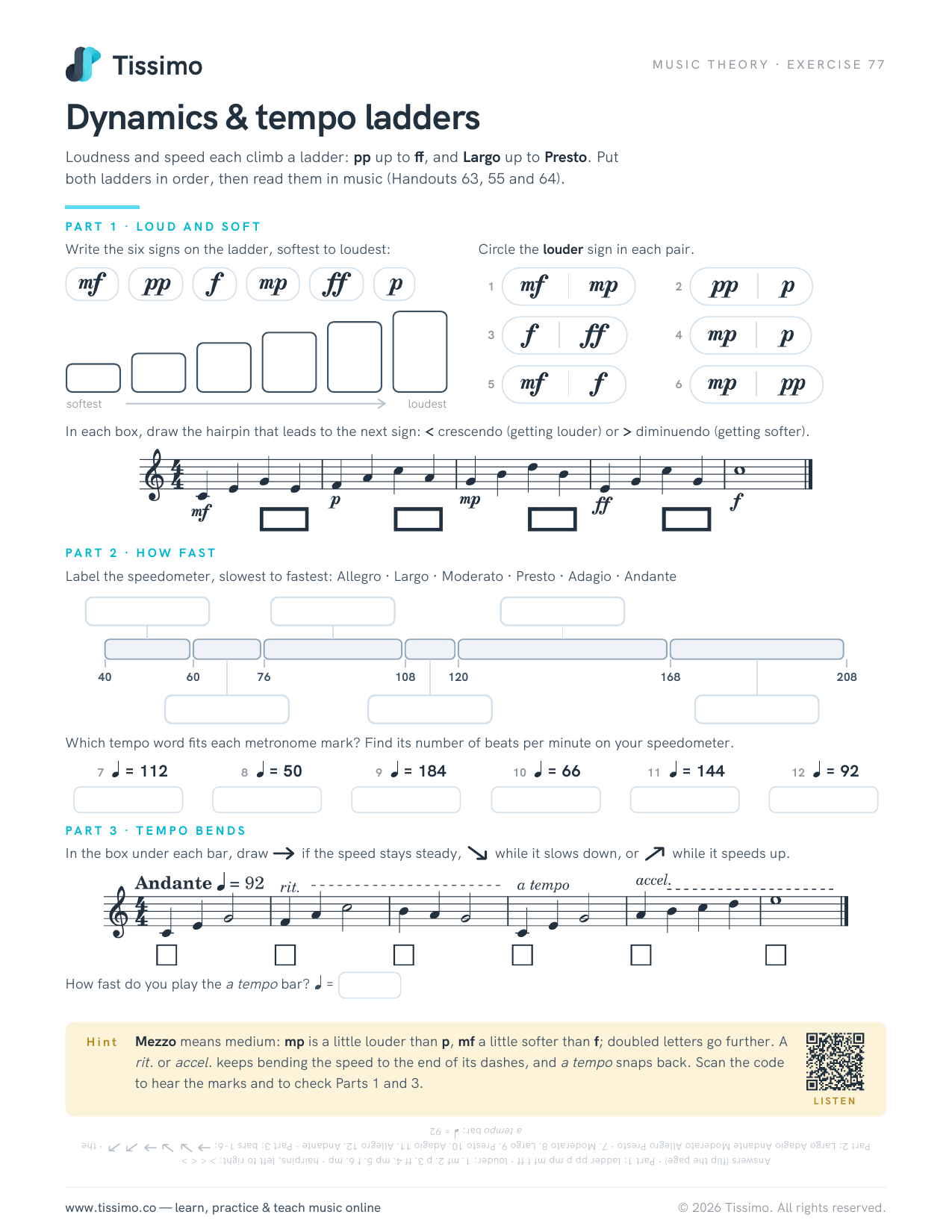 Dynamics & tempo laddersLoudness and speed each climb a ladder: pp up to ff, and Largo up to Presto. Put both ladders in order, then read them in music (Handouts 63, 55 and 64).
Comments