Dynamics & Expression
Dolente (Doloroso)
Pronounced doh-LEN-teh
Dolente means 'sorrowful': play with grief and pain in the sound, usually soft and slow, with drooping phrases. Doloroso and con dolore, 'with grief', ask for the same character.
Dolente means "sorrowful" or "grieving", and doloroso means much the same: both come from the Italian dolore, grief or pain. Con dolore, "with grief", and the adverbs dolentemente and dolorosamente ask for the same character. The music they mark is usually slow, soft and in a minor key, and it should sound as if it hurts.
How it looks on the page
The word is printed in italics, below the staff beside a soft dynamic, as in p dolente, or as part of a heading. A famous heading: in the finale of Beethoven's Piano Sonata in A-flat major, Op. 110 (1821–22), a slow recitative leads into a song-like passage headed Arioso dolente, a sorrowful arioso.
How to play dolente
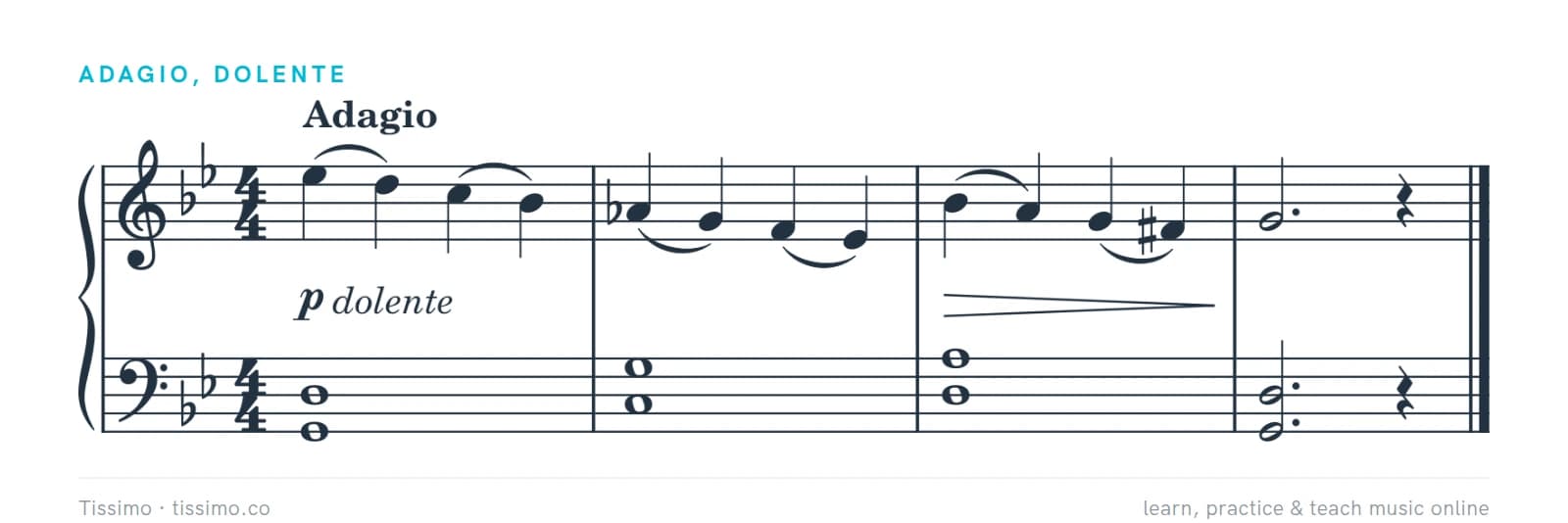
- Lean into the sighs. Grief in music often comes as two-note "sighs": a stressed note that falls by step to a softer one, like an appoggiatura resolving. Weight the first note of each slurred pair and let the second fall away, as in the example below.
- Keep the tone warm and covered. Sorrow is not harsh: avoid bright, hard attacks.
- Take time, but keep moving. Let each phrase breathe without letting the pulse stop.
Dolente, mesto and lamentoso
Italian has several words for sad music, and they overlap. Mesto is sad and mournful, triste is simply sad, and lamentoso is lamenting, like a voice that weeps aloud. Dolente adds the idea of pain: grief that hurts. Its opposite in mood is giocoso, merry and playful.
Common questions
What does dolente mean in music?
Sorrowful, grieving: play with a soft, heavy-hearted, painful character. Doloroso and con dolore (with grief) mean much the same.
Comments