Dynamics & Expression
Triste (Tristamente)
Pronounced TREE-steh
Triste means 'sad': play with a sorrowful, melancholy character, usually soft and unhurried. Tristamente means 'sadly', and con tristezza, 'with sadness', asks for the same.
Triste is the everyday Italian word for "sad", and tristamente means "sadly". The noun is tristezza, sadness, so con tristezza asks you to play "with sadness". Triste is also the French word for "sad", so you may meet it in French scores, as in lent et triste, "slowly and sadly".
How it looks on the page
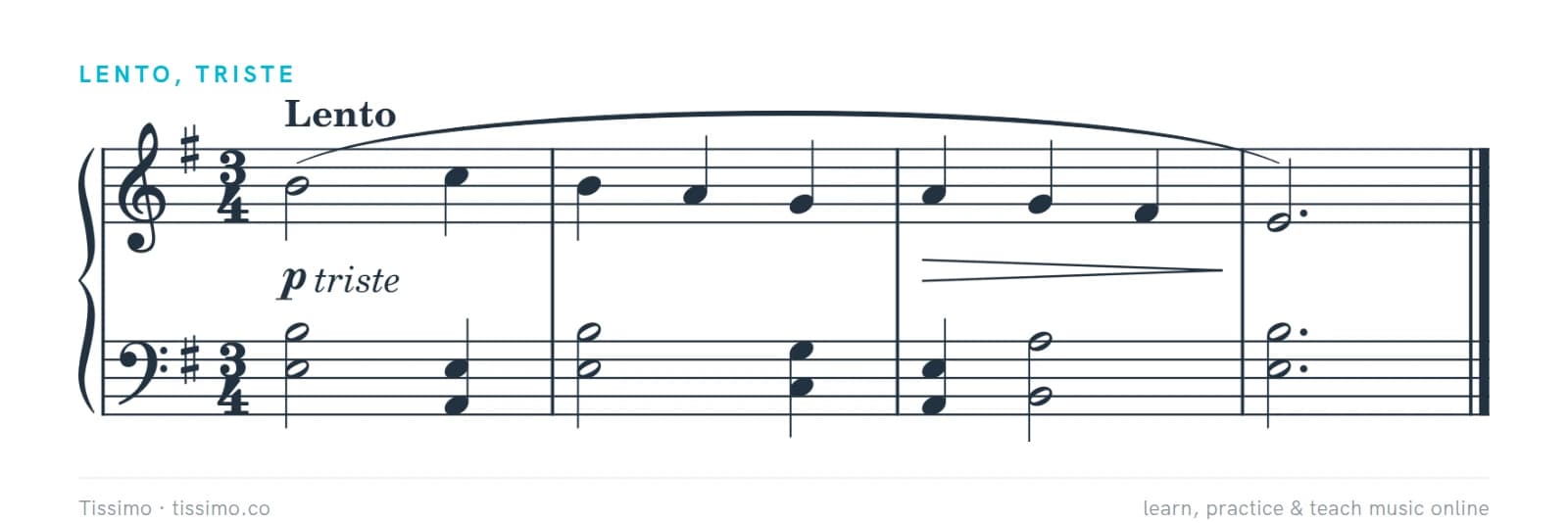
Triste is printed in italics, below the staff beside a soft dynamic, as in p triste, or joined to a tempo word at the head of a piece. It names the mood; the dynamic and tempo words beside it set the level and the speed.
How to play triste
- A quiet, inward tone. Play softly, with a relaxed arm, and avoid bright attacks.
- Let phrases fall. Many sad melodies descend. Let the line sink toward its last note and fade, as in the example below.
- Unhurried, but moving. Give long notes their full value without letting the pulse stop.
Triste, mesto and dolente
Mesto means sad or mournful, dolente sorrowful, with a sense of pain, and lamentoso lamenting, grief expressed aloud. Triste is the plainest of them: simply sad. The differences are small and composers don't use the words consistently, so let the music around the word guide you. Its opposite in mood is giocoso, merry and playful.
Common questions
What does triste mean in music?
Sad: play with a sorrowful, melancholy character, usually soft and unhurried. Tristamente means sadly.
Comments