Dynamics & Expression
Delicato
Pronounced deh-lee-KAH-toh
Delicato means 'delicately': play with a fine, light, refined touch, as if the sound could break. Delicato passages are usually soft, transparent and precise.
Delicato means "delicate". It asks for a fine, light, refined sound, played with care, as if it could break. Delicato passages are usually soft, often high and transparent, with small, precise movements. The adverb delicatamente, "delicately", means the same, and the superlatives delicatissimo and delicatissimamente mean "very delicately", as delicately as possible.
How it looks on the page
Delicato is printed in italics, usually below the staff beside a soft dynamic, as in pp delicato. Like dolce, it is an expression word: it describes the character, and the dynamic sets the level.
Delicato in real music
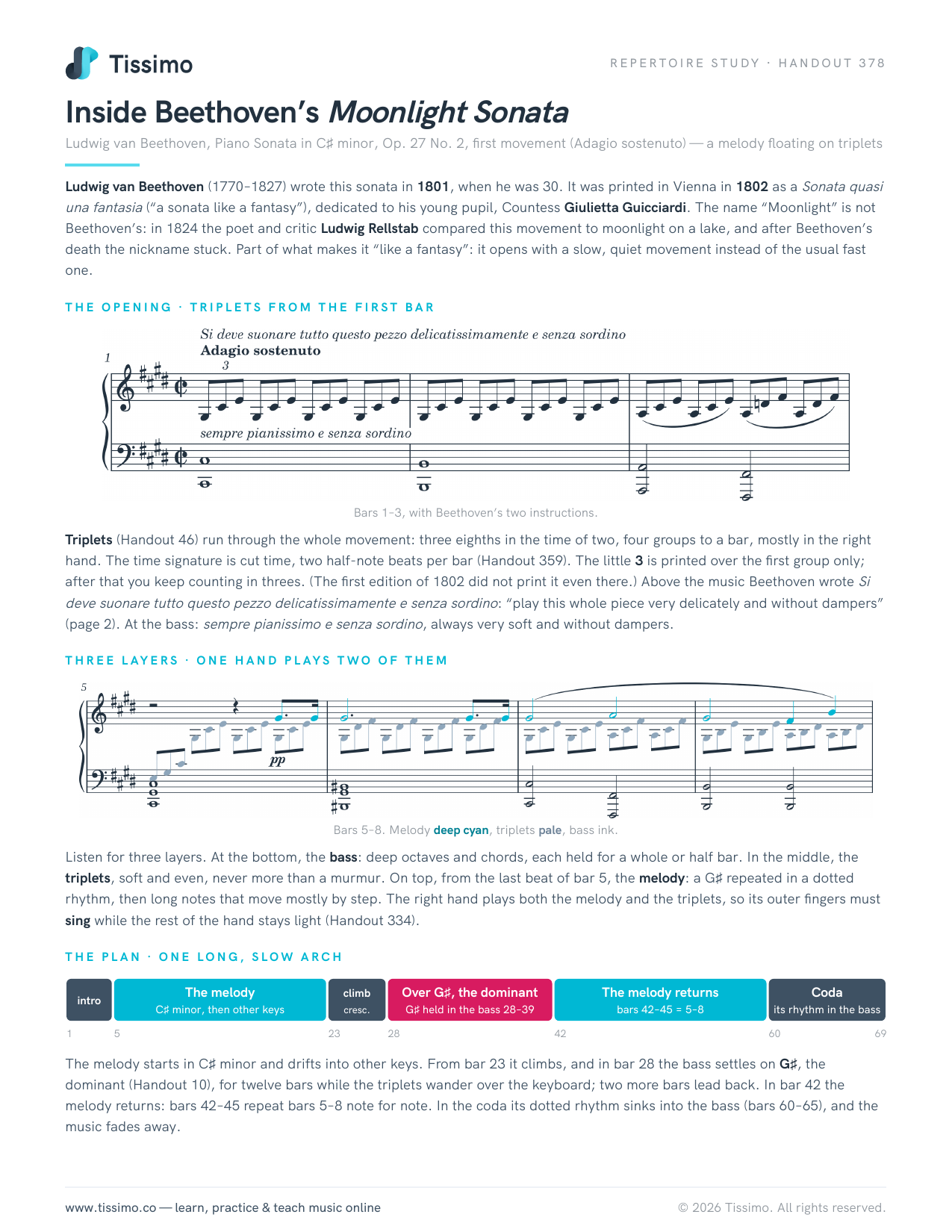
Beethoven's "Moonlight" Sonata begins with a written instruction to play the whole movement delicatissimamente e senza sordino: very delicately, and without the dampers (see senza). Our Moonlight Sonata study explains both halves of that sentence.
How to play delicato
- Stay close to the keys. Small finger movements from the surface of the key give the most control at low levels.
- Keep the arm light. No weight drops; the sound should never thicken.
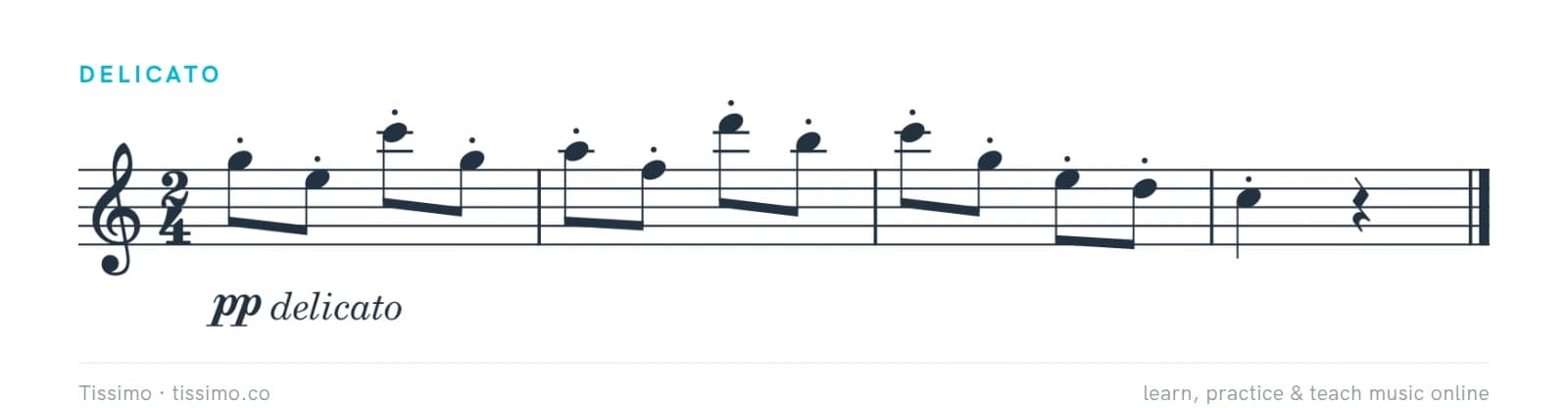
- Make short notes light and exact. Staccato in a delicato passage is a touch, not a jab, as in the example below.
- Keep every note even. One loud note breaks the effect.
Delicato, leggiero and dolce
- Leggiero: light and nimble, mainly a matter of touch in quick passagework.
- Dolce: sweet, warm and tender.
- Delicato: fine, fragile and refined. It overlaps with both, and composers often combine the words.
Its opposites are deciso, firm and decided, and pesante, heavy.
Common questions
What does delicato mean in music?
Delicately: play with a fine, light, refined touch, usually softly, as if the sound could break.
Comments