Dynamics & Expression
Semplice
Pronounced SEM-plee-cheh
Semplice means 'simply': play plainly and naturally, without affectation, with an even tone, a steady tempo and no exaggerated rubato or swells. It does not mean easy or expressionless.
Semplice means "simple" or "plain". It asks you to play without affectation: an even tone, a steady tempo, gentle shaping and nothing added for effect. It does not mean "easy", and it does not mean "without feeling". The music should sound natural and unforced, like a song sung by someone who has no need to show off.
Where you see it
Semplice is printed in italics, usually below the staff beside a soft dynamic, or added to a tempo word at the head of a movement. The second movement of Tchaikovsky's Piano Concerto No. 1 is headed Andantino semplice. The slow Arietta that ends Beethoven's last piano sonata, No. 32, Op. 111, carries the word in its heading, next to Adagio molto and cantabile. The adverb semplicemente, "simply", means the same.
How to play semplice
- Keep the beat steady. Let the written rhythm carry the music instead of stretching notes with rubato.
- Shape phrases gently. Small rises and falls in dynamics, not dramatic swells.
- Play what is written. No added ornaments or accents, and no lingering on the "beautiful" notes.
- Keep the accompaniment quiet and even, so the melody can speak plainly.
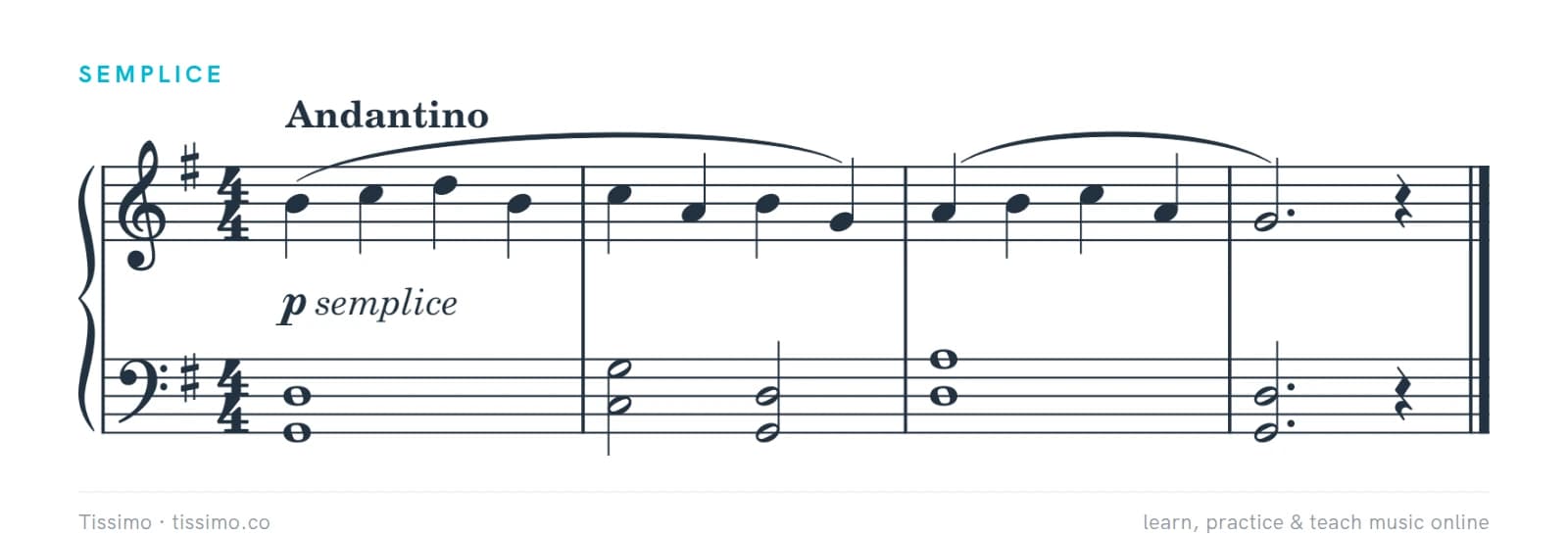
The example below shows the kind of melody that carries the word: steps and small skips, in two short phrases, over held fifths in the left hand.
Semplice, dolce and espressivo
Dolce asks for sweetness and warmth of tone. Cantabile asks for a singing line. Espressivo invites you to show the feeling more openly. Semplice asks for restraint. Its opposite in spirit is appassionato: intense, surging and impassioned.
Common questions
What does semplice mean in music?
Simply: play plainly and naturally, with a steady tempo, an even tone and gentle shaping, without exaggerated rubato or added effects.
Comments