Dynamics & Expression
Niente (Al Niente, Dal Niente)
Pronounced NYEN-teh
Niente means 'nothing'. Al niente asks the sound to fade away to silence, and dal niente asks it to grow out of silence. Many modern scores show it as a small circle at the point of a hairpin.
Niente is Italian for "nothing". In music it names the softest level of all, silence itself, and it is joined to a decrescendo or a crescendo to say where the change ends or begins:
- Al niente or a niente, "to nothing": fade away until no sound is left, as in diminuendo a niente.
- Dal niente, "from nothing": begin in silence and let the sound grow out of it.
- Quasi niente, "almost nothing": barely audible (see quasi).
How it looks on the page
You may see the words, a sign, or both. In many modern scores a hairpin ends or begins in a small circle. A closing hairpin with a circle at its point means "fade to nothing"; an opening hairpin that starts from a circle means "grow from nothing". The MusicXML notation standard has a setting for exactly this circled hairpin, and a separate niente dynamic, printed as a small n. The example below shows both directions, with the words printed too.
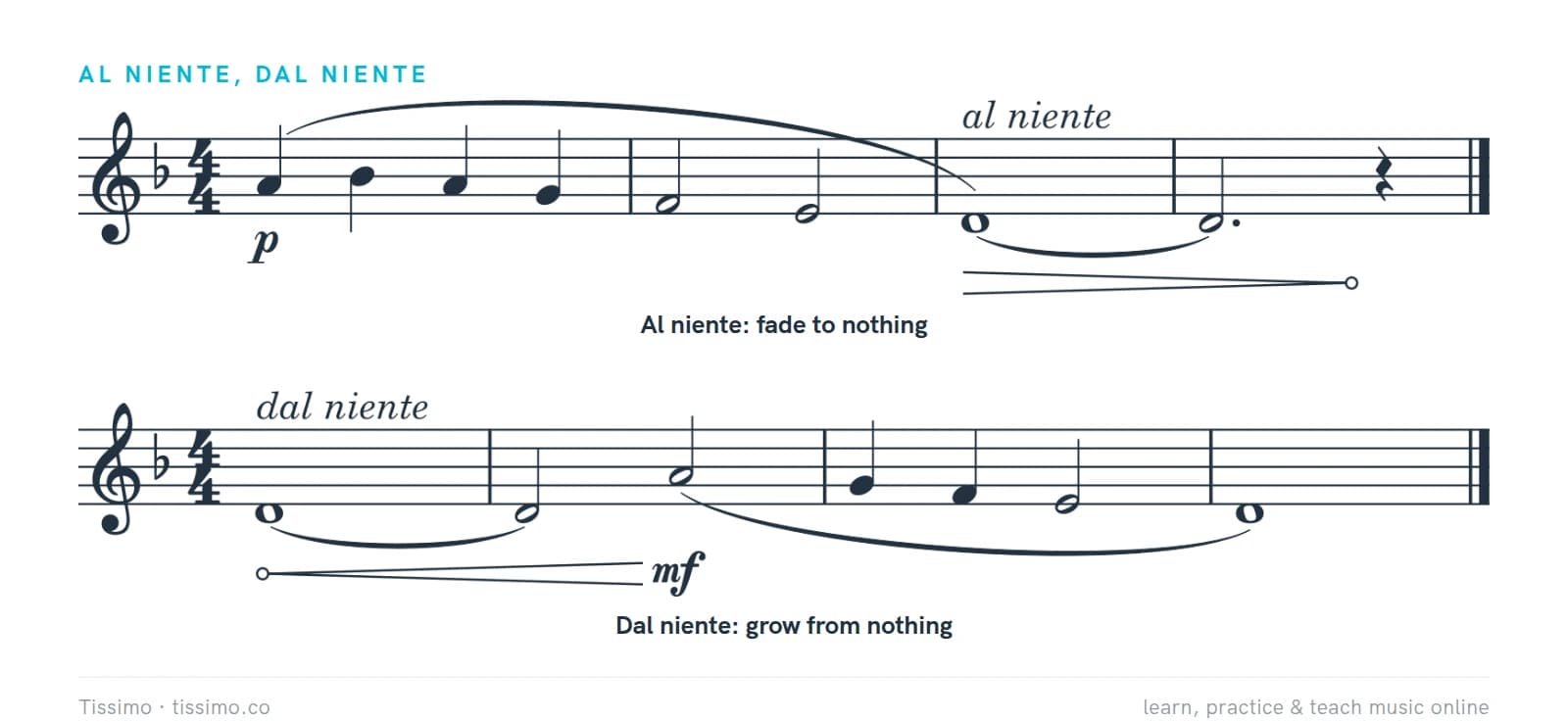
How to play al niente
A singer, a string player or a wind player can fade a held note until it disappears: keep the sound alive and in tune while there is less and less of it, then stop so smoothly that no one can say when it ended. The piano cannot do that. Once a key is struck, the note can only die away by itself. A pianist makes a niente ending by playing each note a little softer than the last, placing the final note or chord very gently and releasing the keys and pedal so slowly that the end of the sound is hard to hear. In the recording of the example, the long D simply decays, which gives the idea only roughly.
Dal niente is harder still at the piano: every struck note begins with an attack, so the best a pianist can do is to begin as softly as possible. That is why the second phrase of the example has no audio.
Niente and morendo
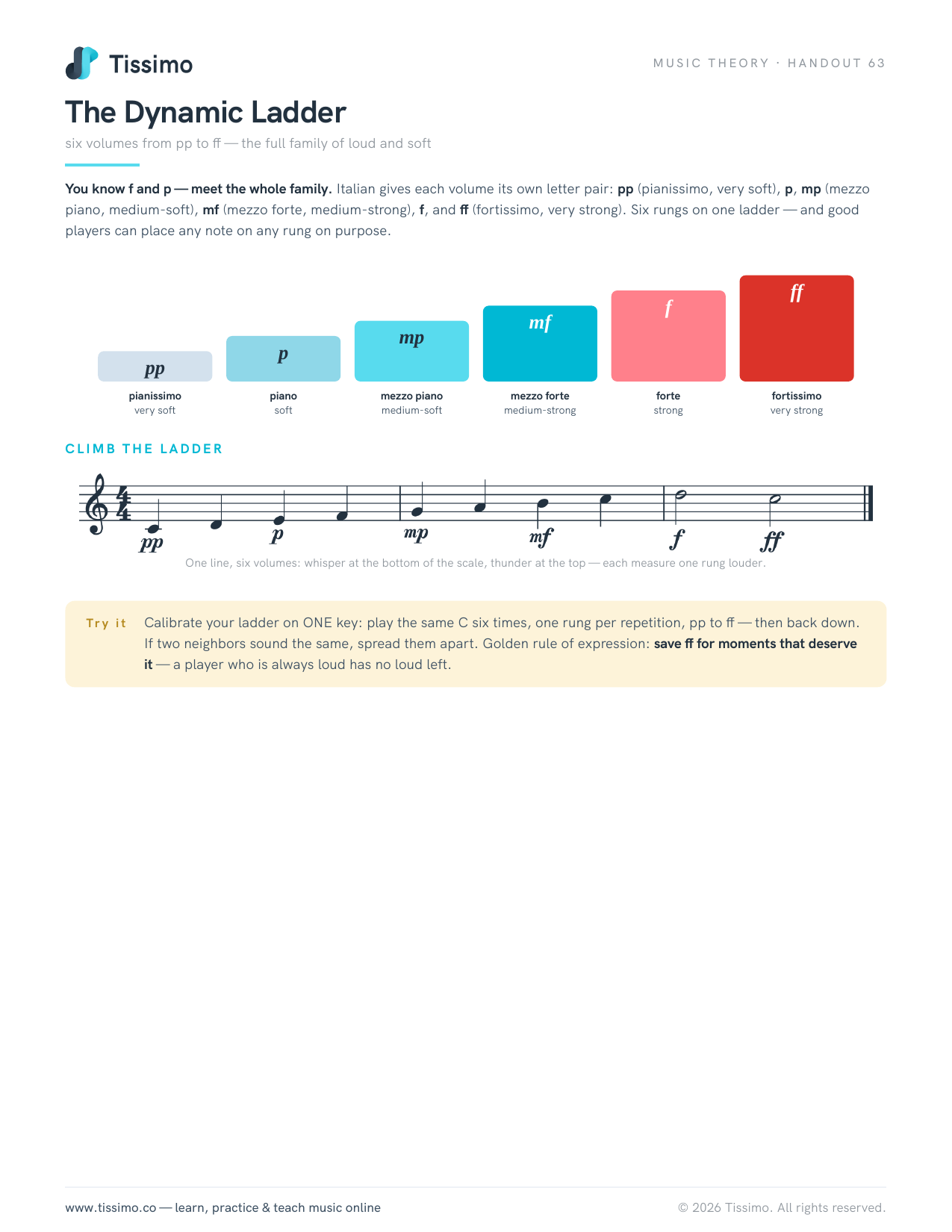
Morendo asks the music to die away, usually slowing down as well. Niente says only where the fade ends: in silence. It lies one step below pianissimo, past the bottom rung of The Dynamic Ladder.
Common questions
What does al niente mean in music?
To nothing: fade the sound away until it disappears into silence. Dal niente is the reverse: grow out of silence.
What does a circle at the end of a hairpin mean?
Niente: a closing hairpin that ends in a small circle means fade to silence (al niente), and an opening hairpin that starts from a circle means grow from silence (dal niente).
Comments