Dynamics & Expression
Nobilmente
Pronounced noh-beel-MEN-teh
Nobilmente means 'nobly': play with dignity and warmth, in broad, full-toned, unhurried phrases. The marking is closely associated with the music of Edward Elgar.
Nobilmente means "nobly", "in a noble style". It asks for a dignified character: broad, full-toned, unhurried phrases, played with warmth and gravity rather than show. It is printed in italics, below the staff beside a dynamic or as part of a heading.
Nobilmente and Elgar
The Concise Oxford Dictionary of Music calls nobilmente a direction "closely, almost exclusively" associated with the music of Edward Elgar. It says he first used it in a published score in the piano transcription of "Nimrod" from the Enigma Variations (1899), and in a published orchestral score in the Cockaigne overture (1901). His Symphony No. 1 in A-flat major (1907–08) opens with the heading Andante. Nobilmente e semplice: nobly and simply.
The marking is often heard as the sound of Elgar's ceremonial music, but the same dictionary points out that he did not use it in the Pomp and Circumstance marches. He used it instead for themes of particular emotional intensity, in his violin and cello concertos and his symphonies.
How to play nobilmente
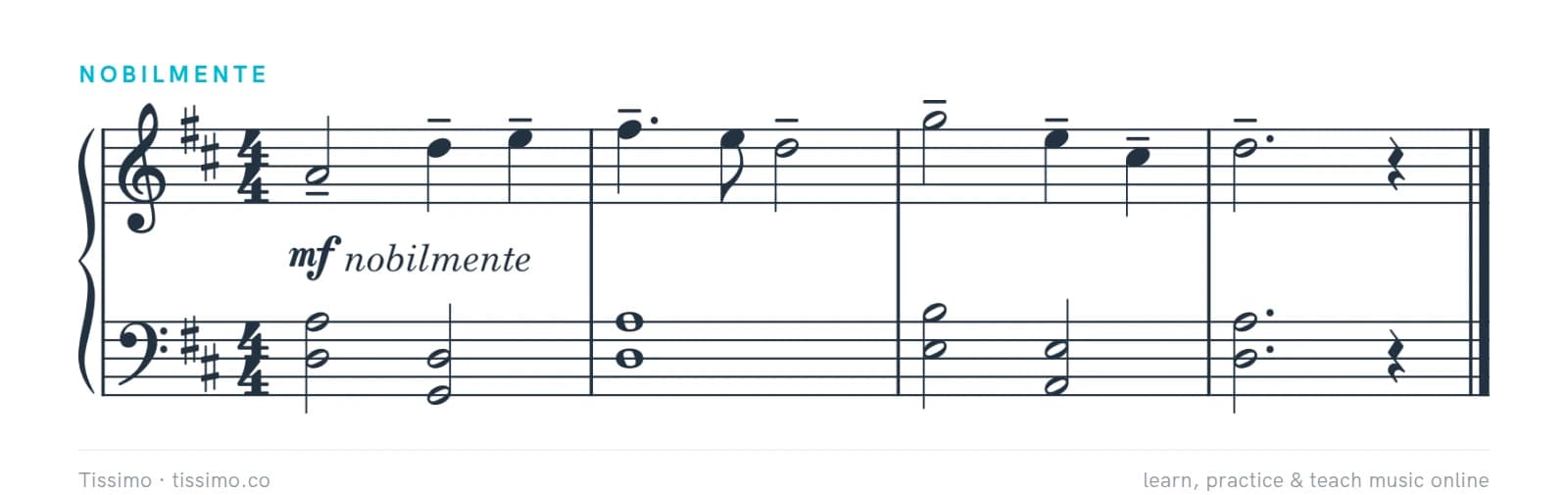
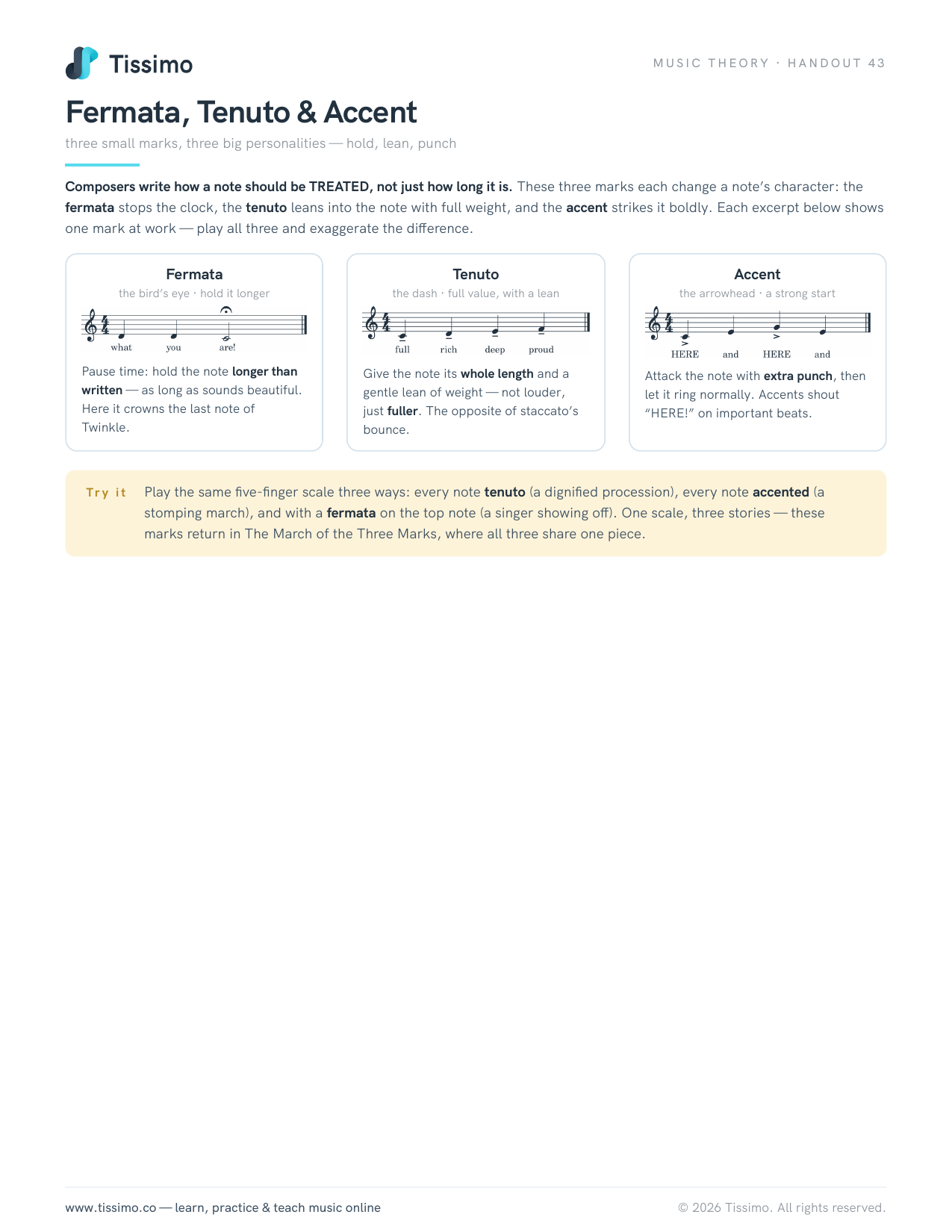
- Give long notes their full value. The tenuto lines in the example below ask for exactly that. Fermata, Tenuto & Accent explains the mark.
- Full, warm tone without forcing. Nobility is not loudness: in the example it comes with mf.
- A broad, steady pulse. Don't hurry, and don't let the line sag either; keep it moving forward.
- Sing the long line. Think of the whole phrase as one breath, rising to its high point and settling at the end.
Nobilmente and maestoso
Maestoso is majestic: grand, proud, often ceremonial. Nobilmente is dignified, with inner warmth. Sostenuto (sustained) and cantabile (singing) describe ways of playing that help a nobilmente phrase sound broad and warm.
Common questions
What does nobilmente mean in music?
Nobly: play with dignity and warmth, in broad, full-toned, unhurried phrases. It is closely associated with Elgar, whose Symphony No. 1 opens Andante. Nobilmente e semplice.
Comments