Dynamics & Expression
Con Forza
Pronounced kohn FOHR-tsah
Con forza means 'with force': play a whole passage powerfully, with a full, strong sound and firm rhythm. It usually comes with f or ff and is not the same as a single forzando accent.
Con forza means "with force". It asks for a powerful, forceful sound, played with the full weight and energy the passage can take. It usually comes with a loud dynamic such as f or ff. Forza on its own means "force", and the stronger con tutta forza (also con tutta la forza) means "with full force".
How it looks on the page
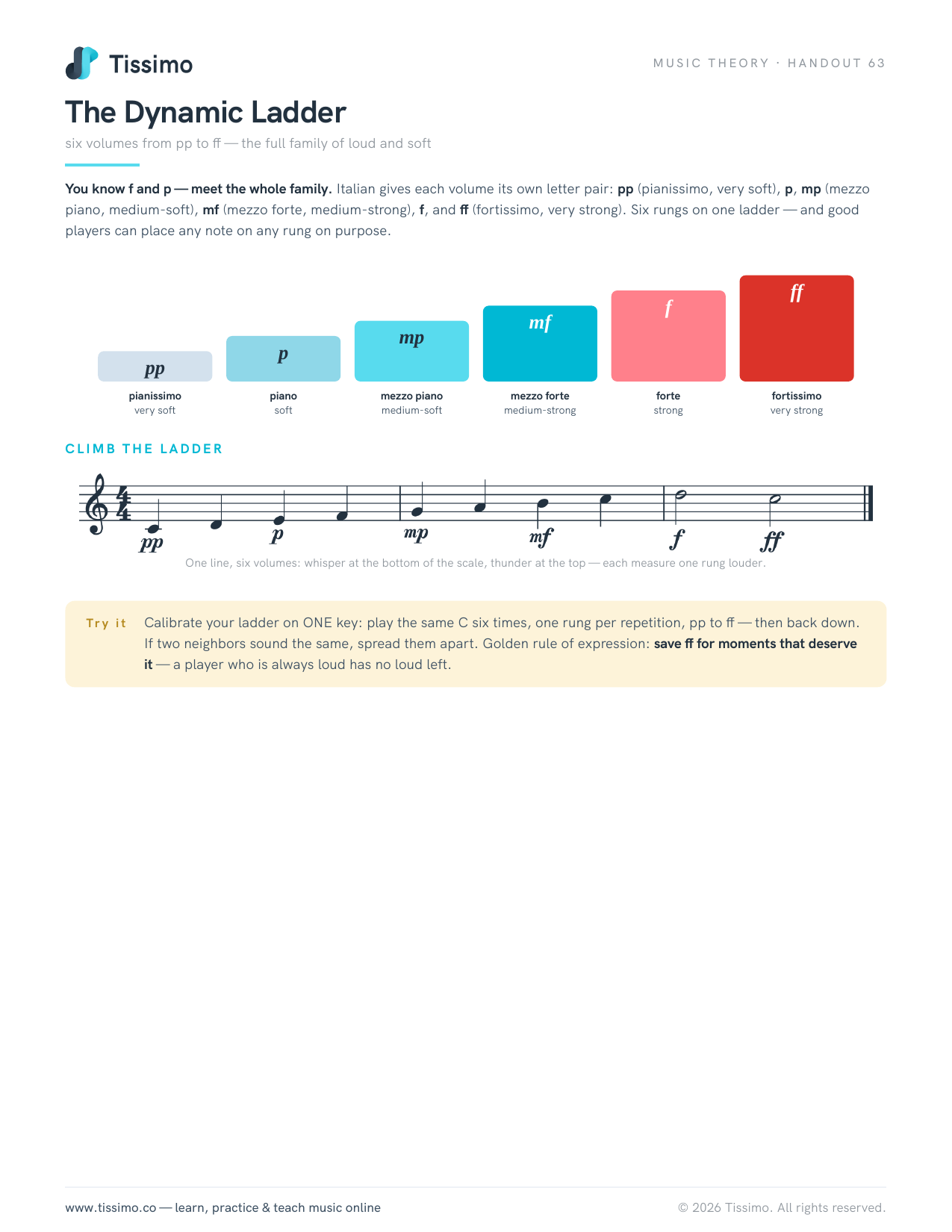
Con forza is printed in italics, usually below the staff beside the dynamic, as in ff con forza. Like risoluto or dolce, it is an expression word: the dynamic sets the level, and con forza tells you to deliver it with power. ff is the top rung of The Dynamic Ladder.
Con forza is not forzando
The similar-looking sforzando (sf, sfz), also called forzando (fz), is an accent on one note or chord: that single sound is forced, and the music goes on at its level. Con forza describes a whole passage, and the forceful character lasts until the music says otherwise. Watch the abbreviation forz.: it stands for forzando or forzato, a forced accent, not for con forza.
How to play con forza
- Use the arm, not just the fingers. Let the weight of the arm go into each chord, and keep the wrist flexible so the sound stays full rather than harsh.
- Voice the chords. Even at full strength, let the top and bottom notes ring out so the chord sounds rich, not banged.
- Keep the rhythm exact. Force needs firm, precise placement, as in the repeated chords below.
- Plan the climax. If con forza lasts several bars, save a little power for the strongest moment.
On other instruments the idea is the same: a strong bow stroke or full breath support, never a forced, cracking tone.
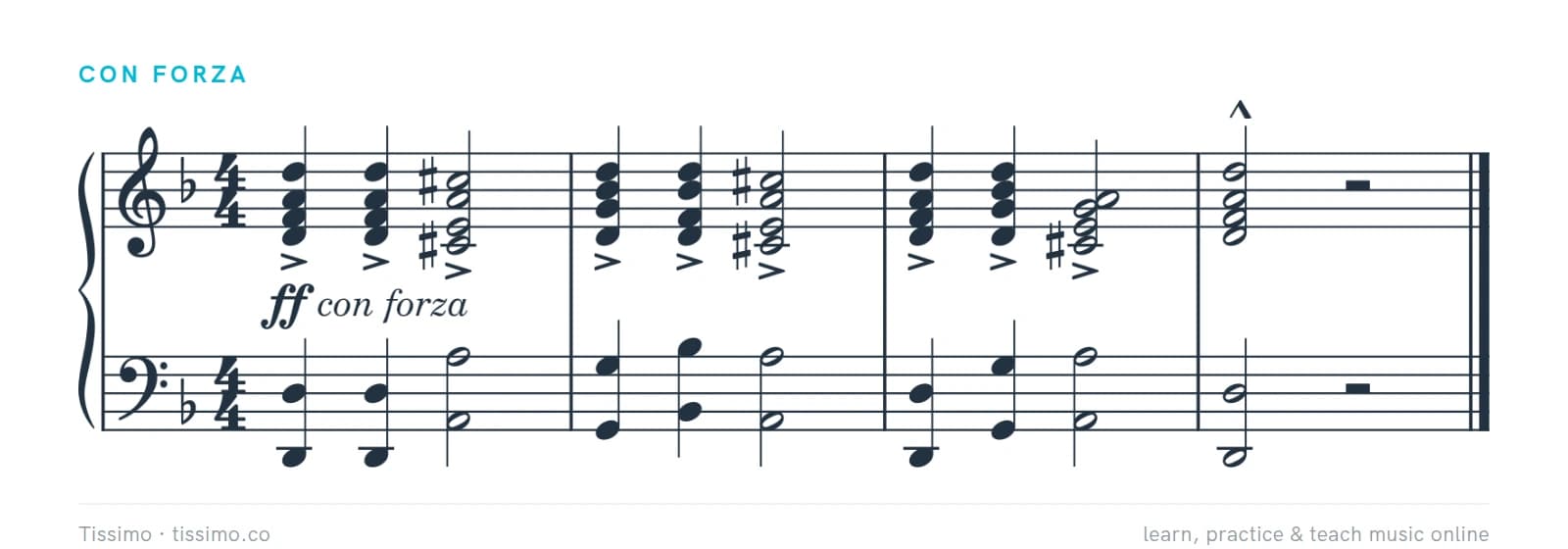
Con forza, pesante and marcato
Pesante asks for weight and is usually unhurried. Marcato is an articulation that stresses single notes. Energico asks for vigor and drive. Con forza is about sheer power. Its opposite is delicato, delicate and fragile.
Common questions
What does con forza mean in music?
With force: play the passage powerfully, with a full, strong sound and firm rhythm. It usually appears with f or ff.
What is the difference between con forza and forzando?
Con forza is a character for a whole passage. Forzando (fz), like sforzando, is an accent on a single note or chord.
Comments