Dynamics & Expression
Sonoro
Pronounced soh-NOH-roh
Sonoro means 'sonorous' or 'resonant': play with a full, rich, ringing tone that fills the room. It describes the quality of the sound, so it is not simply another word for loud.
Sonoro means "sonorous" or "resonant": a full, rich, ringing tone. It asks for sound with body and resonance, the kind that carries and fills the room. The adverb sonoramente means "sonorously".
How it looks on the page
Sonoro is printed in italics below the staff, usually beside a dynamic, as in f sonoro or mf sonoro. The dynamic sets the level. Sonoro asks that, whatever the level, the sound should be round and resonant rather than thin or hard.
How to play sonoro
- Use the weight of the arm. At the piano, let relaxed arm weight sink deep into the keys. A stiff stroke from high above the keys tends to sound hard rather than full.
- Let it ring. Hold chords for their full length, and use the sustain pedal to let the strings resonate, changing it cleanly at each new harmony, as in the example below.
- Balance the chord. Let the top note sing out a little above the others.
- On other instruments, sonoro asks for a free, full tone with plenty of resonance: a broad bow stroke on a string instrument, a full breath in singing or on a wind instrument.
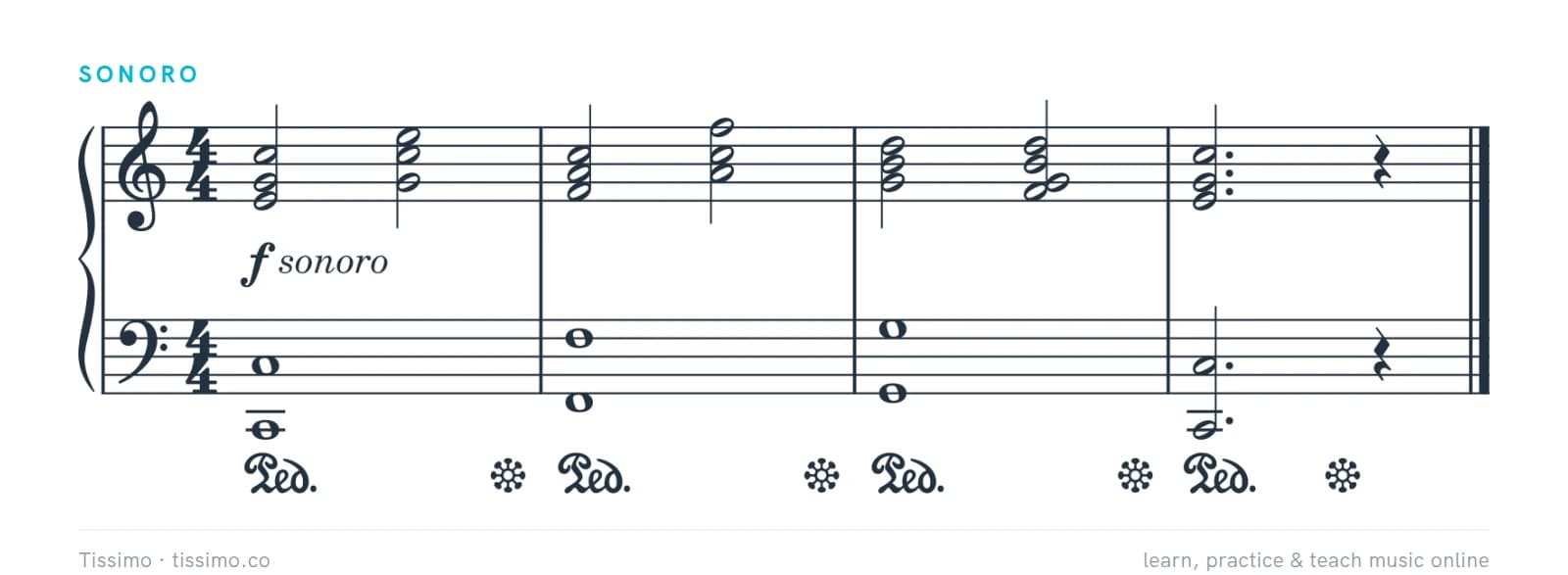
Sonoro is not just loud
A forte can be harsh; a sonoro forte is full and warm. Sonoro can also go with a moderate dynamic: mf sonoro asks for a rich tone at a medium level. Its opposite in color is sotto voce, hushed and veiled. Cantabile (singing) and maestoso (majestic) passages often call for a sonorous tone too.
Common questions
What does sonoro mean in music?
Sonorous, resonant: play with a full, rich, ringing tone. It describes tone quality, so the dynamic beside it still sets how loud.
Comments