Dynamics & Expression
Teneramente
Pronounced teh-neh-rah-MEN-teh
Teneramente means 'tenderly': play softly and gently, with a warm, light tone, smooth slurs and delicate shaping. Con tenerezza, 'with tenderness', asks for the same.
Teneramente means "tenderly", from the Italian tenero, tender. It asks for soft, gentle, loving playing: a light, warm tone, smooth slurs and delicate shaping, as if the music were being sung to someone close by. The noun tenerezza means "tenderness", and con tenerezza, "with tenderness", asks for the same thing.
Where you see it
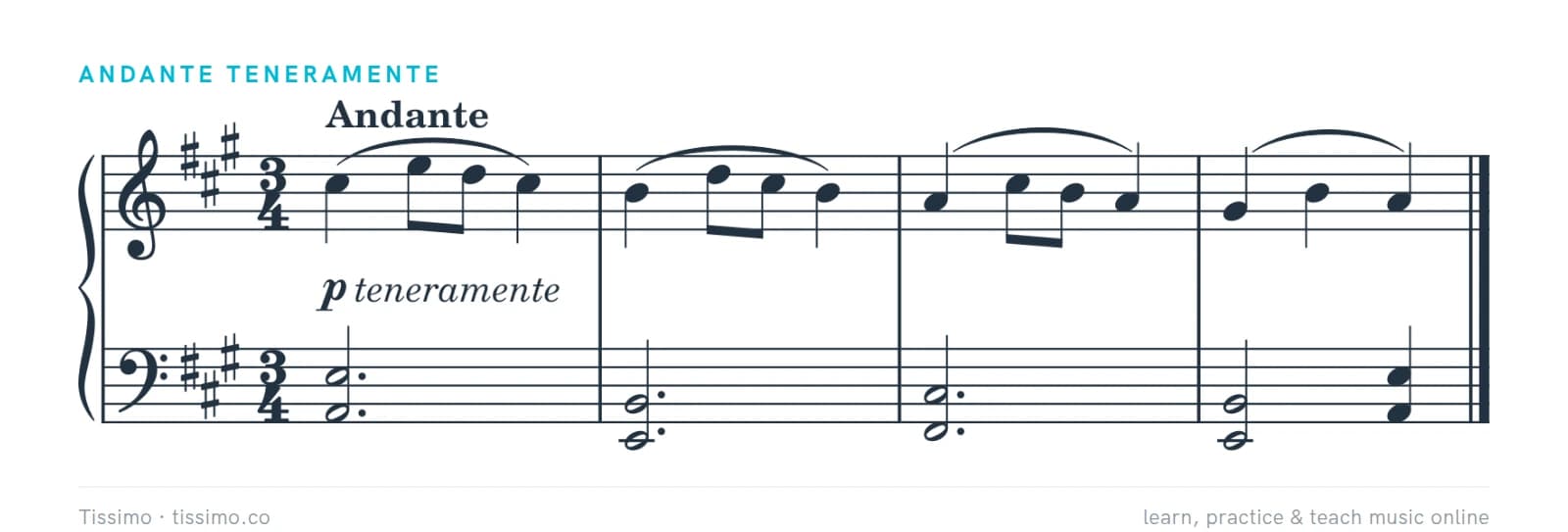
Teneramente is printed in italics, below the staff beside a soft dynamic or joined to a tempo word in a heading. Brahms headed the Intermezzo in A major, the second of his Six Piano Pieces, Op. 118 (1893), Andante teneramente.
How to play teneramente
- Soft and warm. Play close to the keys with a relaxed arm; the sound should never turn hard.
- Shape each slur. Lean gently into its first note and let the last one fall away, as in each bar of the example below.
- Keep it flowing. Tenderness is not sluggishness: keep a gentle pulse moving under the line.
- Keep the accompaniment quieter than the melody.
Teneramente, dolce and affettuoso
Dolce asks for sweetness of tone. Affettuoso asks for warm, heartfelt feeling. Espressivo asks you to show feeling openly. Teneramente is the gentlest of them: soft, careful and loving. The words overlap, and composers often combine them.
Common questions
What does teneramente mean in music?
Tenderly: play softly and gently, with a warm, light tone and smooth, delicately shaped phrases.
Comments