Dynamics & Expression
Spiritoso (Con Spirito)
Pronounced spee-ree-TOH-soh
Spiritoso means 'spirited': play with life, energy and lively character, crisp rhythms and a bright tone. Con spirito, 'with spirit', asks for the same thing, usually at a quick tempo.
Spiritoso means "spirited" or "lively", from the Italian spirito: spirit, energy, life. Con spirito, "with spirit", and the adverb spiritosamente ask for the same character: lively, energetic playing with crisp rhythms, a bright tone and forward momentum. The word is usually joined to a quick tempo word, as in Allegro con spirito, or used alone as a heading.
Spiritoso in real music
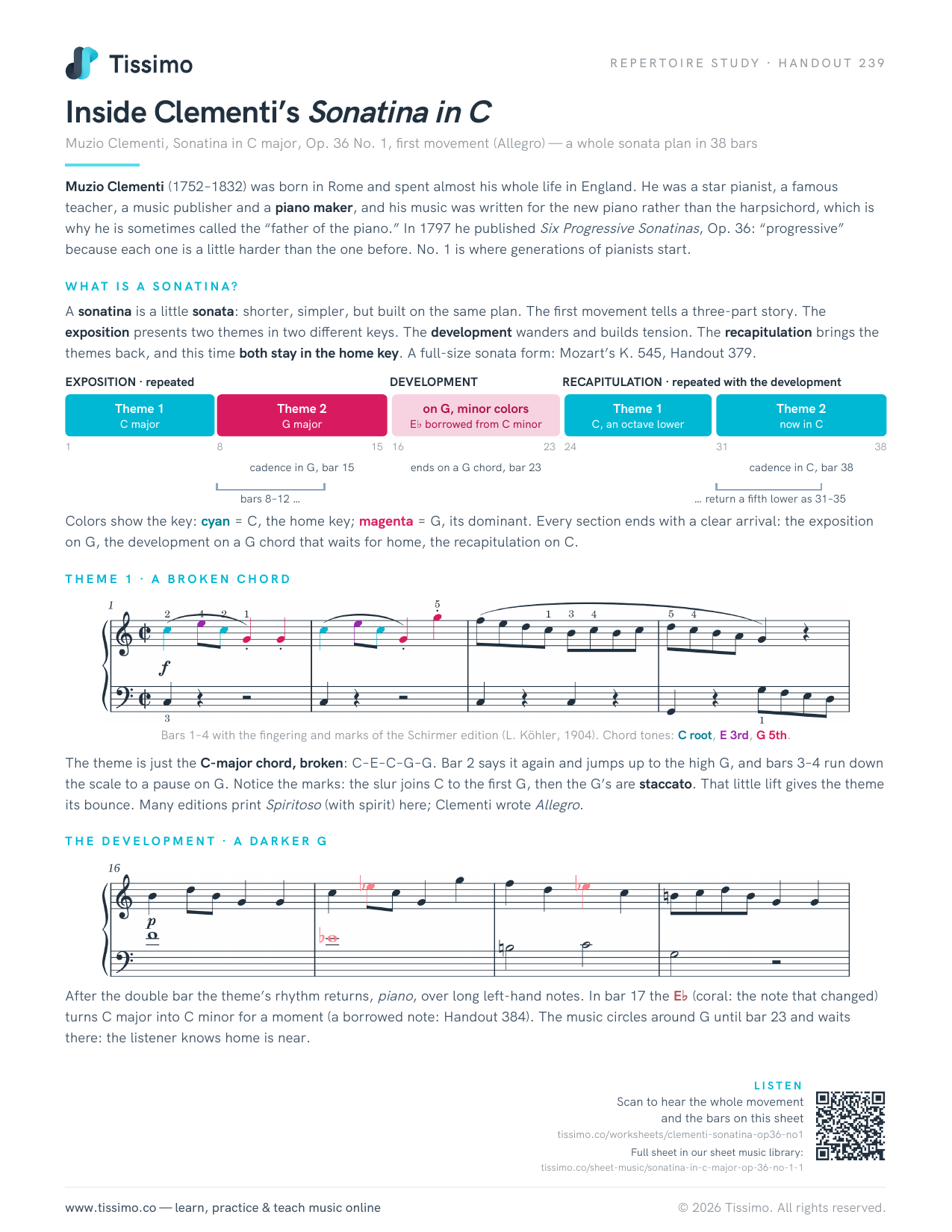
Many editions of Clementi's Sonatina in C major, Op. 36 No. 1, head the first movement Spiritoso, among them the Schirmer edition of 1904. Clementi himself wrote Allegro. Our Clementi Sonatina study points out the difference, and its bouncing staccato theme shows what a spirited Allegro sounds like.
How to play spiritoso
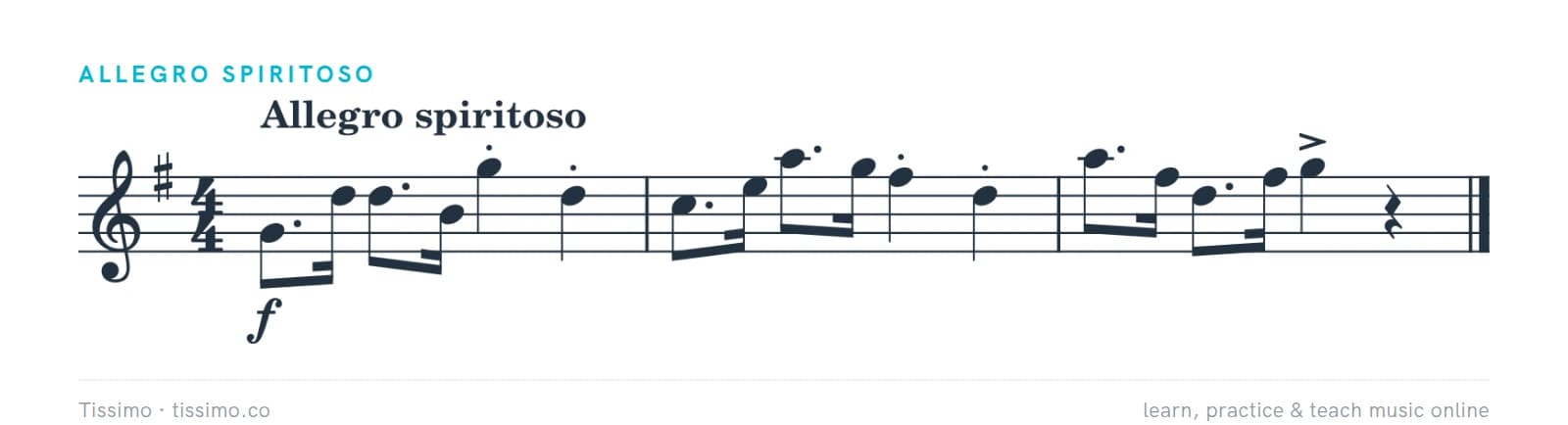
- Crisp rhythms. Keep dotted rhythms sharp: the short note late and light, as in the example below.
- Springy short notes. Let staccato notes bounce off the keys.
- Forward drive. Keep the beat moving through rests and long notes.
- Bright, not heavy. Spirited is not the same as loud: too much weight makes the music sound labored.
Spiritoso and con brio
Con brio is often translated "with spirit" too, and the two overlap. Read con brio as a call for vigor, fire and drive, and spiritoso as a call for liveliness and high spirits. Vivace (lively), animato (animated) and giocoso (playful) are close neighbors. Its opposite in mood is mesto, sad and heavy-hearted.
Common questions
What does con spirito mean in music?
With spirit: play in a lively, energetic way, with crisp rhythms and a bright tone. Spiritoso (spirited) means the same.
Comments