Dynamics & Expression
Misterioso
Pronounced mee-steh-RYOH-soh
Misterioso means 'mysteriously': play with a hushed, shadowy, suspenseful atmosphere, usually very soft and even, as if something is hidden or about to happen.
Misterioso means "mysterious" or "mysteriously". It asks for a hushed, shadowy, suspenseful atmosphere, as if something is hidden or about to happen. Misterioso passages are usually very soft, often low in pitch, and often built on music that seems not to settle: creeping lines, unresolved harmony and quiet repeated figures. The adverb misteriosamente means the same.
How it looks on the page
Misterioso is printed in italics below the staff beside a soft dynamic, as in pp misterioso or p misterioso. It describes the atmosphere; the dynamic and the tempo word beside it set the level and the speed.
Misterioso in real music
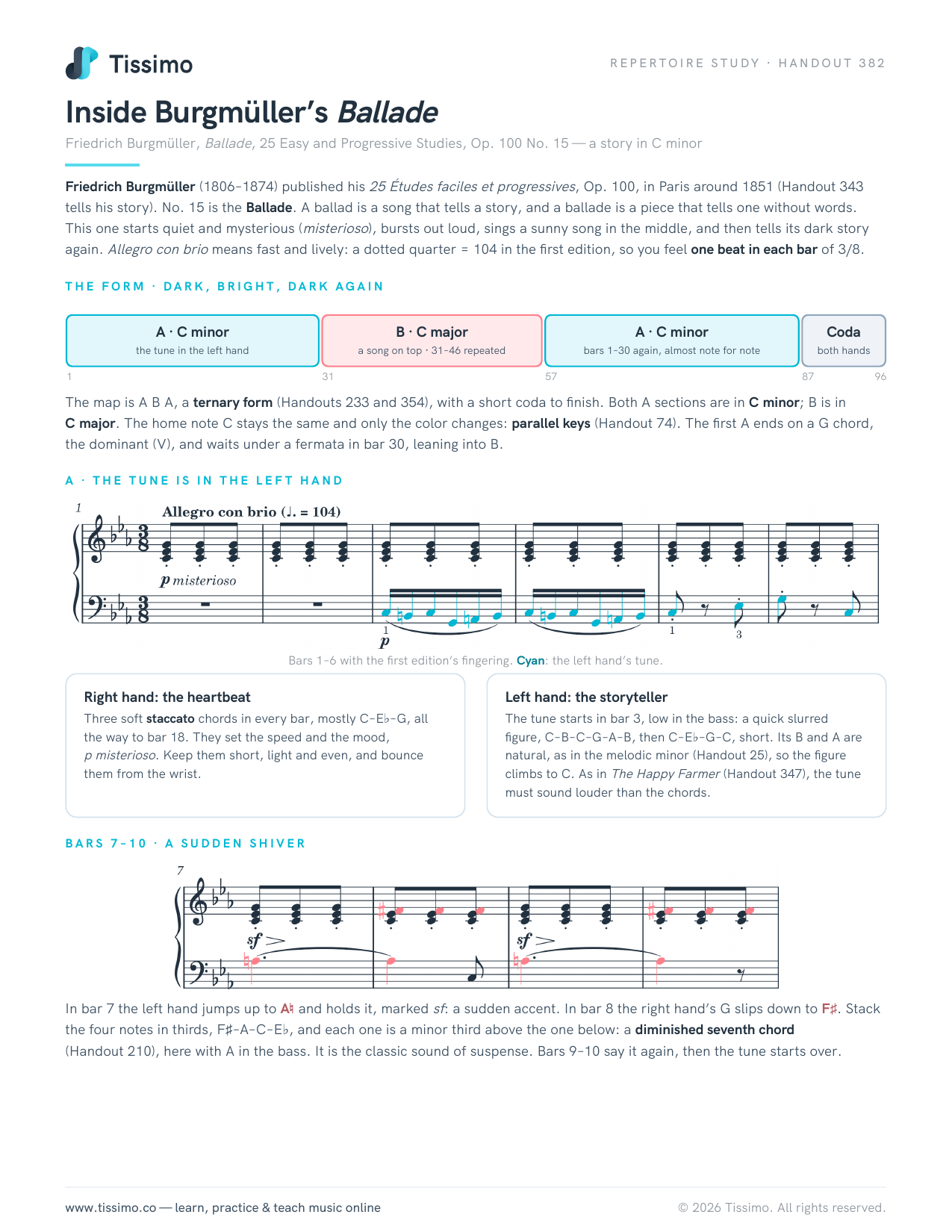
Burgmüller's Ballade, Op. 100 No. 15, begins with soft staccato chords in C minor marked Allegro con brio and p misterioso. It shows that misterioso is about atmosphere, not slowness: the Ballade is fast, and its mystery comes from the hushed, repeated chords and the tune that creeps in low in the bass. Our Ballade study walks through that opening.
How to play misterioso
- Very soft, but clear. Every note should still speak; mystery is not mumbling.
- Even and unaccented. One bright or bumped note breaks the spell.
- Use time and silence. Hold long notes and rests their full length, and let the sound hang, as in the example below.
- Let unresolved endings stay unresolved. Don't round off a passage that is meant to stop in the air.
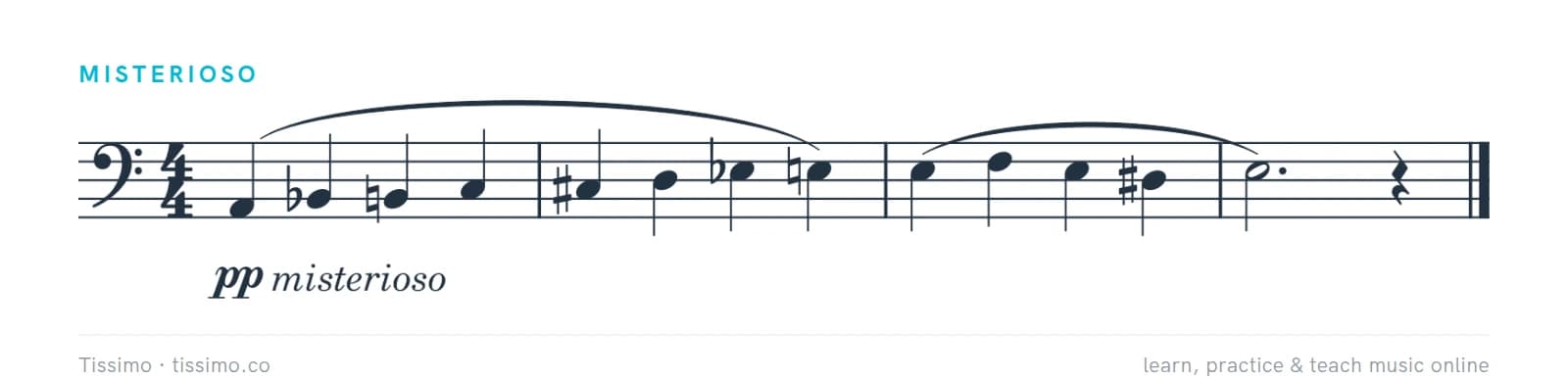
Misterioso, sotto voce and morendo
Sotto voce, "under the voice", asks for a hushed, undertone sound. Morendo asks the music to die away. Tranquillo asks for calm. Misterioso can be as hushed as sotto voce, but it adds suspense: the music sounds as if it is waiting for something.
Common questions
What does misterioso mean in music?
Mysteriously: play with a hushed, shadowy, suspenseful atmosphere, usually very soft and even. It describes the mood, so it can appear at any tempo.
Comments