Dynamics & Expression
Piacevole
Pronounced pyah-CHEH-voh-leh
Piacevole means 'pleasant' or 'agreeable': play in a pleasing, easygoing way, with a smooth, graceful line and no strong accents or sudden contrasts.
Piacevole means "pleasant", "agreeable" or "pleasing", from the Italian piacere, to please. It asks for an easygoing, graceful character: a smooth, flowing line, gentle shaping and nothing that jolts the listener. The glossary in one notation program's manual puts it well: "in a pleasant, agreeable manner with a smooth delivery; free from any strong accents." The adverb piacevolmente means "pleasingly".
How it looks on the page
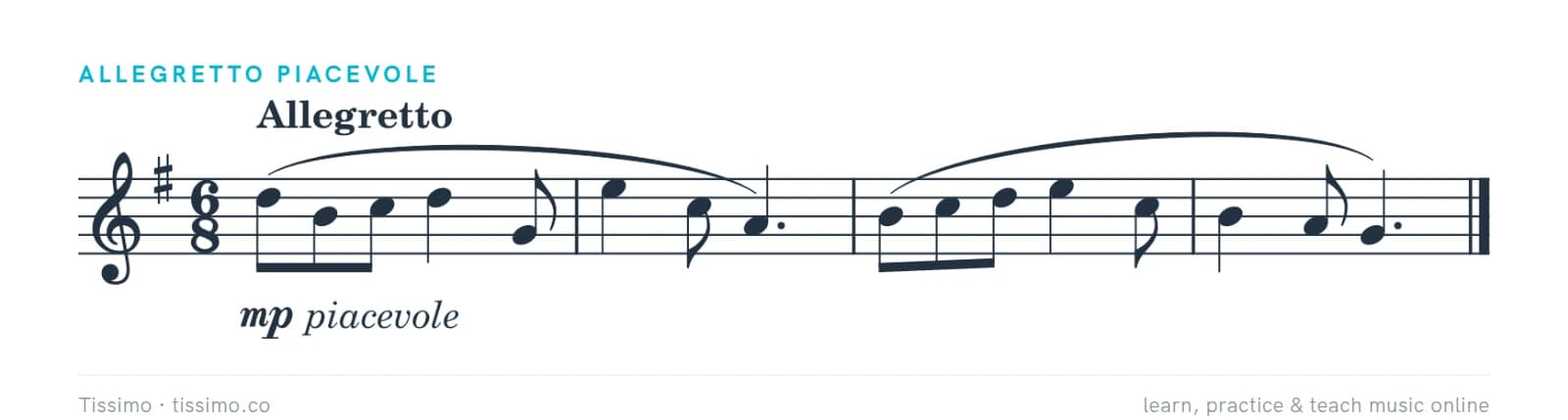
Piacevole is printed in italics, below the staff beside a moderate or soft dynamic, as in mp piacevole, or joined to a tempo word at the head of a piece.
How to play piacevole
- Smooth and even. Keep the line connected and the rhythm flowing, as in the lilting 6/8 of the example below.
- No hard accents. Let the natural lift of the meter do the work.
- An easy pace. Piacevole music is rarely hurried.
- A warm, moderate tone. Pleasant, not intense: save big contrasts for music that asks for them.
Piacevole, grazioso and dolce
Grazioso asks for grace and elegance, dolce for sweetness and semplice for simplicity. Piacevole is the most easygoing of them: agreeable and untroubled. Like giocoso it is cheerful, but quieter and less exuberant.
Common questions
What does piacevole mean in music?
Pleasantly, agreeably: play in a smooth, easygoing, graceful way, with no strong accents.
Comments