Back
Back
The Best First Instrument for Kids: A Parent's Guide to Musical Success
Standing in a music store staring at a wall of instruments, most parents freeze — guitar or violin? Drums or recorder? Here's the good news: when it comes to a child's very first instrument, it almost always comes down to two contenders: piano and ukulele. Both are famously forgiving on small fingers, and both reward a beginner with a real, recognizable song within the first few lessons.
While there's no single instrument that's right for every child, these two consistently work best for beginners because of how accessible they are, how quickly they reward practice, and how much of a musical foundation they build. Here's how to tell which one fits your child, what age to start, and how to set them up to actually stick with it.
Why Piano Remains the Gold Standard
The piano has earned its reputation as the premier starter instrument for good reason. Unlike wind or string instruments, producing a pleasant sound on the piano requires minimal technique — simply press a key and hear a clear note. This immediate gratification keeps young learners motivated during those crucial early stages when other instruments might frustrate them with squeaks, buzzes, or silence. You don't need a full acoustic piano to start, either — a basic 61-key beginner keyboard typically runs about $100–250, which is plenty for a child to build real skills before you invest in anything bigger.
Beyond ease of sound production, the piano provides an unmatched visual representation of music theory. The linear layout of keys makes understanding scales, intervals, and chord relationships intuitive. Children can literally see the distance between notes and watch patterns emerge as they play. This visual learning component proves especially valuable for kids who struggle with abstract concepts.
The piano also develops both hands independently, enhancing fine motor skills and hand-eye coordination. Students learn to read both treble and bass clefs simultaneously, giving them a comprehensive foundation that translates seamlessly to other instruments later. Research published in PMC/NIH links musical training — including piano lessons — to measurable improvements in verbal ability, reading skills, and executive functions in children, though the strongest gains tend to show up in observational studies rather than the most tightly controlled randomized trials. Many professional musicians, regardless of their primary instrument, credit early piano lessons with their deep understanding of music theory and composition.
The Ukulele: A Modern Alternative
In recent years, the ukulele has emerged as a fantastic alternative to traditional starter instruments. Its small size makes it perfectly proportioned for young hands, eliminating the physical struggles that often accompany guitar learning. With just four strings and a shorter neck, children can form chords and play recognizable songs within their first few lessons.
The ukulele's gentle nylon strings are kind to tender fingers, avoiding the painful callus-building phase that deters many young guitarists. Its cheerful, bright tone naturally lends itself to the upbeat, simple songs that children love, from nursery rhymes to contemporary pop hits. This relevance to their musical world keeps kids engaged and practicing without parental prodding.
Perhaps most importantly, the ukulele is highly portable and affordable — a decent soprano ukulele typically costs $40–80. Children can easily carry their instrument to school, friends' houses, or family gatherings, turning practice into a social activity. The low initial investment also reduces pressure on families and children, creating a more relaxed learning environment where mistakes are part of the fun rather than costly errors. Music educators have recognized these advantages too — the National Association for Music Education highlights the ukulele as an ideal classroom starter instrument.
Piano vs. Ukulele at a Glance
For a fast side-by-side, here's how the two stack up for a first-time beginner:
- Starting cost: Piano (basic keyboard) ~$100–250 · Ukulele (soprano) ~$40–80
- Portability: Piano stays put in the house · Ukulele fits in a backpack
- Time to first song: Piano takes a few weeks of practice · Ukulele often within the first lesson
- Physical demand: Piano needs two-hand coordination that builds gradually · Ukulele's soft nylon strings are gentle on small fingers from day one
- Best for: Piano suits kids who like structure and want a foundation that transfers to any instrument · Ukulele suits kids who want to play recognizable songs fast and take their instrument anywhere
Age-Appropriate Considerations
Different ages call for different approaches to musical education, and matching the instrument to your child's developmental stage matters more than starting as early as possible:
- Under 6: Focus on rhythm, listening, and basic musical concepts rather than complex technique — simple percussion, xylophones, and body percussion introduce musical fundamentals without overwhelming young learners.
- Ages 6–8: The sweet spot for starting formal piano or ukulele lessons. Kids at this age typically have the fine motor control and attention span to make real progress, and their reading skills support basic music literacy, even as many methods still lean on ear training alongside notation.
- Ages 9 and up: The full range of instruments becomes viable, including wind and string instruments that demand more physical development. Older beginners often progress faster thanks to stronger cognitive skills and self-discipline — but starting earlier isn't automatically better.
Experts at The Conversation note that musical aptitude is particularly malleable before age nine, which is part of why the 6–8 window is so valuable — but a child who starts at 10 or 11 with genuine enthusiasm will often outpace one who started earlier without it.

Making the Right Match
Selecting an instrument should involve considering your child's physical characteristics, personality, and musical preferences. A shy child might bloom with a loud, expressive instrument like drums, while an outgoing child might find focus through the meditative practice of piano. Observe what naturally attracts your child — do they tap out rhythms constantly, hum melodies, or show fascination with particular instruments?
Practical considerations matter too. Think about your living situation, practice space, and noise tolerance. Apartments might not accommodate drum sets, while houses with dedicated music rooms offer more flexibility. Consider the availability of quality teachers in your area, as even the best instrument choice fails without proper instruction.
Involve your child in the decision-making process through instrument petting zoos, music store visits, or online videos showcasing different instruments. Many music schools offer trial lessons or instrument rental programs, allowing families to test options before committing. This exploratory phase helps children feel ownership over their choice, dramatically improving their motivation to practice and persevere through challenges.

Setting Up for Success
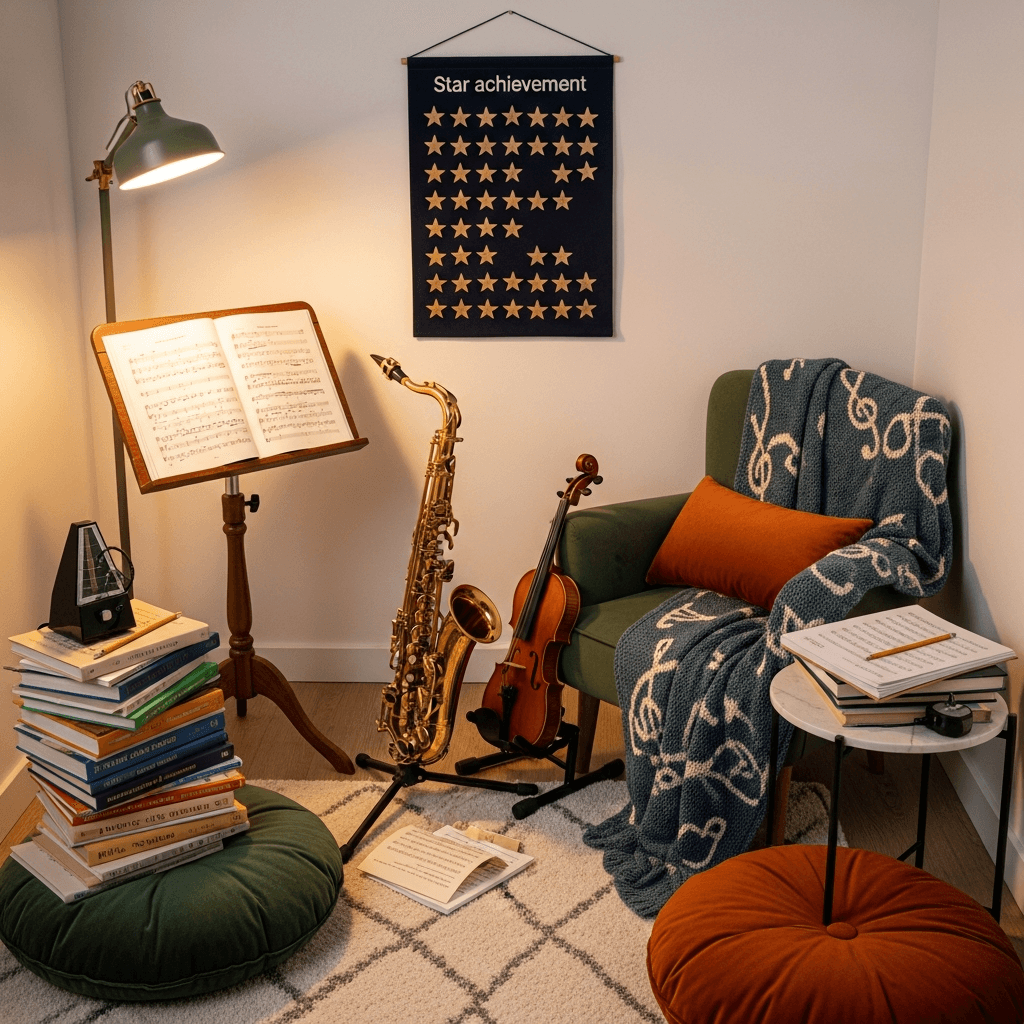
Regardless of which instrument you choose, creating the right environment and expectations determines success more than the instrument itself. Establish a dedicated practice space, even if it's just a corner of a room, where the instrument lives accessibly. Children are more likely to practice when their instrument is visible and ready rather than packed away in a closet.
Start with modest practice expectations — even five to ten minutes daily builds habits better than sporadic hour-long sessions. Make practice routine rather than punishment, perhaps linking it to another daily activity like after-school snack time. Celebrate small victories and progress rather than perfection, remembering that musical development is a marathon, not a sprint.
Consider the social aspects of music learning. Group classes, ensembles, or family jam sessions transform isolated practice into community building. Many children who initially resist solo practice thrive when playing with others. Whether through formal programs or informal gatherings, making music with others reinforces the joy and purpose of their musical journey.
Conclusion
While the piano and ukulele stand out as exceptional first instruments, the best choice ultimately depends on your child's needs, interests, and circumstances. The perfect first instrument is one your child feels excited to play, one that fits your family's lifestyle, and one that gives them a solid foundation for whatever comes next.
Remember, this first instrument is just the beginning. Many musicians start with one instrument and later discover their true passion lies elsewhere — and that's a good outcome, not a failure. By choosing an accessible, engaging starter instrument and building a positive learning environment around it, you're giving your child the gift of musical literacy and expression that will enrich their entire life.
Ready to see which instrument clicks for your child? Book a trial lesson with a real Tissimo teacher — piano, ukulele, or anything else that catches their ear — and get a teacher's read on the right fit before you buy a thing.
Sources
- NIH/PMC – How Musical Training Affects Cognitive Development
- NIH/PMC – Sala & Gobet: Cognitive and Academic Benefits of Music Training (meta-analysis; benefits are strongest in lower-quality observational studies and shrink to near-zero in the highest-quality randomized trials)
- NAfME – Why Try the Ukulele in Schools?
- The Conversation – When Is a Good Time for a Child to Start Music Lessons?