Back
Back
How to Introduce Your Child to Music at Every Age: A Parent's Guide
Your baby could hear your heartbeat by around 18 weeks in the womb — music was part of their world before their first breath. For children, early exposure to music offers far more than entertainment: it opens doors to cognitive development, emotional expression, and social connection. Research suggests that children who engage with music from an early age develop enhanced language skills and improved memory, with emerging evidence for broader benefits such as emotional intelligence. Yet many parents feel uncertain about how to actually introduce their kids to music in a meaningful way.
The good news: it doesn't require expensive equipment, formal training, or musical expertise from you. What it takes is curiosity, patience, and a willingness to explore sound together. Whether your child is an infant responding to lullabies or a school-aged kid ready to try an instrument, there's a developmentally appropriate way to meet them where they are. This guide walks through evidence-based strategies for each stage, so you can build a home environment where musical curiosity grows naturally.
Starting Early: Music for Infants and Toddlers
The relationship between children and music begins long before birth. Fetuses begin hearing internal body sounds—such as the mother's heartbeat and blood flow—from around 18 weeks of gestation, and start responding to external voices and sounds from around 25–26 weeks. Newborns recognize their mother's voice and familiar melodies heard late in pregnancy, which makes infancy an ideal time to continue that exposure. Singing lullabies, playing gentle classical music during quiet times, and adding rhythmic movement to play all help a baby's musical awareness develop.
For infants, focus on creating positive associations with music rather than structured learning. Singing the same songs during specific routines — a good-morning song, a diaper-changing tune, a bedtime lullaby — helps babies recognize patterns and feel a sense of predictability. Your voice matters more than your pitch; it doesn't matter if you consider yourself a good singer. What matters is the emotional connection music creates.
As toddlers, kids can actively participate in music-making. They love repetitive songs with hand motions, like "The Itsy Bitsy Spider" or "Wheels on the Bus" — these combine language development with motor skills and rhythm recognition. Simple percussion instruments like shakers, drums, or tambourines let toddlers experiment with making sound themselves, and music becomes a tool for self-expression as they start showing preferences for certain songs or styles.
The key principle at this age is interactive engagement over passive listening. Background music has its place, but children benefit most from experiences where they're active participants — clapping, dancing, singing along, playing simple instruments. Active involvement strengthens neural pathways and makes music a joyful, embodied experience rather than mere background noise.

Creating a Musical Environment at Home
The home environment shapes how a child comes to see music. When it's naturally woven into daily life, kids learn to treat it as a normal, enjoyable part of their world — you don't need to turn your living room into a studio, just be intentional about when and how music shows up in your family's routine.
Start with a diverse musical library: classical, folk music from different countries, jazz, quality children's music, and a few carefully chosen contemporary picks. Streaming makes this easy — build playlists for different moods and activities, and play music during meals, while drawing or crafting, or on car rides. Each context is a chance for kids to feel how music changes a moment.
Set aside a space, even a small one, where instruments are within reach — a basket of percussion instruments, a keyboard in the corner, a ukulele on the wall. When instruments are visible and accessible, kids explore them on their own. Teaching them to handle instruments carefully also reinforces that music-making is something to value.
Model musical engagement yourself. Let your kids see you enjoying music — singing along, tapping out a rhythm, even fumbling through learning an instrument of your own. Children absorb attitudes as much as skills, and when they see you treat music as a source of joy rather than an obligation, they tend to adopt the same outlook. Share the songs and artists that mean something to you — it gives your family's relationship with music a personal thread.

Age-Appropriate Musical Activities and Games
Different ages call for different kinds of musical engagement. Here's what tends to work best at each stage.
Preschool (ages 3–5)
Emphasize play, movement, and exploration. "Freeze dance," where kids dance until the music stops, builds listening skills and body awareness. Singing games that fold in counting, colors, or the alphabet combine musical and academic learning. Simple clap-and-echo rhythm exercises build foundational skills while staying accessible to young learners.
Elementary school
Kids can handle more structured activities while staying playful. This is a good age to introduce basic music theory through games: pitch-matching exercises, where a child tries to sing back a note they just heard, build ear training, and building simple compositions from household objects teaches timbre and rhythm. Apps like Yousician or Simply Piano turn note- and rhythm-reading into a game, and a beginner method book — Alfred's or Faber's piano series are common starting points — gives structure to hands-on practice.
Approaching middle school
Collaborative projects work well here. Family jam sessions, even with limited skill, create memorable experiences and show that music is about connection, not perfection. Encourage kids to build playlists that reflect their mood or tell a story, and listen to a favorite song together while picking out its verses, choruses, and bridge — a simple exercise that builds real critical-listening skills.
Across every age, the most effective activities share a few traits: they're enjoyable, they leave room for creative expression, and they're free of pressure or criticism. The goal isn't a child prodigy — it's a genuine love of music that enriches a child's life whether or not they ever pursue it formally.

Choosing the Right First Instrument
When a child shows interest in learning an instrument, the question of which one to start with comes up fast. There's no single "best" first instrument — it depends on the child's age, physical development, interests, and your family's circumstances. Most kids can begin on some instrument by five or six, though certain instruments demand more physical maturity or hand size than others.
For young beginners, piano or keyboard has real advantages. Its layout is visual and logical, which makes concepts like high and low pitch easier to grasp, and producing a clean note is immediate — press a key and you get a proper sound, without the bow hold or embouchure a string or wind instrument demands before it sounds right. That instant feedback helps keep kids motivated, and piano skills also transfer well to other instruments and to music theory later on. Keyboards are more affordable and space-efficient than acoustic pianos too, which matters for a lot of families testing the waters.
String instruments like violin or ukulele are also strong choices. Violins come in fractional sizes built for small bodies, and many communities offer group violin programs using the Suzuki method, which teaches by ear before introducing notation. The ukulele has become a popular starter instrument too — it's small, its nylon strings are gentle on little fingers, and its simple chord shapes let kids play real songs within the first few lessons.
Don't overlook percussion. Full drum sets take up space and can be loud, but electronic kits with headphones offer a quieter alternative. Percussion builds rhythmic skills that underlie all music, and it's a natural fit for energetic kids who want to move. Whatever instrument you land on, let your child's genuine interest lead over your own preference — a kid who's excited about their instrument practices more and pushes through the hard parts. Renting first, before you commit to buying, lets them try an instrument on for size.

Formal Lessons Versus Self-Directed Learning
Do kids need formal lessons, or can they learn effectively on their own? There's no single right answer — it depends on the child, your family's resources, and what you're hoping to get out of it. Here's how the two approaches actually compare:
Formal lessons
- A qualified teacher catches technical issues early, before they become habits that are hard to unlearn later
- Lessons follow a structured curriculum that builds skills progressively
- Especially valuable for instruments with technique-heavy fundamentals, like bow hold for strings or embouchure for wind instruments
- The structure and accountability of a weekly lesson keeps many kids motivated to practice
Self-directed learning
- Online tutorials, apps, and method books make this more accessible than ever
- Kids progress at their own pace, without the pressure of a scheduled lesson or recital
- Works well for self-motivated kids, or those who feel anxious in a traditional lesson setting
- Usually cheaper and easier to fit into a busy family schedule
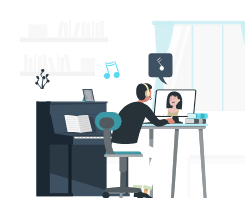
A hybrid approach works well for a lot of families. Start with self-directed exploration so your child builds genuine interest and basic familiarity with the instrument; once they show they're sticking with it, bring in formal lessons to refine technique and speed up progress. Group classes are another middle ground — professional instruction at a lower cost, with the social element of learning alongside other kids. Some families even use formal lessons seasonally, like intensive summer instruction followed by independent practice during the school year.
What matters most isn't which path you pick — it's protecting your child's motivation. Music should add to their life, not become a source of conflict. If lessons start to feel like a battleground, it's worth stepping back and finding your way to the joy that started this journey in the first place.
Conclusion
Introducing your child to music is one of the more lasting gifts you can give them. The benefits reach beyond music itself — cognitive development, emotional regulation, social skills, creative thinking — but the real value is simpler: the joy, expression, and connection music brings to everyday life. Start early with simple, interactive musical experiences, keep expanding what you offer as your child grows, and you'll build a relationship with music that lasts decades.
The goal was never to raise a professional musician, though it might happen. It's to help your child find music as a lifelong companion, whether that means performing on a stage, playing casually for themselves, or simply listening with a more informed ear. Approach it with patience and genuine enthusiasm — and when your child is ready to go deeper, a real teacher on Tissimo can help them take that next step at their own pace.