Back
Back
How to Choose the Right Music Teacher for You (or Your Child)
Finding a music teacher is easy. Finding the right one — someone who makes lessons feel exciting instead of a chore — is what actually determines whether you or your child stick with it. Here's how to vet candidates, what to ask at the first meeting, and the signs of a teacher worth committing to.
What to look for, at a glance:
- Experience and qualifications — a relevant degree, a clear teaching method, and a track record of students who stuck with it
- Teaching style — structured and disciplined, or relaxed and creative? Match it to your (or your child's) personality
- Communication — clear explanations and feedback that's adapted to how you learn
- A trial lesson — before committing to a regular weekly schedule
- A short demonstration — a confident teacher who's happy to play for you is usually a good sign
Determine your goals
Before you start your search, it's important to determine what you want to achieve with your music lessons. Do you want to begin learning an instrument, take voice lessons, or just prepare for a specific performance? Do you prefer group music classes or private lessons? Are you an aspiring concert musician who wants to attend a conservatory, or do you just want to learn a few chords and tunes in your spare time?
For example, a parent looking for a patient teacher for a shy 7-year-old's first violin lessons has very different needs than an adult hobbyist who just wants to finally learn the guitar solos they grew up loving. Knowing your goals up front will help you find a teacher who specializes in the area you want to improve, and whose teaching style is genuinely a match for you.
Ask for referrals
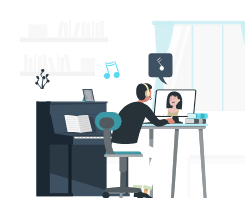
Ask for recommendations from friends, family members, your child's school, or music professionals. A successful private teacher will often stop advertising at some point, and the only way to find them is by word of mouth. You can also check at local music stores — they're often familiar with the local music schools and teachers in the area. If there's a lack of qualified teachers near you, or you prefer the convenience of taking lessons at home, online music lessons are also a great option. Look for testimonials from past or current students to get a sense of a teacher's effectiveness and teaching style, and research the background of potential teachers online.
Qualities to look for in a teacher

Experience and qualifications
A good music teacher should have a solid background in music education, real experience in their field, and a genuine passion for teaching. Specifically, look for:
- A degree in music, or equivalent formal training
- A clear understanding of how to read music and music theory
- Solid technique and real performance experience
- A proven teaching method and a track record of producing successful students
Music programs vary from college to college, so it's worth a quick search on the school a teacher's degree came from — it can tell you a lot about how they were trained.
Teaching style
Every teacher has a unique style, and it's worth finding one that suits how you actually learn. Some prefer a structured, systematic approach; others take a more relaxed, creative one. Some are strict, expecting daily practice and a high standard of musicianship; others leave the pace up to the student. Ideally, your teacher will tailor the curriculum to your (or your child's) needs rather than teaching everyone the same way — so think about your own learning style before you commit.
Communication
Music lessons depend on clear, effective communication between teacher and student. A good teacher explains concepts in a way that's easy to understand and gives constructive feedback that actually helps you progress — patient and encouraging with a nervous beginner, more technical with an advanced player. They should also be able to adapt their communication style to fit each student.
Introductory lesson

Before committing to a teacher, it's advisable to schedule a trial lesson. Some teachers offer a free trial lesson while others don't; the important thing is to let the teacher know ahead of time that you're not ready to commit to a regular weekly schedule just yet. During the introductory lesson, you'll have a chance to observe the teacher's style, assess their communication skills, and ask any questions you have. If you're finding a teacher for your child, it's not a bad idea to be present for the entire first lesson — it's also a good way to see if the teacher is a good match for your child's personality and learning style.
Request a demonstration

When you meet a teacher for the first time, ask if they wouldn't mind giving you a quick demonstration of something they've been working on recently. Asking them to play for you is a good way to gauge their competency and teaching ability — a teacher who's confident and happy to play for you is often a good sign.
Questions to ask

Here are a few questions that you may want to ask ahead of time:
- Does the teacher offer recitals? This may be particularly important if you're finding a teacher for your child, as regular recitals and performance opportunities can be a valuable part of their music education.
- What methods do they teach? Ask which method books they use — researching them online to see how intensive they are can give you insight into their teaching style.
- Does the teacher belong to any music teaching associations? If the lessons are for your child and the teacher belongs to an association, for example the Music Teachers National Association (MTNA), there may be additional benefits — including being able to list the awards and achievements your child received when they apply to high schools and colleges later on.
Finding the right music teacher takes a bit of time, but it's worth the effort: the right fit is often the difference between a student who quits after a few months and one who falls in love with music for life. Take your time, do your research, and choose a teacher whose experience, style, and personality genuinely match what you or your child need.
Ready to start the search? Browse real, vetted teachers across every instrument on Tissimo and book a trial lesson online to see the fit for yourself before committing to a full course.
Planning on taking piano lessons but don't have a piano yet? See our article on finding and selecting a good quality free piano.