Back
Back
Is Ableton Live Good for Beginners? Your Complete Getting-Started Guide
Short answer: yes. Ableton Live's clean layout, built-in lessons, and drag-and-drop workflow make it one of the most approachable digital audio workstations (DAWs) for a total beginner — while still having the depth that professional producers and touring DJs rely on. Here's exactly what makes it beginner-friendly, how the editions and free trial work, how long it realistically takes to get comfortable, and how it compares to other popular DAWs.
What Makes Ableton Live Good for Beginners
Ableton is one of the leading music production brands in electronic music production. It's a DAW with powerful features for creating all kinds of music, but it's especially suited for certain workflows. People use Ableton Live for:
- Using virtual instruments, samples, or existing audio.
- Composing directly in the DAW rather than writing first and recording later.
- Building an arrangement out of loops or loop segments.
Live made a huge impact on the professional audio software scene when it launched, with features tailored to the needs of electronic and hip-hop producers, such as:
- Session View, which lets you create, queue, and rearrange loops on the fly.
- The "Warp" feature, which lets you change the tempo of any audio without changing its pitch.
- High-quality built-in instruments and effects.
- An optional crossfader view so tracks can be controlled like a DJ mixer.
If You're Coming From DJing
If you already DJ, Ableton doubles as a way to test track combinations before you commit to them live. In the default Session View, drag an audio clip onto two audio channels, click the crossfader icon at the bottom of the master channel to enable it, then assign one channel to "A" and the other to "B" so you can crossfade between them. Live's transpose feature makes it easy to shift a track's pitch without touching its tempo, which is handy for harmonic mixing.
The tradeoff is flexibility: running a set entirely inside Live can feel more rigid than adapting live to the dance floor with dedicated DJ software. Ableton Link helps bridge that gap — it syncs tempo between your Live setup and third-party DJ software such as Traktor and Serato, so you could build an impromptu drum loop in Live while mixing it against a Traktor Stems track in real time.

Ableton's Effects and Live-Performance Tools
Ableton Live is a DAW similar to Cubase and Logic, but true to its name, it's also built for performing live. Its Session View looks more like a digital mixer than a virtual DJ deck, but that's what gives you a mixer with an effectively endless combination of decks, effects, and other tools. With "Warping," you're not limited to electronic dance music — you can mix all kinds of music in new ways, layering in samples, loops, acapellas, drum kits, and other sounds, and trigger them live with controllers like Ableton Push.
As a full DAW, Ableton can also run external hardware: samplers, drum machines, groove boxes, synths, and even modular synths and virtual modular gear like VCV Rack (which has a free core version). Affordable hardware has made this easier in recent years too, from Korg's Volca series to Behringer's budget-friendly clones of classic gear.
Get Started with Live Today
Ableton has a clean, no-nonsense design that makes it easy to get started, which is part of why it works for beginners and experts alike. Its intuitive layout and rich built-in content make the basics easy to learn, and its versatility and fast workflow suit both electronic music production and live performance at any skill level. It's built for capturing and editing audio in seconds, as well as for MIDI and loop-based composition.
Three features in particular make Ableton a great choice if you're just starting out:
- It doesn't use a traditional dedicated mixer — every plugin or sample you load automatically becomes its own channel, which keeps the mental model simple.
- It has a "straight to the point" workflow: the tools you need for producing music are laid out right on the screen instead of buried in menus.
- It's freely and intuitively adaptable — Ableton makes it easy to map DAW parameters to your MIDI controller or keyboard shortcuts, so you can build your own shortcuts to the controls you use most.
There's also a Learn View in Ableton Live (called Help View in older versions). If it isn't already open, go to the Help menu at the top and select Learn View. All the information there is clear and designed for newcomers, so work through the built-in lessons before you start. You can also press the "?" key at any time to toggle Info View, which shows contextual tooltips for whatever you're pointing at — keep it on as a reference while you work, and you'll be making music in Ableton in no time.
How Long Does It Take to Learn Ableton Live?
To get a sense of how long it will take you to get comfortable in Ableton, ask yourself a few questions:
- How much time can you devote to practice each day?
- How much experience do you have with other recording software?
- Are you willing to invest in a high-quality course? Check out the catalog of available courses in the Tissimo Course Search.
Learning Ableton can take weeks or months — the biggest factor is how much time you dedicate to it, followed by how much prior experience you have and whether you study alone or with the help of tutorials and courses.
Start with one of the newest versions of Ableton so you're learning current tools and workflows (watch for sales if the price is a barrier). If you've already used other DAWs like FL Studio, Pro Tools, Logic Pro, or Cubase, you'll pick up Ableton faster — most of the core concepts carry over between DAWs, even if the interfaces look different.
How to Learn Ableton Live Fast as a Beginner
1. Get started with Ableton Live Intro
Ableton Live comes in three editions: Live Intro, Live Standard, and Live Suite. Suite is the most expensive and includes every feature, instrument, effect, and sample Ableton offers — you can download it here for a 30-day free trial. Live Intro is the most affordable option: it has Ableton's core functionality with some limitations, which makes it a low-cost way to try the program and decide if it's the right fit for you.

2. Find a Good Ableton Live Course
Ableton's official website has free video tutorials covering everything from setup to specific workflows — a solid way to learn the basics at no cost. You can check them out here. Also check out the catalog of available courses at Tissimo Course Search.
3. Get a MIDI Controller made for Ableton
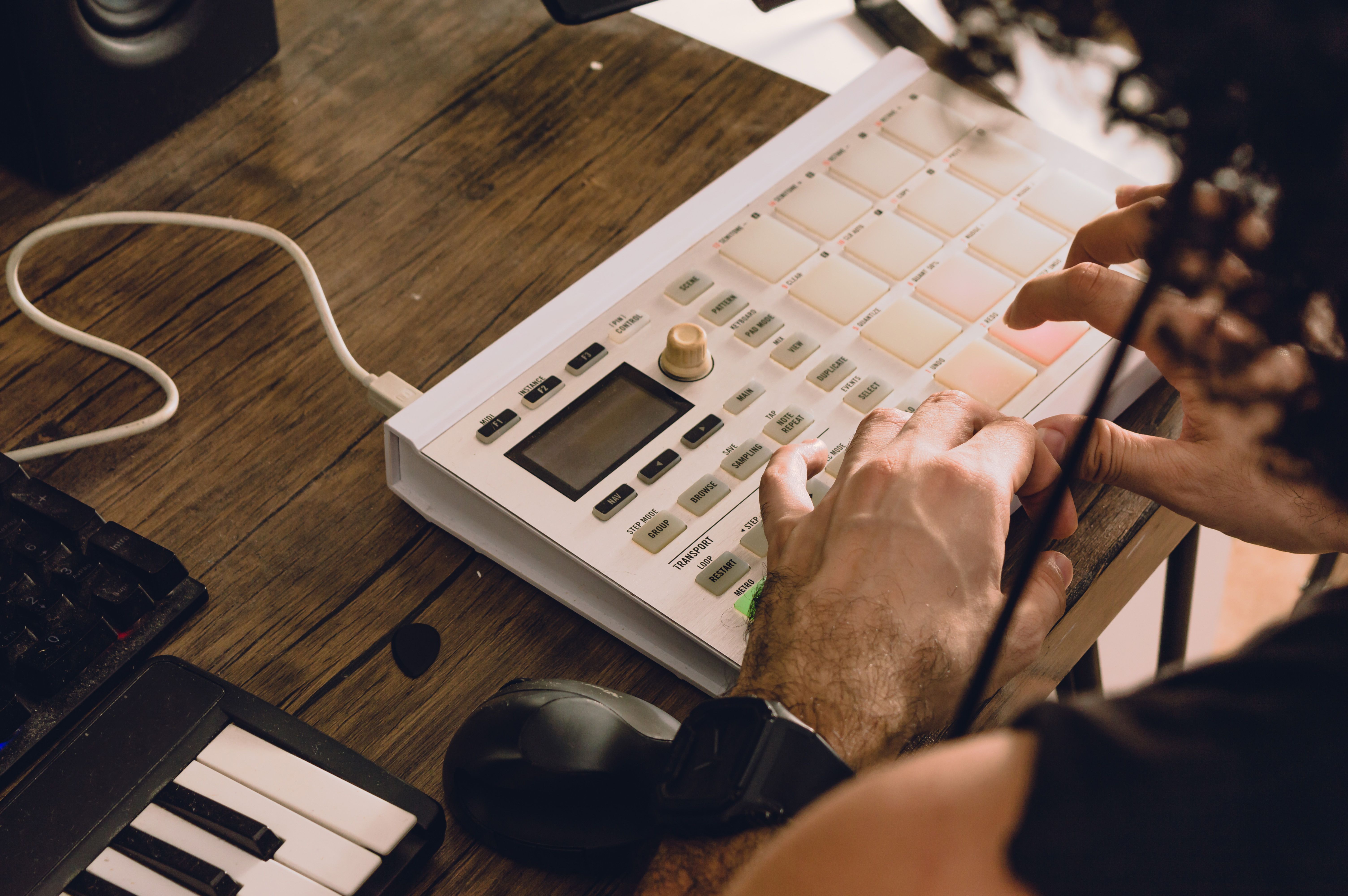
A MIDI controller is a hardware device that sends notes and MIDI data to your computer or a hardware synthesizer, which speeds up playing notes into your software and makes production more fun. For beginners, look for something that integrates tightly with Ableton Live and fits your budget — options like the Ableton Push Mini, Novation Launchkey Mini, or Akai APC Mini are popular starting points that pair well with Live's Session View.
Ableton rewards hands-on practice, and a teacher who already knows the software can save you weeks of trial and error — whether that's arrangement workflow, sound design, or finishing your first track. If you'd rather learn with feedback than go it alone, browse Tissimo's music teachers and book a trial lesson.